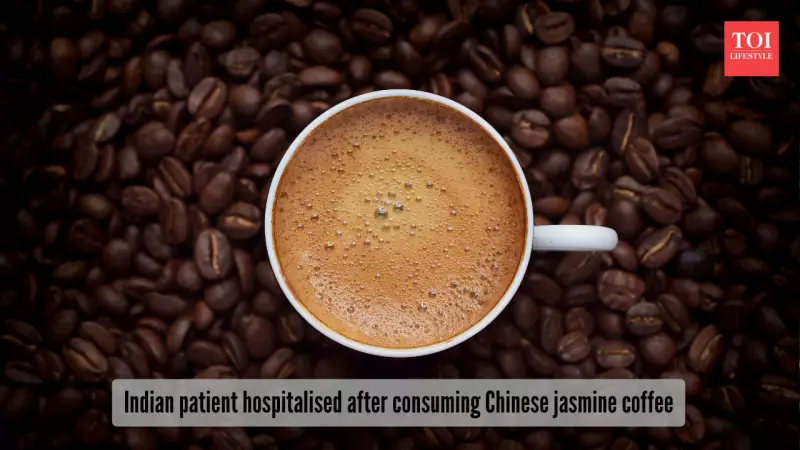
A relaxing cup of flavoured coffee has turned into a health scare for an Indian patient, leading to hospitalisation with severe liver damage. The incident, linked to a product named 'Dian Er Wa' Chinese Jasmine Coffee, has raised serious concerns about the safety of exotic herbal infusions and flavoured beverages.
From Daily Ritual to Hospital Bed
The alarming case was brought to light by renowned hepatologist Dr. Cyriac Abby Philips, popularly known as 'The Liver Doc' on social media platform X. He detailed how a patient was admitted with severe hepatitis and jaundice after a week of consuming the coffee.
The patient reportedly drank 2 to 3 cups of the Chinese Jasmine Coffee daily before classic symptoms appeared. These included yellowing of the eyes, dark urine, and intense itching on the hands and feet. Dr. Philips shared an image of the coffee sachet, confirming the product under suspicion after a thorough investigation.

Not All That Smells Like Jasmine Is Safe
In his detailed post, Dr. Philips issued a crucial clarification. He stated that true jasmine species, such as Jasminum officinale, Jasminum grandiflorum, or Jasminum sambac, are generally safe when used in small quantities for food flavouring and teas.
However, the danger lies in counterfeit or mislabelled products. Several other plants commonly sold as 'jasmine' are highly toxic and can cause significant organ damage. The doctor listed perilous varieties, including:
- Yellow Jessamine
- Night-Blooming Jessamine (Cestrum nocturnum)
- Cestrum diurnum
- Star Jasmine
These plants, he warned, can harm the liver, heart, and kidneys.
The Hidden Toxin in Night Jasmine
Dr. Philips specifically highlighted the extreme hazards of Night-Blooming Jasmine (Cestrum nocturnum), which is not a true jasmine. All parts of this plant are poisonous, with the berries being especially toxic.
He explained the science behind the toxicity: "They contain a steroidal glycoside that is hydrolyzed to a form of Vitamin D3, which can cause severe illness and organ damage due to excessive calcium absorption." This means the impostor plant tricks consumers with a familiar, pleasant scent but delivers a potentially deadly chemical punch to the body's vital organs.
This case serves as a stark warning for consumers attracted to exotic herbal teas and flavoured coffaces. It underscores the risks of unregulated ingredients and mislabelled products in the global market. Experts advise caution, thorough research, and purchasing from reputable sources when trying such specialty beverages, as the consequences of a misstep can be severe.