

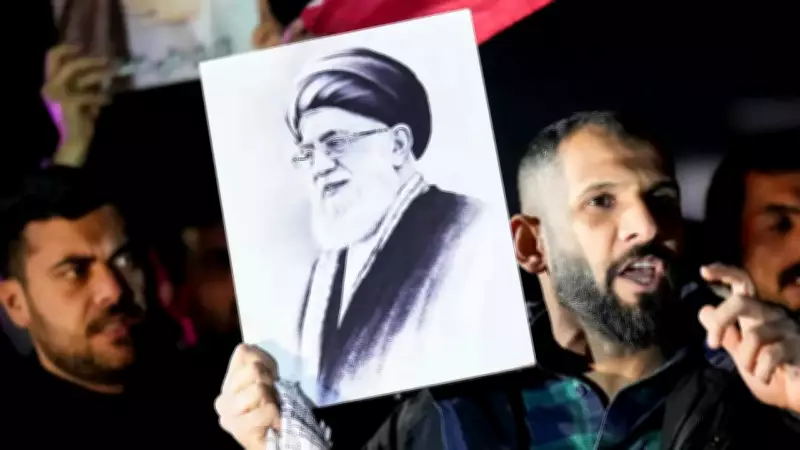
Iran's Interim Leadership Council Begins Functioning After Khamenei's Killing in US-Israeli Strikes
In a significant development following the assassination of Supreme Leader Ayatollah Ali Khamenei, Iran's President Masoud Pezeshkian announced on Sunday that a new interim leadership council has formally commenced its operations. This move comes in the wake of Khamenei's killing during coordinated military strikes by the United States and Israel, which have escalated regional tensions and triggered a series of retaliatory actions across the Middle East.
Pezeshkian's Video Statement and Commitment to Continuity
In a recorded video statement broadcast on state television, President Pezeshkian confirmed the activation of the interim leadership council, emphasizing Iran's resolve to maintain stability and continue along the path established by the late Supreme Leader. "The interim leadership council started its work. We will continue with all our strength along the path set by Imam Khamenei, the founder of the Islamic Republic," he declared. Pezeshkian further asserted, "We will continue the path of the Leader with strength. Our Armed Forces are crushing the bases of the enemies," underscoring Iran's military posture in response to the attacks.
Foreign Minister Araghchi on Succession and Constitutional Processes
Iran's Foreign Minister Abbas Araghchi provided critical insights into the succession process, indicating that the appointment of a new Supreme Leader could be finalized within a matter of days. In an interview with Al Jazeera on Sunday, Araghchi stated that state institutions remain functional and succession procedures are actively underway. "You may see the selection of a supreme leader in a day or two," he revealed, adding that "Iran's institutions are functioning" and the country "has constitutional procedures in place."

Araghchi described Khamenei's killing as a watershed moment, condemning it as an unprecedented violation of international law. "It is absolutely unprecedented and a major violation of international law for a leader of another country to be assassinated by foreign forces," he remarked. He issued a stern warning, noting that this act could exacerbate the conflict, stating, "That would make this conflict – this war of aggression by the Americans against us – even more dangerous and more complicated, and it would perhaps add new aspects to it."
The foreign minister also confirmed that Tehran has activated constitutional provisions to ensure governance continuity. "We have begun a constitutional process, and the Transitional Council was established today and will work to manage affairs," he explained. Emphasizing Iran's stance on self-defense, Araghchi added, "We have no restrictions or limits in defending ourselves," highlighting the nation's readiness for potential retaliation.
How Iran's Supreme Leader is Selected
Under Iran's constitution, the Supreme Leader holds the highest authority in the country, with control over key areas such as:
- The armed forces
- The judiciary
- State broadcasting
- Critical appointments
- Overarching state policy
In the event of a vacancy, the Assembly of Experts—an elected clerical body—is responsible for selecting a successor. If the position becomes suddenly vacant, as in this case, a temporary leadership arrangement is activated to ensure continuity. This typically involves senior constitutional authorities assuming interim responsibilities until a new Supreme Leader is formally chosen by the Assembly.
The establishment of the interim leadership council marks a crucial step in Iran's political transition, aimed at maintaining stability during this period of uncertainty. As regional tensions simmer with reported attacks in Gulf cities like Dubai, Doha, and Manama, the international community watches closely for further developments in Iran's leadership and potential escalations in the conflict.






