

KGMU Milk Bank Saves Critically Ill 1.2 kg Baby with Donor Human Milk
In a remarkable case from Lucknow, a baby boy weighing a mere 1.2 kilograms—significantly below the normal birth weight range of 2.5 to 4 kilograms—was born with severely underdeveloped lungs. The infant was immediately admitted to the neonatal intensive care unit at King George's Medical University (KGMU) and required ventilator support to breathe. His mother experienced a complicated delivery and was unable to produce breast milk in the initial days, while the baby was too weak to digest formula milk. Doctors turned to donor human milk (DHM) from the university's milk bank, which proved critical for his survival during this fragile period.
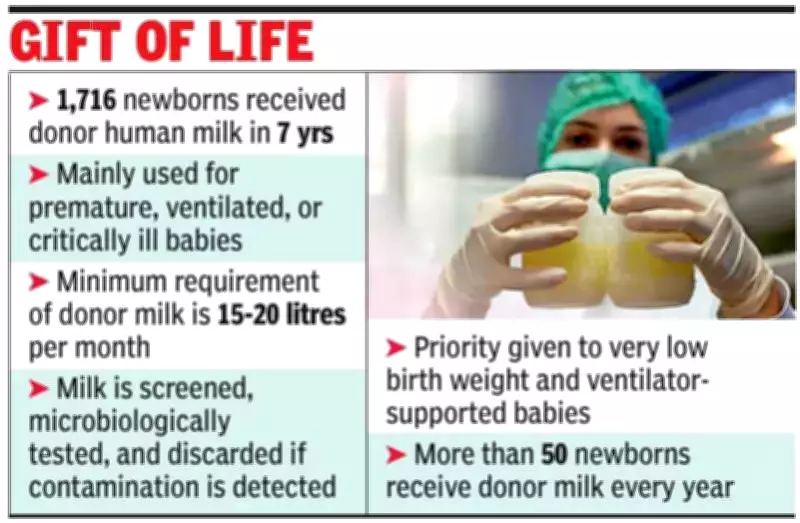
Milk Bank Celebrates Seven Years, Serving Over 1,700 Newborns
As the milk bank at KGMU completed seven years of operation on March 5, its journey highlights a vital lifeline for vulnerable infants. Established in 2019 under the guidance of paediatrician Professor Mala Kumar, the bank has provided donor milk to more than 1,700 newborns in need. However, doctors report that demand consistently exceeds supply, meaning some babies still face delays in receiving this essential nutrition. The bank primarily supports babies whose mothers cannot breastfeed immediately after delivery, often due to prematurity or critical illness.
Medical Benefits and Safety Protocols of Donor Milk
Professor Shalini Tripathi, in charge of the milk bank, emphasized the advantages of donor human milk for fragile newborns. "These babies are often extremely premature or critically ill," she said. "Donor human milk is much easier for them to digest than formula feed. We rarely see vomiting or feeding intolerance in babies who receive it." Before the milk reaches a newborn, it undergoes rigorous safety checks. Donor mothers are medically screened first, and the milk is tested in a laboratory under the supervision of microbiologist Professor Sheetal Verma. "If any bacterial growth is detected during testing, the milk is discarded," Prof Verma noted. "For such fragile babies, ensuring zero contamination is extremely important."

Challenges and Strategies in Milk Donation
The neonatal units at KGMU require approximately 15 to 20 liters of donor milk each month, but supply often falls short. Dr. Anshika Rastogi, manager of the milk bank, attributed this shortage to strict donor screening criteria and hesitation among potential donors. "Strict donor screening criteria and hesitation among mothers reduce the number of eligible donors," she explained. Consequently, the bank prioritizes the sickest babies, such as those on ventilator support or with very low birth weights. Each year, more than 50 newborns whose mothers died or were unable to feed depend entirely on donor milk. In some cases, mothers admitted to hospitals outside Lucknow are counselled over the phone to express and store milk for their babies.
Importance of Awareness and Counselling
Doctors highlight that counselling mothers plays a pivotal role in encouraging donations. "Conversations among mothers in the wards often encourage others to donate," Prof Tripathi said. "When one mother comes forward, it motivates others as well." Professor SN Singh, head of paediatrics at KGMU, underscored the significance of donor milk in neonatal care. "For very low birth weight babies and those on ventilator support, donor human milk can significantly improve survival and reduce complications," he stated. Greater public awareness about milk donation is seen as key to bridging the supply gap and ensuring more newborns receive this life-saving support.






