

Kolkata Hosts Prestigious International Breast Cancer Conference
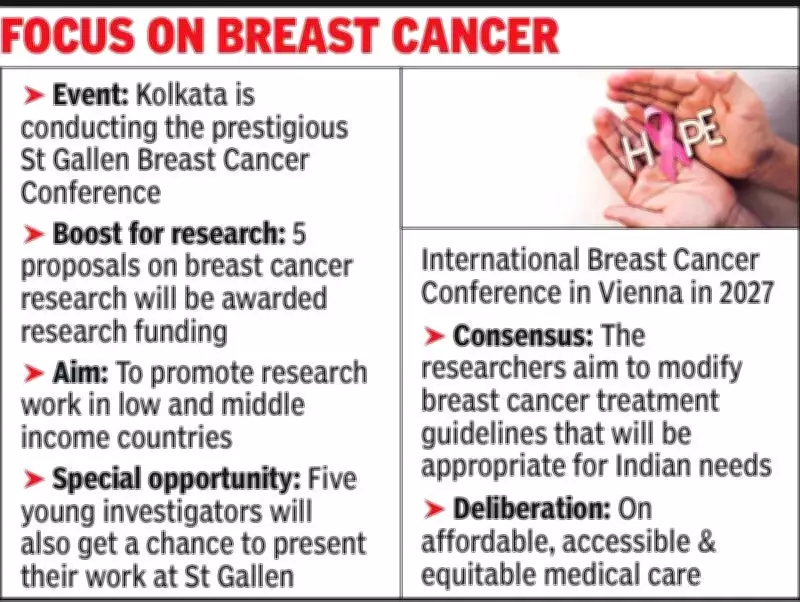
The global medical community's focus shifted to Kolkata on Friday as one of the world's most prestigious conferences on breast cancer commenced in the city. Organized by the Institute of Breast Diseases Kolkata (IBDK), this significant gathering brings together over 600 doctors and researchers from across the globe to address critical challenges in cancer care.
Research Grants and International Opportunities
A highlight of the conference is the selection of five research proposals that will receive substantial grants. These selected proposals will also earn the distinguished opportunity to be presented at the next St Gallen International Breast Cancer Conference in Vienna, Austria. This initiative aims to bridge the funding gap that often hinders clinical research in many regions.
"Many clinicians in our country do not receive sufficient funds to support their research endeavors," explained Dr. Soumen Das, Director of IBDK and a leading oncologist. "This financial shortfall frequently leads to an over-reliance on research solutions developed in Western nations." The conference specifically invited proposals to fill these critical gaps in cancer research.

Diverse Research and Critical Discussions
From an initial pool of 140 submissions, the conference committee shortlisted 28 research proposals for presentation. These proposals explore a wide array of innovative approaches, including early detection models, artificial intelligence-enabled diagnostics, biomarker research methods, surgical innovations, and healthcare strategies tailored for resource-limited settings.
Professor Jens Houber from St Gallen, Switzerland, emphasized the comprehensive approach needed: "Beyond regular screening, early detection, and treatment, there is a pressing need for dedicated research, education, and advocacy in the field of breast cancer."
A dedicated session will focus on adapting Western research guidelines to meet local requirements. "We will examine how international guidelines can be effectively modified to suit our specific regional needs and healthcare infrastructure," stated radiation oncologist Dr. Sayan Paul.
Addressing Late Detection and Fostering Global Collaboration
Doctors at the conference highlighted a concerning statistic: approximately 70% of breast cancer cases in the state are detected at a late stage. This delayed diagnosis adversely affects treatment outcomes and significantly increases the financial burden of care.
Professor Beat Thürlimann from St Gallen, Switzerland, noted the value of such gatherings: "Events like this foster meaningful collaboration between experts and clinicians from diverse global healthcare settings, which is essential for progress."
In contrast, US-based radiation oncologist Dr. Sushil Beriwal pointed out that in some healthcare systems, around 70% of cases are detected early, leading to markedly better treatment results, underscoring the importance of early diagnosis initiatives.
Beyond Academic Exchange: Building a Global Network
Dr. Tanmoy Kumar Mandal, Director of IBDK, described the conference's broader mission: "This initiative transcends traditional academic exchange. It is about building a collaborative network to tackle cancer care challenges at the regional level."
Professor Etienne Brain from Paris echoed this sentiment, stating, "Global collaboration is indispensable for developing effective treatment approaches and addressing the multifaceted challenges in cancer care accessibility."
Community Engagement and Conference Conclusion
In tandem with the academic discussions, the conference also launched "Pink Army," a community-led volunteering program aimed at generating widespread awareness about cancer prevention and early signs.
The conference, which will conclude on Sunday, features in-depth discussions on the persistent challenges in cancer care, particularly focusing on improving access to affordable and effective treatment options for all socioeconomic groups. This gathering stands as a testament to Kolkata's growing role as a hub for advanced medical discourse and international healthcare collaboration.






