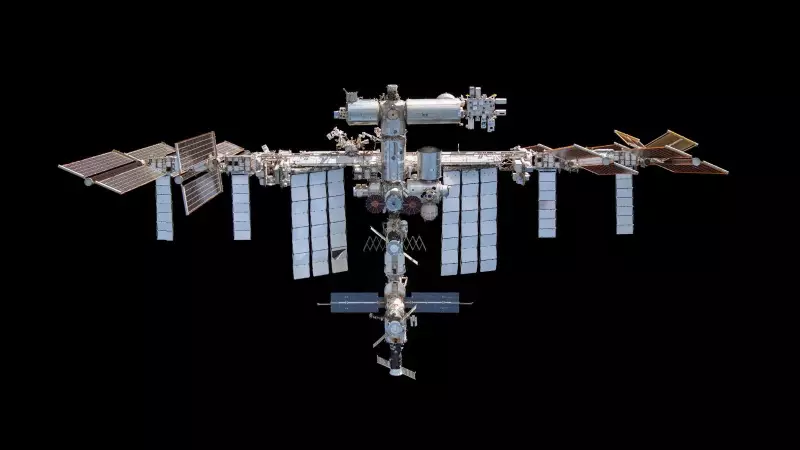
In a historic first for the International Space Station, NASA has decided to bring a crew of astronauts back to Earth ahead of schedule due to a medical issue. The space agency confirmed on January 8 that one member of the SpaceX Crew-11 mission requires a more comprehensive medical evaluation, prompting an accelerated return. Officials were quick to clarify that this does not constitute an emergency situation.
The Decision for an Early Return
NASA Administrator Jared Isaacman explained during a press briefing that while the agency is always prepared for an urgent de-orbit, this situation did not reach that critical level. The primary reason for the early return is the limitation of diagnostic and treatment capabilities aboard the orbiting laboratory. The astronaut in question is reported to be in stable condition and faces no immediate danger.
The medical concern first emerged on January 7, leading to the postponement of a planned spacewalk by NASA astronauts Zena Cardman and Michael Fincke. Dr. James Polk, NASA's chief health and medical officer, later confirmed that the issue was not related to any operational activity or injury. He highlighted the inherent challenges of diagnosing certain conditions in microgravity with the station's limited medical tools.
Meet the Crew-11 Astronauts
The affected crew is part of the SpaceX Crew-11 mission, which launched to the ISS on August 1, 2025. The team was nearing the end of its planned six-month stay. The crew consists of:
- NASA astronauts Zena Cardman and Michael Fincke
- Japan Aerospace Exploration Agency (JAXA) astronaut Kimiya Yui
- Roscosmos cosmonaut Oleg Platonov
NASA has not disclosed which crew member is affected or the specific nature of the medical condition, citing privacy reasons.
Timing and Operational Impact
Isaacman noted that the timing of this decision was influenced by several factors. The Crew-11 team had already completed nearly all its mission objectives. Furthermore, the next crew, Crew-12, is scheduled to launch within weeks. With a spacecraft ready and suitable weather windows approaching, NASA determined it was an appropriate moment to prioritize crew health.
Once Crew-11 departs, the ISS will operate temporarily with a reduced crew of three: NASA astronaut Christopher Williams and Russian cosmonauts Sergey Kud-Sverchkov and Sergei Mikayev. Williams will be the sole American on board during this period, a responsibility for which NASA says he is fully prepared.
A Statistical Reality, Not a Panic Moment
Despite being the first of its kind in the over two-decade history of the ISS, NASA officials presented this event as an expected statistical occurrence rather than a shocking failure. Dr. Polk stated that models predict such medical situations requiring evacuation could happen once every few years. The fact that it hasn't happened until now is a testament to careful planning and the overall health of astronauts, not a reason for alarm.
The exact schedule for Crew-11's return aboard the SpaceX Crew Dragon Endeavour spacecraft is still being finalized, with an update promised in the coming days. NASA remains confident that station operations and scientific research will continue safely with extensive support from global mission control teams until the arrival of the next crew.
The International Space Station, a symbol of global cooperation, has hosted over 280 astronauts from 26 nations since its inception, with 170 of those visitors coming from the United States. This 356-foot-long engineering marvel, larger than a six-bedroom house, provides its inhabitants with six sleeping quarters, two bathrooms, a gym, and a unique 360-degree viewing cupola.