

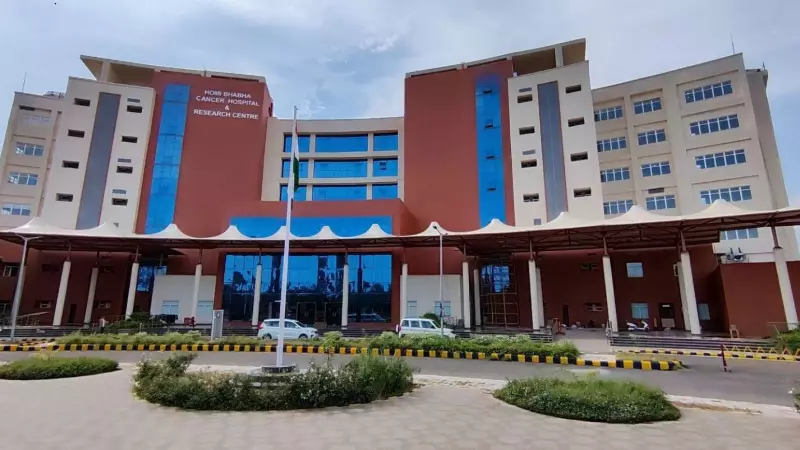
A significant boost to cancer care infrastructure in North India was marked on Friday with the inauguration of state-of-the-art medical imaging equipment at the Homi Bhabha Cancer Hospital and Research Centre (HBCH&RC) in New Chandigarh, Punjab.
CSR Initiative Powers Advanced Healthcare
The ceremony, chaired by HBCH&RC Director Dr. Ashish Gulia, saw the handover of an advanced CT Scan and Bi-Plane Digital Subtraction Angiography (DSA) machines. This vital equipment was provided under the Corporate Social Responsibility (CSR) initiative of the Power Grid Corporation of India Limited (POWERGRID). Independent directors from POWERGRID were also present at the event.
The new technology is set to revolutionize diagnostic and interventional procedures for cancer patients in the region. It will enable precise imaging and facilitate minimally invasive vascular procedures, which are crucial for both diagnosis and treatment.

Transformative Impact on Patient Care
In his address, Dr. Ashish Gulia emphasized the transformative potential of this integration into the hospital's clinical workflow. He stated that the machines go beyond providing superior images; they are instrumental for earlier detection of cancers and performing highly complex, life-saving interventional procedures.
"We are deeply grateful to POWERGRID for their commitment to public health, which empowers us to deliver faster, more accurate treatment to those who need it most," Dr. Gulia said. He highlighted that this support allows the centre to uphold its mission of providing global-standard cancer care accessible to all, regardless of socioeconomic background.
A Growing Hub for Cancer Treatment
Dr. Gulia also underscored the expanding capacity of the institution, noting that the Tata Memorial Centre in Punjab, with a total capacity of 450 beds, stands as one of the largest tertiary public cancer care centres in the entire northern India region. This development solidifies its role as a critical healthcare hub dedicated to bringing advanced oncology services to the doorsteps of patients.
The installation of this cutting-edge equipment is expected to significantly reduce patient travel for advanced diagnostics and interventions, ensuring timely and effective care within the state. It represents a major step forward in bridging the healthcare infrastructure gap for complex diseases like cancer in public health institutions.






