

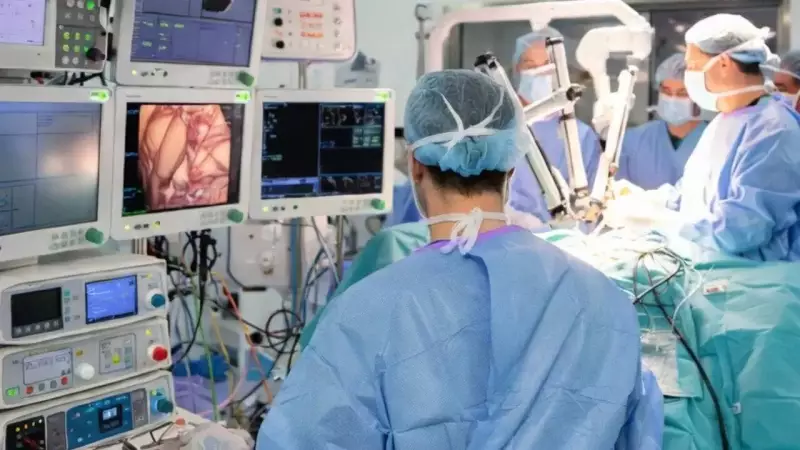
In a groundbreaking medical feat, a 64-year-old resident of Andheri, Mumbai, successfully underwent surgery for prostate cancer last week with a high probability of a near-total cure. The remarkable aspect of this procedure was the location of the lead surgeon: Dr. T. B. Yuvaraja performed the operation while being physically present in Shanghai, China, approximately 8,000 kilometers away from the patient.
The Mechanics of a Cross-Border Operation
The surgery was made possible through advanced robotic arms installed in the operating theatre at Mumbai's Kokilaben Ambani Hospital. Dr. Yuvaraja, an onco-urologist attached to the hospital, controlled these arms in real-time via an internet-enabled console from his consulting room in Shanghai. "I could sit with the console in my consulting room and operate on the patient in the OT," explained Dr. Yuvaraja. The patient, referred to as S Rahul for privacy, was discharged just three days after the successful remote procedure.
A Growing Trend in Indian Healthcare
This Shanghai-Mumbai surgery is not an isolated incident. Just a day prior, on December 23, doctors from HN Reliance Foundation Hospital in Girgaon, Mumbai, performed another remote robotic procedure at a community medical centre in Jamnagar, Gujarat. This highlights a concerted push to democratize specialized surgical care in India.

Dr. Tarang Gianchandani from HN Reliance Foundation Hospital emphasized the transformative potential, stating, "For decades, specialised surgical care remained concentrated in a few urban centres, leaving millions without timely access to treatment." She described tele-robotic surgery as reimagining complex surgical care delivery across India, powered by indigenous innovation, advanced robotics, and secure digital infrastructure.
Potential and Challenges of Remote Surgery
The implications for healthcare access are significant. Global studies estimate that nearly 5 billion people lack access to safe and affordable surgical care. Telerobotic surgery, which began in India last year, promises to bridge this gap, though fewer than 200 such surgeries have been conducted so far. A key player in this field, SS Innovations International Inc, recently announced the completion of 100 robotic telesurgeries using India's first indigenous surgical robotic system, the SSII Mantra.
However, the path forward includes addressing several concerns:
- Cost: Using a robotic arm can add between Rs 1 lakh and Rs 2 lakh to a surgery's cost. However, doctors argue that overall expenses for families could be lower by eliminating travel and accommodation needs for treatment in metro cities.
- Legal and Cybersecurity: Clear regulations and robust digital security protocols are essential for widespread adoption.
Dr. Yuvaraja pointed out additional benefits, including easier surgical training and education. He noted that newer robotic systems come with integrated artificial intelligence to enhance precision and are now being built with telesurgery capabilities from the start.
This fusion of robotics, AI, and telecommunications marks a new chapter in making high-quality surgical expertise available beyond geographical boundaries, potentially transforming healthcare delivery for millions in India and beyond.






