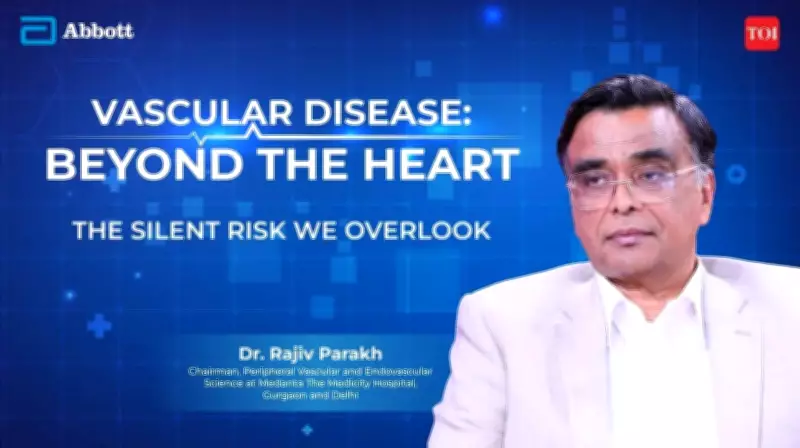
Pain while walking. Feet that feel unusually cold. Wounds that refuse to heal. For many people, these symptoms are brushed aside as signs of aging, weakness, diabetes, or even joint trouble. But according to vascular expert Dr. Rajiv Parakh, they may actually point to something far more serious: peripheral vascular disease (PVD).
In the latest episode of the Peripheral Vascular Disease awareness podcast series by Abbott in collaboration with The Times of India, host Anisha Nayar Dhawan spoke with Dr. Rajiv Parakh, Chairman of Peripheral Vascular and Endovascular Sciences at Medanta, Gurugram and Delhi, about why vascular disease remains one of the most overlooked yet dangerous health conditions. The conversation explored how symptoms such as leg pain while walking, cold feet, fatigue, or non-healing wounds are often ignored despite potentially pointing to a much larger vascular problem.
Why PVD Is Often Misunderstood
While cardiovascular disease affects the heart, vascular disease refers to conditions affecting blood vessels across the body, including arteries and veins supplying the brain, kidneys, and limbs. One of the biggest challenges with PVD is awareness. Unlike a heart attack, which often arrives dramatically with chest pain and breathlessness, PVD tends to develop gradually over months or years.

"You start walking slowly. You think it could be age, weak joints, or muscular weakness. You do not think the blood supply to the legs is becoming compromised," Dr. Parakh explained. He pointed out that many patients with leg pain often first visit orthopaedic specialists or physiotherapists, assuming the issue is related to bones, joints, or the spine.
Dr. Parakh noted that awareness around vascular disease remains limited not only among patients, but also within general medical practice, often contributing to delayed diagnosis. He also recalled how limited exposure to vascular surgery during his early medical training shaped his understanding of the condition and later pushed him towards the specialty.
What Exactly Happens in PVD?
Dr. Parakh described PVD as the "heart attack of the legs." "If the blood vessels supplying blood to the legs get blocked, circulation becomes compromised, much like what happens during a heart attack," he explained. Over time, narrowing of these arteries reduces blood flow to the muscles and tissues.
The most common causes include:
- Diabetes
- Smoking
- High cholesterol
- High blood pressure
- Family history
- Elevated uric acid levels
"The disease pathway is exactly the same as a heart attack," Dr. Parakh said.
Symptoms People Should Never Ignore
One of the biggest reasons PVD goes undiagnosed is that the symptoms appear subtle in the beginning. Dr. Parakh highlighted some of the most important warning signs:
Cold Feet or Legs
"Whenever one part of the body is colder than the rest of the body, there is no other diagnosis but reduced blood supply," he said. He explained that if a leg or foot feels noticeably colder to touch compared to the rest of the body, it should immediately raise concern.
Pain While Walking That Improves with Rest
Patients with PVD often experience pain or cramping in the calves or legs after walking a certain distance. "You walk, the pain comes on, and then you have to stop because the leg cramps up. Once you stop, it gets better, and then you can walk again," he explained. This stop-and-start walking pattern is one of the classic signs of reduced blood supply to the legs.
Non-Healing Wounds
Another red flag is wounds or ulcers on the feet or legs that take unusually long to heal. According to Dr. Parakh, this becomes especially dangerous in people with diabetes because narrowed arteries further reduce circulation.
Changes in the Skin
Visual signs can also point towards circulation problems. "You can have shiny skin, dry skin, scaling, hair loss on the legs, and changes in colour or pigmentation," he said.

Why Diabetes and Smoking Are a Dangerous Combination
Dr. Parakh warned that diabetes significantly increases the risk of vascular disease. "Diabetes causes accelerated deposition of cholesterol inside the arteries, causing them to narrow," he explained. Smoking further damages the inner lining of blood vessels, making blockages even worse. "Diabetic patients who smoke face a double whammy," he said. He also stressed that diabetes itself rarely kills directly today. "Most people die because of complications of diabetes, and peripheral vascular disease is one of the major complications," he noted.
Understanding Diabetic Foot
The discussion also explored diabetic foot, a serious complication that can lead to infections, gangrene, and amputations. Dr. Parakh explained that diabetic foot develops due to a combination of three major problems: nerve damage leading to loss of sensation, reduced blood supply, and increased risk of infections. "Unless a person feels pain, they will not be able to protect themselves," he said. Because diabetes damages nerves, many patients lose the ability to feel injuries in their feet. "There are people sitting with deep infected ulcers in their feet and saying there is nothing wrong because they have lost sensation," he explained.
Repeated, unnoticed injuries, combined with poor circulation and infections, can eventually lead to ulcers that refuse to heal. "These patients can end up with amputations," Dr. Parakh warned. Depending on the severity, patients may lose toes, feet, or even entire limbs. He also highlighted the impact this has on long-term survival. "Studies have shown that diabetic patients who undergo amputations because of gangrene have very poor long-term survival because the disease is affecting the entire body, not just the legs," he said.
The Importance of Daily Foot Checks
Dr. Parakh said, "If something happens to your face, everybody around you will notice it. But if something happens to your feet, only you will know." He also advised diabetic patients to inspect their feet daily for cuts, wounds, swelling, dryness, or discolouration.
How PVD Is Diagnosed
Dr. Parakh explained that diagnosis goes beyond routine heart tests and often starts with a simple physical examination. According to him, diagnosis can often begin with something as simple as checking the pulse near the ankle. "All it needs are two fingers," he said. Doctors may also recommend:
- ABI (Ankle Brachial Index), which compares blood pressure in the arms and legs
- Doppler ultrasound to check blood flow and identify blockages
- CT angiography or angiography to pinpoint the exact location and severity of the narrowing
"The same ultrasound machine used in pregnancy scans can actually visualise the arteries in the legs and detect blockages," he explained. These tests help doctors understand how severe the blockage is and whether a patient may benefit from lifestyle changes, medication, or vascular intervention.
Are Vascular Procedures Safe?
Many patients fear vascular procedures because they associate them with major surgery. However, Dr. Parakh stressed that treatment today has become significantly more advanced and minimally invasive. According to him, modern vascular interventions often involve catheter-based procedures, stenting, balloon angioplasty, or minimally invasive surgeries that can restore blood flow and prevent complications. The key, he said, is timely diagnosis. "If patients come early, limbs can often be saved," he emphasised.
Why Early Diagnosis Matters
One of the strongest takeaways from the conversation was the importance of not dismissing leg symptoms as normal aging. By the time many patients reach vascular specialists, the disease has already progressed to advanced stages involving ulcers, gangrene, or limb-threatening complications. Dr. Parakh explained that patients diagnosed early often respond well to medication, lifestyle changes, smoking cessation, diabetes control, and minimally invasive procedures. However, delayed diagnosis can result in severe infections, irreversible tissue damage, amputations, and higher mortality risks.
Dr. Parakh emphasised that awareness and early intervention can make a major difference. "You really need to be aware of the disease and the way it has to be managed," he said. For people with diabetes, smokers, or anyone noticing persistent leg pain, cold feet, or non-healing wounds, paying attention to these early warning signs could help prevent serious complications later.
The Heart-Leg Connection People Often Ignore
Dr. Parakh also highlighted that patients with PVD face a higher risk of heart attacks and strokes because vascular disease often affects arteries across the body. Delayed diagnosis can also increase the risk of infections, gangrene, and amputations, particularly in people with uncontrolled diabetes. However, experts say many of these complications can be prevented through early diagnosis, diabetes management, smoking cessation, and timely vascular intervention.
Why Paying Attention to Leg Symptoms Matters
Peripheral vascular disease may begin with symptoms that seem easy to ignore, but delayed attention can allow the condition to progress silently over time. As the discussion highlighted, recurring leg pain, cold feet, non-healing wounds, and reduced walking capacity are not always signs of aging or fatigue. In many cases, they may indicate compromised blood flow and a larger vascular issue linked closely to heart health, diabetes, and stroke risk. The conversation ultimately underscored the importance of early diagnosis, regular screening for high-risk individuals, and greater awareness around symptoms that are often overlooked until complications become severe.
Disclaimer: The views/suggestions/opinions expressed in the article are the sole responsibility of the brand concerned. This should not be considered as a substitute for medical advice. Please consult a health care practitioner for more details. This article has been produced on behalf of Abbott by Times Internet's Spotlight team.