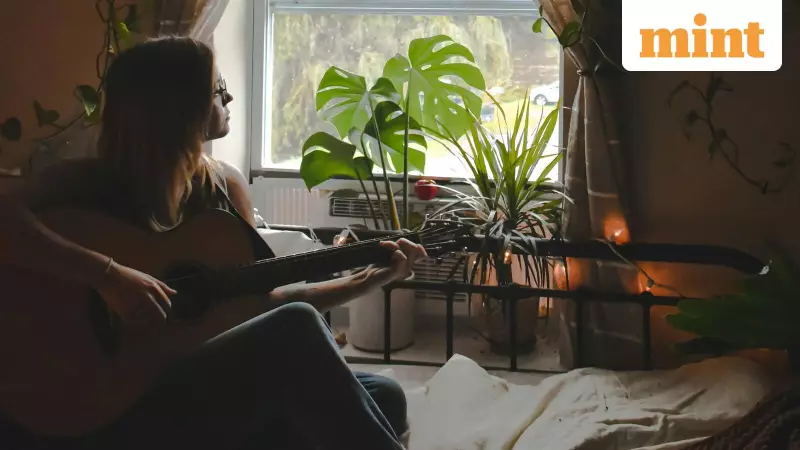
In a world saturated with constant notifications and digital noise, the simple act of doing nothing has become a radical form of self-care. For Nitin Narain, a public relations consultant in Bengaluru, his evening ritual of quiet solitude is a non-negotiable sanctuary. He describes a home where the television often plays on mute, and the absence of sound is not a void but a comforting presence. "Silence doesn't feel empty. It feels like peace quietly wrapping itself around me," Narain shares, highlighting a practice that many now find deeply uncomfortable.
The Modern Discomfort with Silence
Clinical psychologist Kanika Jindal from Delhi points to our excessive exposure to digital media as the core issue. Our brains have been conditioned to expect a relentless stream of stimulation from the moment we wake. "This makes it difficult to tolerate being alone," Jindal explains. For younger generations especially, silence has become synonymous with an absence of validation and dopamine, triggering unease or even panic.
Counselling psychologist Shevantika Nanda from Mumbai adds that this aversion often signals an inability to manage one's own thoughts. "Silence reveals a mind avoiding confrontation with its own contents. Thoughts become louder. Rumination increases," she notes. Therapist Kratika Gupta from West Bengal provides a generational perspective, suggesting that for those who grew up in volatile or busy households, peace itself can feel threatening, bringing suppressed emotions to the surface.

Why We Constantly Reach for Distraction
The immediate reflex to fill quiet moments is a maladaptive coping mechanism, according to the experts. Jindal observes that clients often maintain composure through a busy workday only to "collapse emotionally once home," leading to habits like excessive digital consumption. Nanda explains that constant stimulation shifts our focus entirely outward, making genuine self-awareness nearly impossible. This erodes our relationship with ourselves, as we stop noticing our inner emotional cues and instead rely on devices for regulation.
It is crucial, however, to distinguish between harmful isolation and beneficial solitude. "Solitude is being alone by choice," Jindal clarifies. While forced isolation can increase depression and anxiety, intentional solitude promotes relaxation, independence, and meaningful engagement.
The Creative and Restorative Power of Idle Time
When we consciously choose stillness, remarkable neurological processes activate. Nanda highlights the role of the Default Mode Network (DMN), which becomes active during intentional solitude. This network supports vital functions like introspection, memory recall, future planning, and emotional processing. Gupta adds that this allows the nervous system to settle out of a constant fight-or-flight state, creating an internal sense of safety.
This state is fertile ground for creativity. Kerala-based musician Rishi Raj Ravi argues that society has wrongly associated "doing nothing" with being unproductive." He asserts, "New ideas come from nothing. To think out of the box, eliminate the box." Neuroscience supports this: the mind needs unstructured, wandering time to form original connections. Narain confirms that his most original ideas surface only in stillness, and the experts agree that solitude enriches the core foundations of creativity: attention, memory, and empathy.
Furthermore, emotional maturity is cultivated in quiet. "In stillness we learn to notice emotions, sit with discomfort, reflect, and build confidence," says Gupta. This practice ultimately leads to better emotional regulation and stronger, more empathetic social cognition.
How to Cultivate the Skill of Solitude
The psychologists unanimously agree that solitude is a skill that can be developed with consistent practice. They recommend starting small and being intentional:

- Micro-quiet moments: Spend two minutes after waking without your phone, or have one distraction-free meal a day.
- Sensory grounding: Practice mindful activities like sipping tea slowly or noticing the colours and textures around you.
- Nature immersion: Spend time in a park or garden without devices; try walking barefoot on grass.
- Self-soothing rituals: Incorporate warm showers, journaling, or gentle movement into your routine.
- Seek therapy: For those whose nervous systems feel profoundly unsafe in silence, therapy can provide a regulated space to learn.
The key is reframing solitude from something to avoid into a space for curiosity and self-restoration. In a culture that glorifies busyness and consumption, the most radical act of wellness might just be to sit quietly and do nothing at all.