

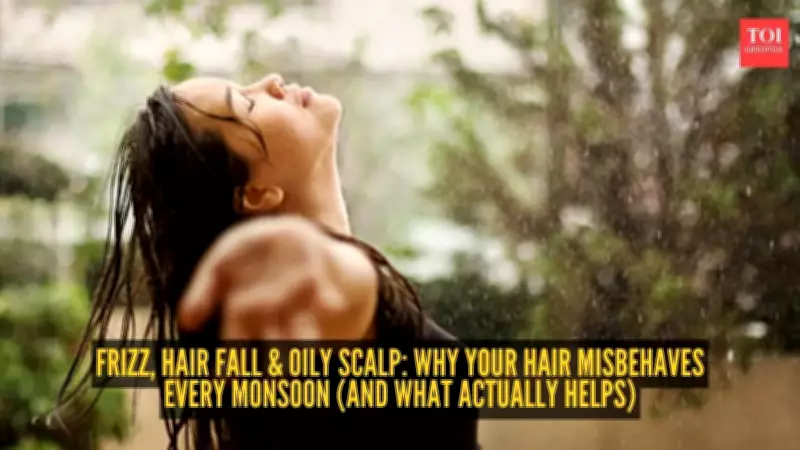
There is something about the monsoon that makes almost everyone complain about their hair. The moment the rains arrive, hair that looked perfectly fine a week ago suddenly turns frizzy, flat, greasy, or impossible to manage. Some people notice more strands in their hairbrush. Others find themselves dealing with dandruff, itchy scalps, or roots that feel oily just hours after washing.
If you have ever wondered why your hair seems to have a mind of its own during the rainy season, you are not imagining it.
The monsoon creates the perfect storm for hair troubles. Humidity rises, sweat increases, rainwater mixes with pollution, and the scalp's natural balance gets disrupted. The result? Frizz, hair fall, oily roots, and a whole lot of frustration.

Why monsoon affects your hair so much
According to experts, humidity is the biggest culprit.
Hair is naturally porous, which means it absorbs moisture from the environment. During the monsoon, there is excess moisture in the air, and hair strands soak it up like a sponge. Dr. Poonam Patel, Clinical Cosmetologist and Founder of LookLush Aesthetic & Laser Centre, explains: Every monsoon, I see the same worry walk into the clinic. The rain feels romantic, but our hair rarely agrees. The simple reason is humidity. When moisture in the air rises, the hair shaft swells and lifts, and that is what we recognise as frizz.
When the outer layer of the hair strand lifts and swells, the smooth surface becomes uneven. That is what creates that rough, fluffy, unmanageable texture many people struggle with during the rainy season.
At the same time, the scalp begins producing more sweat and oil.
Dr. Aisshwarya Panddit, Celebrity Cosmetic Doctor and Founder of AuraEdge Aesthetic & Wellness, explains: During the monsoon, humidity can make the scalp sweat more and produce excess oil, while the hair shaft absorbs moisture from the air and becomes frizzy. This is why many people feel their scalp is greasy, but their hair lengths are dry, rough or unmanageable.
In other words, your scalp and your hair lengths can have completely different problems at the same time.
The oily scalp dilemma
One of the most common complaints during the rainy season is that freshly washed hair starts looking greasy far too quickly.
The reason lies in a combination of sweat, humidity and increased sebum production.
Dr. Poonam Patel says: Oily scalp is another seasonal visitor. Sweat and dampness sit on the skin, stimulate the glands, and the roots feel greasy by afternoon.
And while many people respond by washing their hair aggressively or more frequently with strong shampoos, experts say that can actually make matters worse.
Mr. Umashan Naidoo, Chief Creative Officer and Beauty, Trent Ltd, explains: Frizz, hair fall, and an oily scalp are the most common monsoon hair concerns - caused by excess humidity, sweat, pollution, and buildup disrupting the scalp's natural balance. The key is not harsher cleansing, but smarter scalp care that controls excess oil while protecting the hair barrier from moisture-induced damage.
Why hair fall seems worse during the rains
One of the biggest myths around monsoon hair care is that rain directly causes hair fall. The reality is more complicated.
Humidity, sweat, scalp buildup, fungal growth, dandruff and inflammation can create an unhealthy environment for the scalp, which may lead to increased shedding.
Dr. Neha Taneja, Consultant Dermatologist and Hair Transplant Surgeon at V6 Clinics, says: During the monsoon, high humidity levels affect scalp and hair health which often leads to frizz, increased hair fall, and an oily scalp.
She explains that increased oil production and dampness can clog follicles and affect scalp health. This, combined with dampness and fungal proliferation, can also trigger temporary hair shedding.
The good news? In many cases, this type of seasonal hair fall is temporary.
As Dr. Poonam Patel points out: Most monsoon hair trouble is temporary. If shedding feels heavy or refuses to settle, please see a professional rather than guessing.

The dandruff connection
Interestingly, scalp issues often sit at the root of many monsoon hair concerns.
According to Google Trends data, more people are now looking beyond quick fixes and trying to understand what is happening underneath.
Swagatika Das, CEO and Co-founder of Nat Habit, says: Something interesting has been happening in how Indians search for hair care. Anti-dandruff has remained the single highest-volume hair concern for three consecutive summers, but the question being asked has fundamentally changed. People have moved from 'what's the best anti-dandruff shampoo' to 'why does my dandruff keep coming back'.
She believes this shift shows that consumers are becoming more aware of scalp health. The frizz, the shedding, the greasy scalp that the season is famous for, these are not monsoon problems as much as they are scalp health problems that monsoon makes harder to ignore.
What does science say?
Research supports the connection between humidity and hair behaviour.
A study published in the International Journal of Trichology found that high humidity levels can increase hair fibre swelling and alter hair structure, making strands more prone to frizz and loss of smoothness. Dermatologists have also long recognised that warm, humid weather creates conditions that encourage dandruff-causing fungi and excess oil production on the scalp. In simple terms, the weather itself is not damaging your hair. It is changing the environment around your scalp and strands.
So, what actually helps?
The answer is not piling on more products.
Experts say consistency matters more than complexity.
Dr. Madhuri Agarwal recommends: It is essential to take care of the hair in monsoons as hair is affected too. The scalp tends to become oily, hair becomes limp, dry and rough. This could also lead to hair fall and dandruff problems. A proper hair care regime can help in controlling these issues. She recommends using a good volumising shampoo and conditioner at least two to three times a week while avoiding excessive styling products that can make the scalp greasier. Once a week oiling the hair can help nourish the scalp and maintain moisture balance.
Scalp cleansing also becomes especially important during this season.
Rochelle Chhabra, Head of Streax Professional, says: During the monsoon, regular scalp cleansing becomes essential. Using a gentle shampoo suited for oily scalp or dandruff helps remove excess oil, sweat, and impurities. Ingredients such as salicylic acid can help exfoliate dead skin, while tea tree oil and Piroctone Olamine are known to support dandruff and oil control.
At the same time, hair still needs hydration. Lightweight conditioners, masks, or leave-in serums with ingredients like hyaluronic acid can help tame frizz and maintain softness without weighing hair down, she adds.
Small habits that make a big difference
Sometimes the simplest changes have the biggest impact.
Experts consistently recommend avoiding tight hairstyles on wet hair, drying the scalp thoroughly after washing, rinsing off rainwater when you get home, and keeping pillowcases and combs clean.
Rochelle Chhabra says: Simple habits such as avoiding wet hair ties, washing away rainwater, and keeping combs and pillow covers clean can go a long way in maintaining scalp and hair health during the season.
Dr. Aisshwarya Panddit also cautions against some common mistakes. I also see patients over-washing, using harsh shampoos, tying wet hair or ignoring dandruff and fungal flare-ups during this season, all of which can irritate the scalp and worsen hair fall. Hair care in monsoon: While it is tempting to wash your hair frequently during the monsoon to remove sweat and dirt, overwashing can strip your hair of its natural oils, leading to dryness and frizz.
Monsoon hair problems are incredibly common, but they are usually manageable.
The season may leave your scalp oilier, your strands frizzier and your brush a little fuller than usual, but that does not mean your hair is permanently damaged.
The focus should be less on fighting your hair and more on supporting your scalp.
As Swagatika Das puts it, people are increasingly beginning to view the scalp as an ecosystem rather than just a surface.
And perhaps that is the biggest monsoon hair lesson of all. Healthy hair does not start with the strands you see in the mirror. It starts with the scalp underneath.





