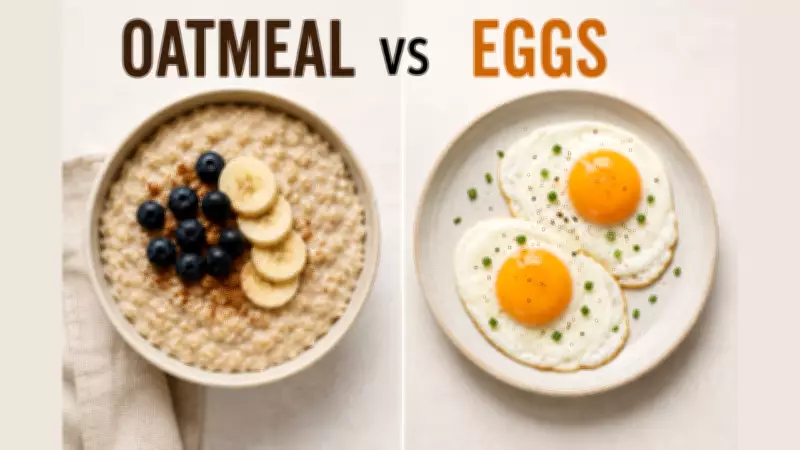
You are standing in your kitchen at 7 AM, hungry, and you have got to choose: oatmeal or eggs. It sounds like a simple decision, but what you pick in the next five minutes could determine whether you are crashing by 10 AM or actually feeling solid until lunch. This is not about taste. It is about energy, and how your body actually functions when you feed it.
The conventional wisdom says oatmeal is healthy. It is whole grain. It has fiber. It is marketed everywhere as the breakfast of champions. But the reality is messier than that. For a lot of people, especially those dealing with insulin resistance, fatigue, or constant hunger, a bowl of oatmeal alone can become a very carbohydrate-heavy start to the day. It might feel energizing at first, but that feeling does not last.
Mugdha Pradhan, Founder and CEO of iThrive, a functional health company, and a functional medicine practitioner, sees this pattern constantly in her clients. "Breakfast is often called the most important meal of the day, but what truly matters is not just eating in the morning, it is what you eat and how your body responds to it," she explains. "When comparing oatmeal and eggs for breakfast, the answer clearly depends on one major factor that is stable energy. And from a metabolic and satiety perspective, eggs tend to perform far better for most people."

The energy crash is real. You eat oatmeal, you feel full for maybe thirty minutes, and then by mid-morning you are looking for a snack or your third coffee. The carbohydrates spike your blood sugar, and when it crashes, your body is asking for more fuel. This is not a character flaw. This is chemistry.
What Eggs Actually Do in Your Body
Eggs work differently. They are not just protein; they are a complete nutritional package. They contain protein, healthy fats, and micronutrients that actually help your body function. The protein stabilizes your blood sugar. The fat keeps you satisfied. Your body is not scrambling for its next hit of glucose.
According to Pradhan, "Eggs offer top-notch quality, bioavailable protein along with healthy fats, which helps in stabilising blood sugar and keeps you full for longer. Protein also gives the body the raw material it needs for repair, hormone function, neurotransmitter production, and muscle maintenance. This is why an egg-based breakfast often leads to much more sustained focus, stable mood, and better satiety through the first half of the day."
That is not marketing speak. That is how your metabolism actually works. When you eat protein and fat, your digestive system takes time to break them down. Your energy does not spike and crash. It sustains. You are not thinking about lunch at 10:30 AM because your stomach is empty and your blood sugar is in the basement.
But here is where it gets complicated. Most people today are already consuming excess carbohydrates throughout the day while being low on protein. Starting the morning with another carb-dominant meal just compounds the problem. You are setting yourself up for a day of blood sugar swings, energy crashes, and cravings that have nothing to do with actual hunger.
The Oatmeal Defense
Now, oatmeal is not the villain here. It is not inherently bad. Context matters. Dr. Ajay Kumar Gupta, Senior Director and Head of Internal Medicine at Max Super Speciality Hospital in Vaishali, offers a more nuanced perspective.
"Muesli is packed with complex carbohydrates and soluble fibre, especially beta-glucan, which slows digestion and gives a steady source of energy," Dr. Gupta explains. "This slow release of glucose also prevents spikes and crashes in blood sugar levels, making muesli a great option for sustained energy and fullness. It also enhances gut health and might help with the balance of cholesterol."
The key word there is "complex." If you are eating plain oatmeal with sugar, honey, or packaged flavourings, you are not getting the benefit of complex carbohydrates. You are getting a glucose spike that feels like energy but is not. The soluble fiber in oats can legitimately help with digestion and blood sugar stability, but only if you are actually getting the fiber and not drowning it in sweeteners.

If someone is highly active, metabolically healthy, or combines oats with protein, nuts, seeds, and healthy fats, the body might tolerate it much better. But that is not just eating oatmeal anymore. That is eating oatmeal with purpose.
The Real Difference Between the Two
So what is actually happening differently? Dr. Gupta breaks it down: "Metabolically, muesli may give you more available fuel for your active mornings. Eggs tend to be more satiating for longer."
That is the crux of it. Oatmeal gives you fuel. Eggs give you sustained energy. If you are about to go for a run, oatmeal makes sense. If you are sitting at a desk for eight hours, eggs make more sense.
Eggs also contain nutrients like choline and vitamin B12 that matter for brain function and energy metabolism. You are not just avoiding a crash. You are actually supporting your cognitive performance. That is why an egg breakfast often means better focus through the morning, not just avoiding hunger.
Why Most People Get This Wrong
The bigger issue, according to Dr. Gupta, is not what gets eaten but what gets avoided. "Highly processed breakfasts rich in sugar often lead to energy dips, cravings and reduced concentration later in the day," she notes.
This is where the conversation needs to shift. It is not oatmeal versus eggs. It is actual food versus processed nonsense. A bowl of instant oatmeal packets with added sugar is not the same as steel-cut oats with nuts and seeds. That distinction matters more than which breakfast you choose.
The Combined Approach
And here is what both experts seem to agree on: neither one of them has to be alone. "More and more experts are urging a combined approach rather than one over the other," Dr. Gupta says. "Oats and eggs together make a more balanced breakfast. Fibre, protein and slow-release energy all mixed up."
Eggs on top of oatmeal. Oatmeal with nuts and seeds on the side. Oatmeal cooked with egg. The combinations work because they balance what each one does. The carbohydrate and fiber from oats give fuel. The protein and fat from eggs give satiety and metabolic stability. Together, they give you actual sustained energy.
The Real Test
Pradhan offers a simple principle for figuring out what works for you: "Breakfast should help you feel stable, not just full."
And she gives you the test: "If your breakfast leaves you hungry, sleepy, or craving caffeine within two hours, the body is already telling you something."
This is how you know it is not working. Not because someone told you oatmeal is bad or eggs are the only answer. Because your body is literally telling you the choice you made is not sustaining your energy.
The bottom line is this: what matters most is consistency in energy levels. "The key takeaway is that consistency in energy levels comes from a balanced breakfast that supports blood sugar stability, satiety and nutritional adequacy, not from a single 'superfood'," Dr. Gupta concludes.
Real energy has never been about quick fuel. It is always been about how long your body can sustain it without crashing. Your breakfast choice determines the entire first half of your day. Make it count.