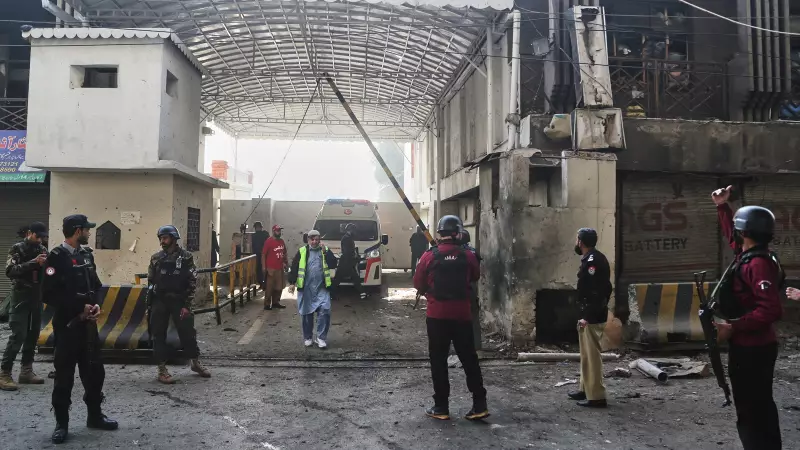
A tragic and violent incident has struck a critical public health initiative in Pakistan, resulting in the deaths of five individuals. A team dedicated to administering polio vaccines was targeted in a brutal armed attack in the country's northwest, marking a severe blow to ongoing eradication efforts.
Details of the Deadly Assault
The attack occurred on a Tuesday in the Khyber Pakhtunkhwa province, specifically within the Tank district. According to local police officials, unidentified gunmen on motorcycles opened fire on the polio vaccination team as they were conducting their vital work. The ambush was swift and deadly.
The attack resulted in five fatalities. Among the dead were four dedicated members of the vaccination team. A young child, reportedly accompanying one of the health workers, was also killed in the assault. Initial reports confirm that two other individuals sustained injuries during the attack.

Context and Immediate Aftermath
This is not an isolated incident in Pakistan's long and challenging battle against polio. Health workers involved in vaccination drives, particularly in regions like Khyber Pakhtunkhwa, have frequently faced threats and violence. Militant groups have historically spread misinformation, claiming the vaccination campaigns are a Western plot, which has led to a dangerous environment for frontline workers.
Following the attack, a large contingent of police and security forces rushed to the scene. The area was cordoned off as authorities launched a search operation to apprehend the assailants. No group has immediately claimed responsibility for the killings, leaving the motive under investigation, though the pattern points to anti-vaccination militancy.
Impact on Global Polio Eradication
Pakistan and Afghanistan remain the only two countries in the world where the wild poliovirus is still endemic. Attacks like this one severely hamper national and global efforts to wipe out the crippling disease. Vaccination campaigns are often suspended in the aftermath of such violence for security reasons, leaving thousands of children unprotected and allowing the virus to spread.
The killing of health workers creates an atmosphere of fear, making it increasingly difficult to recruit and retain staff for these essential door-to-door campaigns. This latest tragedy underscores the immense risks taken by these brave individuals who work on the frontlines of public health.
International health bodies, including the World Health Organization (WHO) and UNICEF, have consistently supported Pakistan's polio eradication program. However, security for health workers remains the paramount and most challenging obstacle to achieving the goal of a polio-free Pakistan and, ultimately, a polio-free world.