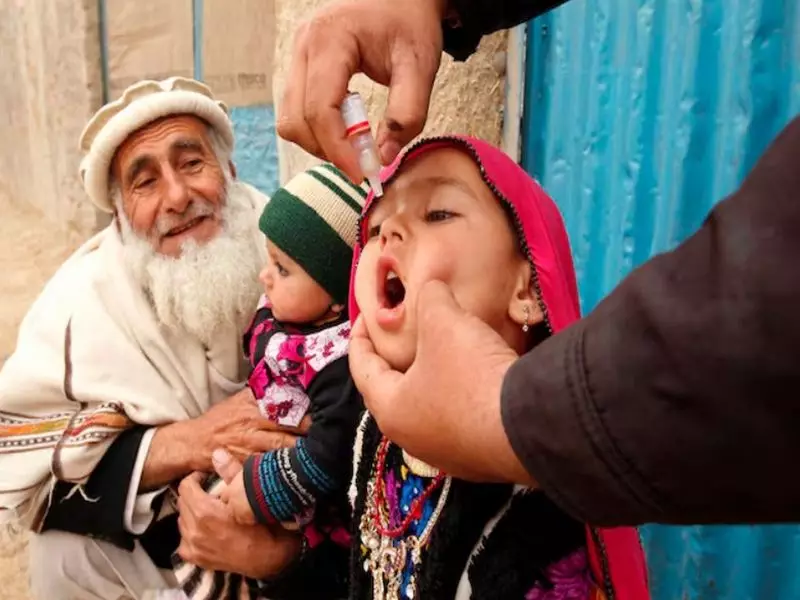
KABUL: Afghanistan's fragile healthcare system faces renewed pressure as health authorities confirm the country's ninth polio case of 2025, this time emerging from the volatile Uruzgan province. This latest detection underscores the persistent threat of the debilitating disease in regions plagued by security instability and limited medical access.
The confirmed case involves a young child from Uruzgan, a southern province where militant activities and geographical isolation have consistently hampered vaccination campaigns. Health officials express particular concern as this represents a significant setback in what was hoped to be the final chapter of polio eradication in Afghanistan.
Security Challenges Cripple Vaccination Efforts
"The ongoing security situation remains our biggest obstacle," revealed a senior health ministry official, speaking on condition of anonymity. "In areas like Uruzgan, our vaccination teams cannot reach children consistently due to safety concerns and movement restrictions."

The Taliban's takeover in 2021 initially raised hopes for improved health access, but reality has proven more complex. While the current administration has officially supported polio eradication, ground-level implementation faces numerous hurdles:
- Armed conflicts restricting movement of health workers
- Cultural resistance and vaccine misinformation in remote areas
- Limited infrastructure and healthcare facilities in rural provinces
- Economic crisis affecting both resources and community cooperation
Regional Disparities in Polio Eradication
Neighbouring Pakistan, which shares similar eradication challenges, has reported only two polio cases this year, highlighting Afghanistan's disproportionate struggle. Health experts attribute this disparity to Afghanistan's more severe security situation and deeper infrastructure deficiencies.
"When vaccination teams cannot access children for months at a time, we create immunity gaps that the virus exploits," explained a WHO representative monitoring the situation. "Each missed child represents a potential link in the transmission chain."
Global Eradication Goals at Risk
The recent cases threaten global polio eradication targets, with Afghanistan and Pakistan remaining the last two countries where wild poliovirus remains endemic. International health organizations have redoubled efforts, implementing:
- Emergency vaccination campaigns in accessible districts
- Community engagement programs to build trust
- Cross-border coordination with Pakistani health authorities
- Alternative delivery methods for hard-to-reach areas
"Every child deserves protection from this preventable disease," the health ministry statement emphasized. "We are committed to overcoming these challenges, but we need sustained international support and improved security conditions to reach every last child."
As the world watches, Afghanistan's battle against polio continues to be as much about geopolitics and security as it is about medicine and public health.