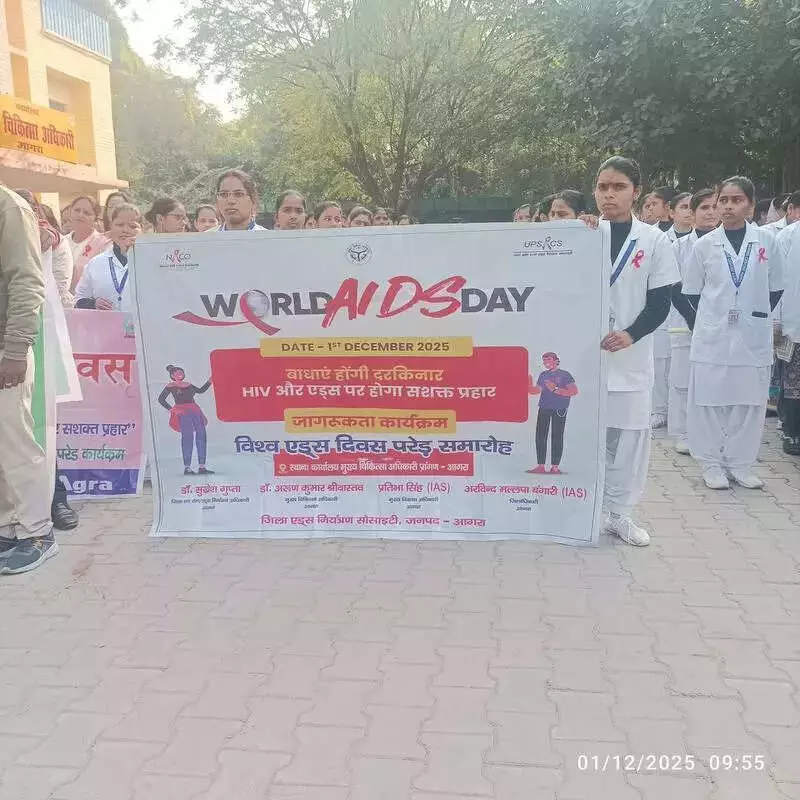
The Agra health department marked World AIDS Day with a significant awareness parade, rallying the community under the theme "Removing Barriers, Empowering the Fight Against HIV." The event placed a strong emphasis on the critical need for Tuberculosis (TB) preventive medication for individuals living with HIV.
Community Unites for a Vital Cause
Held on the premises of Chief Medical Officer Dr. Arun Kumar Srivastava's office, the parade witnessed robust participation from over 300 individuals. The gathering represented a cross-section of community health and service, including ANM trainee students, volunteers from the National Service Scheme (NSS) and National Cadet Corps (NCC), counsellors, ASHA workers, and representatives from several non-governmental organizations.
Key participating NGOs included Jan Chetna Seva Samiti, Panchsheel Welfare Society, Agra Positive Welfare Society, and Chetna Society. This collective presence underscored the widespread commitment to combating HIV stigma and spreading essential knowledge.

A Call to Action from Health Authorities
Addressing the participants, Dr. Arun Kumar Srivastava reiterated the importance of World AIDS Day, observed globally every December 1. He stated that the day serves as a powerful reminder to strengthen awareness, protect the rights of HIV-positive individuals, and reinforce worldwide efforts against the disease.
Dr. Srivastava delivered a crucial public health message, highlighting that TB remains one of the gravest threats to people living with HIV. "HIV weakens the immune system, drastically increasing vulnerability to TB, which is a serious lung infection that can turn life-threatening if left untreated," he explained.
He issued a clear directive: "Every HIV patient must take TB-preventive medication for six months." This preventive therapy, he stressed, is non-negotiable for safeguarding the health and lives of HIV-positive individuals.
The Global and Local Context of HIV/AIDS
World AIDS Day represents a global movement uniting people in the fight against HIV and AIDS. Communities worldwide have stood together on this day since 1988 to demonstrate strength and solidarity against the stigma associated with HIV and to remember the lives lost to the pandemic.
The statistics presented are sobering. Globally, an estimated 38 million people are living with the virus. Over the past four decades, more than 35 million people have died from HIV or AIDS-related illnesses, cementing its status as one of history's most destructive pandemics.
The Agra event, by focusing on the intersection of HIV and TB, addressed a key local and national health priority, empowering frontline workers and volunteers with knowledge to take back to their communities.