

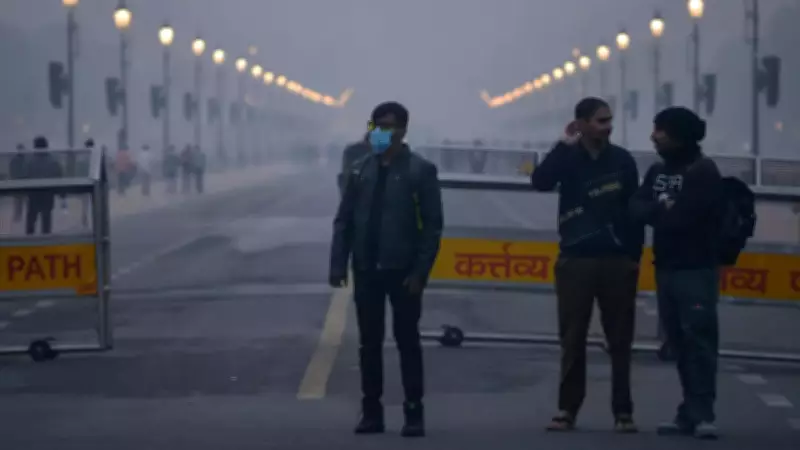
Government Ministries Present Starkly Different Views on Air Pollution Mortality
In a revealing policy contradiction at the heart of India's public health and environmental response, two key government ministries have offered completely different answers to a critical question: Is air pollution directly causing deaths in India? The Ministry of Environment, Forest and Climate Change (MOEFCC) and the Indian Council of Medical Research (ICMR) under the health ministry have presented conflicting data that exposes significant gaps in the government's approach to this pressing national issue.
Parliamentary Response Denies Direct Correlation
On Thursday, MOEFCC told Parliament there was "no conclusive data in the country to establish direct correlation of deaths exclusively due to air pollution." This statement came in response to a Rajya Sabha question about the National Clean Air Programme, deaths caused by chronic pulmonary diseases, and whether air pollution constitutes a national health crisis.
The ministry further emphasized that PM10 levels had actually decreased in several cities following the implementation of the clean air programme, suggesting progress in pollution control measures. This position directly contradicts mounting scientific evidence and creates confusion about the severity of India's air quality crisis.

ICMR's RTI Response Cites 12.4 Lakh Deaths
Just two days before MOEFCC's parliamentary statement, ICMR provided a dramatically different assessment through an RTI response to environmental activist Amit Gupta. The medical research body stated that 12.4 lakh deaths in India during 2017 were attributable to air pollution, representing 12.5% of all deaths that year.
The RTI response clarified that these death estimates were not anecdotal but derived from rigorous modeling-based research developed in collaboration with the Public Health Foundation of India and the Institute for Health Metrics and Evaluation. These findings were published in 2018 in the prestigious international medical journal, The Lancet Planetary Health, as part of the Global Burden of Disease study.
Detailed Breakdown of Pollution-Related Mortality
According to the ICMR response, the research titled 'The impact of air pollution on deaths, disease burden, and life expectancy across the states of India: the Global Burden of Disease Study 2017' revealed specific details about air pollution mortality:
- 1.24 million deaths in India in 2017 were attributable to air pollution
- 0.67 million deaths resulted from ambient particulate matter pollution
- 0.48 million deaths were caused by household air pollution
- 51.4% of these pollution-attributable deaths occurred in people younger than 70 years
This comprehensive study provides strong scientific backing for the connection between air pollution and premature mortality, making the environment ministry's denial particularly puzzling to public health experts.
Environmental Activist Expresses Concern
"Both central ministries have completely different viewpoints, which is concerning given the crisis," said Amit Gupta, the environmental activist who filed the RTI application. This contradiction between government agencies responsible for public health and environmental protection creates confusion about the severity of the problem and potentially hampers effective policy implementation.
Delhi's Rising Respiratory Deaths Highlight Urgency
Adding urgency to this debate, recent government data shows Delhi has witnessed a steady increase in deaths due to respiratory diseases over the past three years. The national capital recorded:
- 9,211 deaths due to respiratory diseases in 2024
- This represents a significant increase from 7,432 respiratory deaths in 2022
While circulatory or cardiovascular diseases remained the top cause of death in Delhi, claiming 21,262 lives in 2024, the rising trend in respiratory fatalities directly correlates with periods of severe air pollution in the region. This pattern suggests a strong connection between deteriorating air quality and public health outcomes, despite the environment ministry's claims to the contrary.

Policy Implications of Contradictory Data
The stark divergence between these two government bodies raises serious questions about:
- Policy coordination between health and environment ministries
- Scientific consensus informing government decisions
- Transparency in communicating health risks to the public
- Resource allocation for pollution control measures
- Effectiveness of existing clean air initiatives
This contradiction comes at a time when India faces increasing international scrutiny for its air quality challenges and when citizens across northern states endure hazardous pollution levels during winter months. The lack of unified government messaging on this critical public health issue could undermine both domestic confidence in environmental policies and international credibility in addressing climate and health concerns.
The conflicting positions highlight the need for greater inter-ministerial coordination, more transparent data sharing, and a unified scientific approach to addressing what many experts consider one of India's most pressing public health emergencies.





