

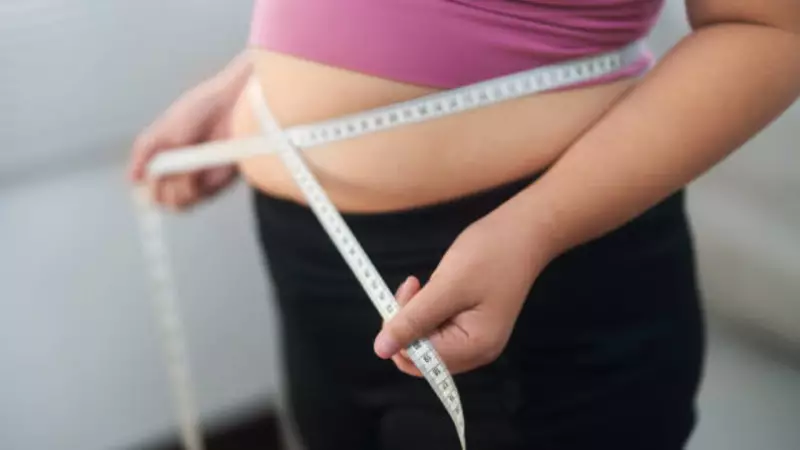
A leading endocrinologist has issued a stark warning, highlighting that excess belly fat is far more than a cosmetic concern. It serves as a powerful and easily measurable predictor for serious health conditions like fatty liver disease and type 2 diabetes, especially for the Indian population.
Why Belly Fat is a Critical Health Marker
According to Dr. Anshu, Senior Consultant in Endocrinology & Diabetes at Max Smart Super Speciality Hospital, Saket, abdominal fat, or central obesity, is a key component in diagnosing metabolic syndrome. This visceral fat, which surrounds internal organs, acts as an active tissue. It triggers an increase in inflammatory markers and free fatty acids. These fatty acids travel to the liver, where they cause inflammation, get stored, and can lead to liver damage, scarring, and fibrosis over time.
How to Measure Your Risk: Guidelines for Indians
Measuring belly fat is straightforward: use a tape measure around your waist, just above the hip bones. While global benchmarks exist, Indian-specific guidelines are stricter due to a higher inherent risk profile.

For Indian men, a waist circumference exceeding 90 centimetres (approximately 35.4 inches) is considered abnormal and risky. For Indian women, the danger threshold is 80 centimetres (about 31.5 inches). This is lower than the common international standards of 102 cm for men and 88 cm for women, as recommended by the Indian Council of Medical Research (ICMR).
This stricter standard exists because Indians often exhibit a "lean fat phenotype," meaning they can develop metabolic diseases like diabetes or fatty liver at a lower Body Mass Index (BMI) compared to Western populations. Consequently, even a small increase in waist size can significantly elevate health risks.
The Direct Link to Liver Disease and Diabetes
Research indicates a strong correlation between waist size and fatty liver. Every 5-centimetre increase in waist circumference can raise the risk of fatty liver by up to 20%. The positive news is that lifestyle intervention works; reducing waist size through diet and exercise can decrease liver fat by 30% to 50%.
The mechanism linking belly fat to diabetes is insulin resistance. The inflammatory markers and fat deposits caused by visceral fat impair insulin's function. To assess diabetes risk, the waist-to-hip ratio is an even stronger tool than waist circumference alone. It is calculated by dividing your waist measurement by your hip measurement (taken at the widest part of the buttocks).
An abnormal ratio is more than 0.90 for men and more than 0.85 for women. Studies show that a mere 0.01 increase in this ratio can significantly raise diabetes risk, correlating with higher fasting blood glucose and HbA1c levels.
Timely Action Can Reverse the Risk
The underlying pathways for fatty liver and diabetes are closely intertwined. The key takeaway is that timely intervention is crucial. Noticing a change in your belt size or a few extra kilograms should be a wake-up call, as it indicates a rising risk for both conditions.
The empowering message from experts is that these risks are largely modifiable. Aggressive and consistent lifestyle changes aimed at reducing belly fat can substantially lower the threat of developing fatty liver disease and type 2 diabetes. Monitoring simple metrics like waist circumference and waist-to-hip ratio provides a valuable, clinical tool for safeguarding long-term health.






