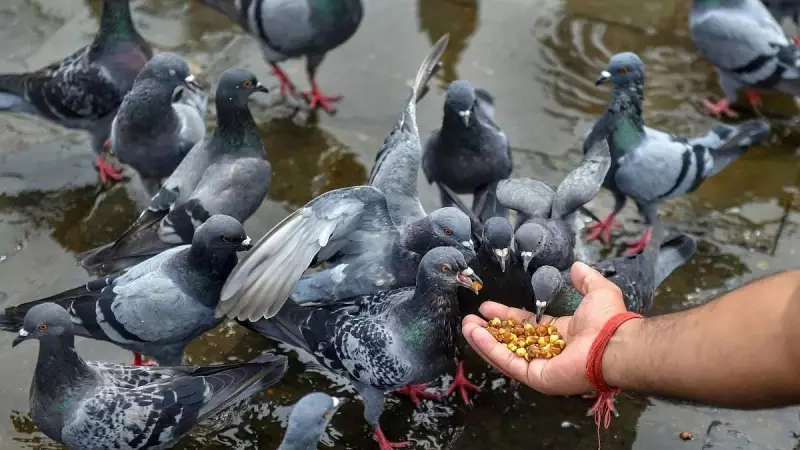
The Health Department in Bengaluru has issued a significant directive to the Greater Bengaluru Authority (GBA), calling for the creation of specific, designated areas for feeding pigeons. This move aims to tackle growing public health concerns linked to close contact with the birds and their droppings.
Health Risks Prompt Official Action
The advisory, dated 17 December 2025, underscores serious medical findings. Health authorities report that proximity to pigeons and their excrement can be injurious to respiratory health. The primary concern is the potential to cause hypersensitivity pneumonia, a condition where the lungs become inflamed due to an allergic reaction to inhaled organic dust. Other chronic lung issues are also associated with prolonged exposure.
The Call for Controlled Feeding Zones
Instead of a blanket ban, which is often difficult to enforce culturally, the health department's solution is to manage the practice. By establishing designated places for pigeon feeding, the GBA can centralize the activity. This strategy seeks to minimize widespread public exposure to allergens found in droppings and feathers, thereby reducing the community health risk while respecting local customs.

Implications for Bengaluru's Urban Management
This directive places a new responsibility on the city's civic body. The GBA must now identify suitable locations that do not compromise public spaces or air quality. The success of this initiative hinges on public awareness and cooperation. The goal is clear: to allow for the cultural practice of feeding pigeons to continue, but in a manner that safeguards the respiratory well-being of all Bengaluru residents. The announcement made on 16:45 IST marks a formal step towards balancing urban wildlife interaction with modern public health priorities.