

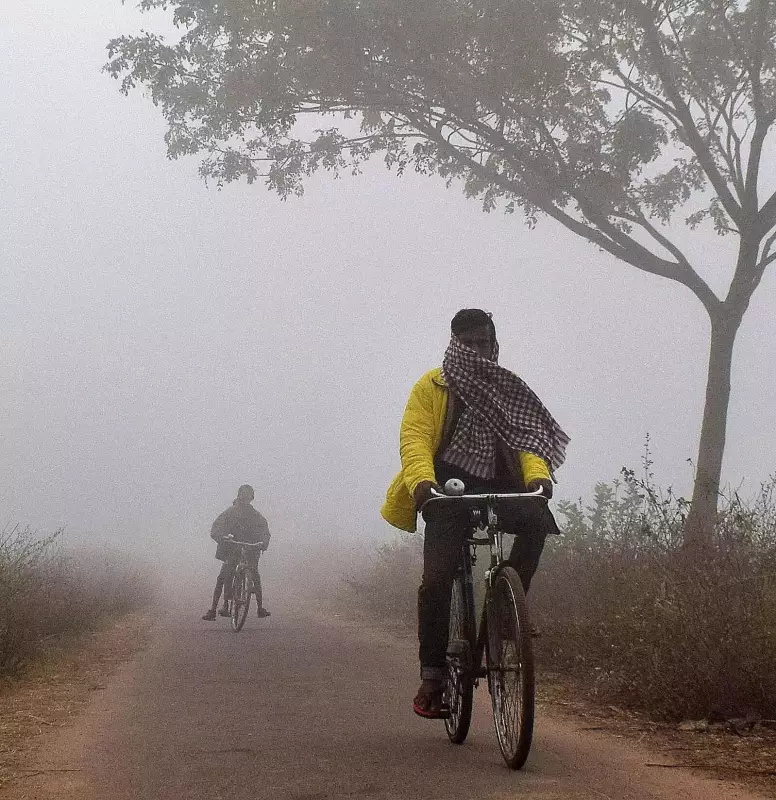
Odisha continued to grapple with intense winter conditions on Thursday, as the state capital Bhubaneswar recorded its coldest January day in the past 14 years. The mercury plunged to a low of 9.4 degrees Celsius, sending a shiver across the region and disrupting daily life.
Record-breaking Chill Grips the Capital
According to the India Meteorological Department (IMD), Thursday's minimum temperature of 9.4°C in Bhubaneswar marked a significant departure from the norm, being a sharp 5.6°C below the average for this time of year. This comes just a day after the city experienced 10.2°C, which was itself the coldest January day in seven years. The IMD report highlighted that this is the lowest January temperature for the capital since January 15, 2012, when it had touched 9.3°C.
The all-time lowest temperature ever recorded in Bhubaneswar remains 8.2°C on December 30, 2018, while the coldest January day on record is 8.6°C from January 5, 1992. The neighbouring city of Cuttack was not far behind, recording a minimum of 9.6°C, which was 3.9°C below normal.

Statewide Coldwave Conditions and IMD Warning
The chill was not confined to the urban centres. The hill station of G Udayagiri in Kandhamal district became the season's coldest spot in the state so far, with the mercury dropping to a frigid 2.5°C. Semiliguda in Koraput district followed at 3.2°C. Jharsuguda town recorded 5.8°C, witnessing the day's highest departure from normal at 6°C.
An official report stated that night temperatures in 24 towns and cities across Odisha hovered below 10°C in the early morning. Coldwave conditions were officially declared in Khurda, Jagatsinghpur, Angul, and Jharsuguda districts.
The IMD has forecast no large change in the prevailing conditions for the next two days and has issued a coldwave warning for 11 districts: Jharsuguda, Sundargarh, Jagatsinghpur, Cuttack, Khurda, Balasore, Angul, Dhenkanal, Kalahandi, Kandhamal, and Nabarangpur.
Impact on Daily Life and Weather Outlook
The intense cold spell made life difficult, particularly for the underprivileged sections of society. Many people preferred to stay indoors until late in the morning. A common sight across several areas was people huddling around bonfires to seek warmth. Public spaces like parks, gardens, and jogging tracks saw a noticeable drop in visitors, with many regular morning walkers choosing to remain indoors.
Providing some hope of respite, Manorama Mohanty, Head of the regional IMD centre, said night temperatures are expected to rise by 2°C to 3°C after two days. However, former director of the regional IMD centre, Sarat Sahu, indicated that this rising trend might continue only until January 11, after which another dip in temperature is likely. He attributed the current cold spell to radiational cooling and supportive wind patterns.






