

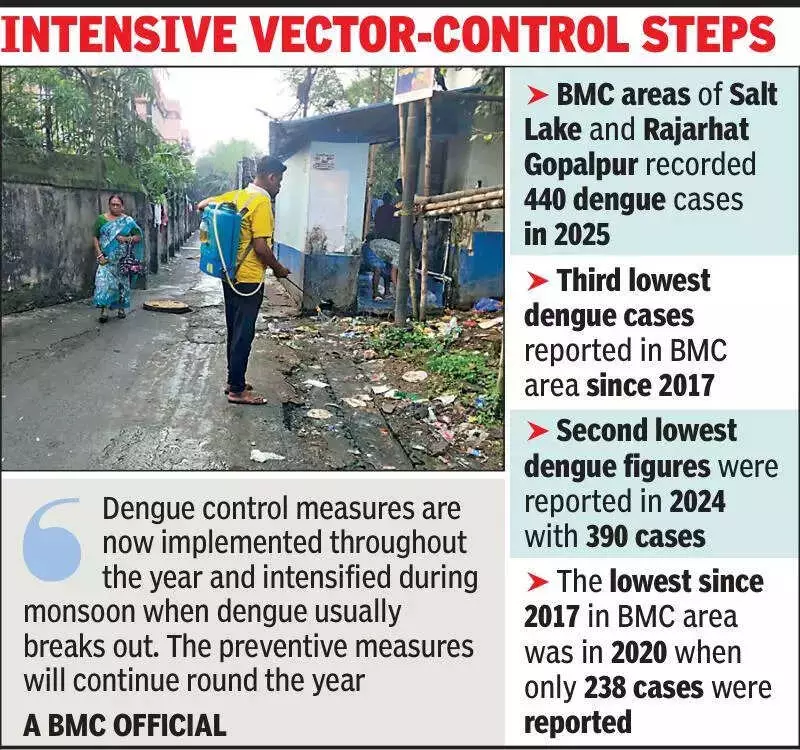
In a significant public health achievement, the areas under the Bidhannagar Municipal Corporation (BMC) in Kolkata have recorded a substantial and sustained decline in dengue cases over the last two years. The civic body's data reveals that 2024 and 2025 rank as the second and third lowest years for dengue incidence, respectively, within a nine-year span dating back to 2017.
A Comparative Look at the Dengue Numbers
The year 2025 concluded with a total of 440 reported dengue cases across Salt Lake and Rajarhat-Gopalpur, securing its position as the third-lowest year since 2017. This follows the trend set in 2024, which saw 390 cases and was the second-lowest. The record for the lowest number remains with the year 2020, which reported only 238 cases.
This positive trend marks a stark contrast to the severe outbreaks witnessed in the immediate preceding years. The period of 2022 and 2023 were the worst-affected, with a staggering 4,222 and 3,956 people affected by dengue in the BMC area, respectively.

Shift from Clusters to Isolated Cases
Civic officials highlighted a crucial change in the pattern of disease spread. Unlike the clustered outbreaks across localities like Salt Lake, Kestopur, and Baguiati in 2022-23, the last two years saw a more scattered and controlled scenario. In most of BMC's 41 wards, only one or two dengue cases were reported per week.
The most significant exception occurred in November 2024, with a major outbreak at an orphanage in Salt Lake's BK Block. Of the 102 cases reported in October that year, 40 originated from this single location. The civic authorities responded swiftly with an intensive cleaning drive and medical camps, containing the situation within weeks.
Proactive Measures Behind the Success
BMC officials attribute the encouraging numbers to intensified, year-round dengue control measures. The strategy moved beyond reactive spraying to a comprehensive preventive approach.
The key initiatives included:
- Regular larvicide spraying in vulnerable areas.
- Extensive door-to-door awareness and inspection campaigns.
- Large-scale cleanliness drives to eliminate breeding grounds.
- A biological control method: releasing guppy fish in water bodies and canals to naturally prey on mosquito larvae.
- Issuing notices to state and central government offices, urging them to maintain clean premises.
"Dengue control measures are now conducted throughout the year and are intensified during monsoon. The preventive measures will continue round the year," affirmed a BMC official.
Challenges and Continued Vigilance
Despite the overall decline, the year was not without serious incidents. The BMC area reported one dengue death in 2025. A 15-year-old resident of the ESI housing complex opposite Purbachal in Salt Lake succumbed to the disease in October. This tragedy prompted the formation of special fever surveillance teams and intensified door-to-door visits across Salt Lake and Rajarhat-Gopalpur.
Furthermore, a late surge of 122 cases in November 2025 served as a reminder of the virus's persistence, making it the highest single-month tally for that year. To combat this and ensure accessibility, BMC provided free medical consultations, medicines, and dengue tests at urban primary health centers throughout its jurisdiction.
The consistent efforts over the past two years demonstrate a model of sustained civic action that has successfully curbed a major vector-borne disease, offering a blueprint for other urban areas grappling with similar public health challenges.






