

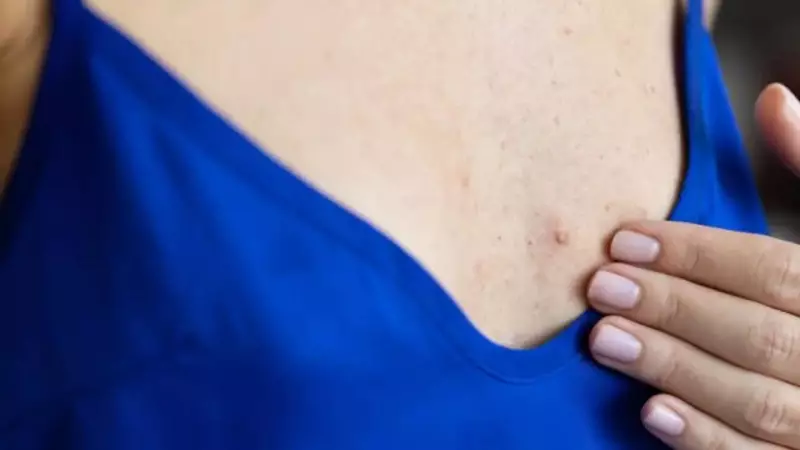
Breast cancer remains a formidable global health challenge, touching millions of lives every year. It holds the grim distinction of being the most common cancer among women worldwide, and its prevalence shows no signs of declining. In the year 2022 alone, the disease accounted for a staggering 2.3 million new diagnoses and led to 670,000 deaths. As global life expectancy increases, these alarming figures continue their upward trajectory.
The Critical Power of Early Detection
The silver lining in this daunting scenario is the proven effectiveness of early detection. Identifying breast cancer in its initial stages dramatically improves the chances of successful treatment and survival. This fundamental truth places immense importance on regular self-awareness and examination of one's own breasts. While discovering a lump can be frightening, it's vital to remember that most breast lumps are not cancerous. They are frequently benign conditions like cysts or normal tissue variations. However, any new, persistent, or unusual change should never be ignored, as personal vigilance is the first critical step toward early medical intervention.
It is essential to clarify that breast self-examination is not a substitute for professional medical screening, such as clinical exams or mammograms. Instead, its primary value lies in fostering a deep familiarity with your own body's normal landscape. This knowledge empowers you to recognize subtle deviations promptly and seek expert advice without delay. A thorough self-check involves more than just feeling for a lump; it requires a mindful assessment of several key factors.

Key Questions to Guide Your Self-Examination
When you notice a change in your breast tissue, ask yourself these four crucial questions to better understand the situation.
1. Is This Lump New or Unfamiliar?
Begin by determining if the lump or area of thickening is something you have never felt before. Breasts naturally have lumpy textures, and many women have benign, "normal" lumps. However, a brand-new formation, or one that persists through your menstrual cycle, warrants attention. Cancerous lumps often present as hard, firm masses that feel distinct from the surrounding tissue. Any novel or odd sensation deserves a professional evaluation.
2. What is the Texture and Mobility of the Lump?
Gently assess how the lump feels. Is it hard or soft? Does it move freely under the skin, or is it fixed in place? Typically, malignant lumps tend to be firmer, may have irregular or jagged edges, and often do not move when pressed. In contrast, many harmless cysts feel smooth and can roll under your fingers. Regardless of texture, never attempt self-diagnosis. Even a soft or painless lump can be serious, making a doctor's consultation imperative for any new finding.
3. Are There Other Visual or Physical Changes?
Shift your focus beyond the lump itself. Examine the skin and nipple on the affected breast. Look for dimpling, redness, or a texture resembling an orange peel. Observe if the nipple is retracting inward, becoming scaly, or discharging fluid. Also, note any unexplained change in the size or shape of one breast compared to the other. While these signs can be associated with cancer, they may also stem from other conditions. Document all changes and discuss them with your healthcare provider.
4. Has the Lump Evolved Over Time?
Monitor any new lump over a few weeks. Is it gradually growing larger, becoming harder, or more pronounced? If a lump persists for more than a month, or is accompanied by localized pain unrelated to your menstrual cycle, it is time to schedule a doctor's visit. Although pain is not a definitive indicator of cancer, persistent discomfort in a specific area should not be dismissed.
Taking Action: The Next Steps
If a lump raises concern due to its newness, firmness, changing nature, or association with skin or nipple changes, act promptly. Do not adopt a wait-and-watch approach. Book an appointment with a doctor at the earliest opportunity. The physician will conduct a clinical examination and, if necessary, recommend diagnostic tests such as a mammogram, ultrasound, or a biopsy to determine the exact nature of the abnormality.

The overarching message is one of proactive hope. While the majority of breast lumps are benign, the life-saving potential of early detection cannot be overstated. It opens the door to more treatment options and significantly better outcomes. By knowing your body, trusting your instincts, and overcoming hesitation to seek medical advice, you take powerful control of your health. Remember, you are the foremost expert on your own body.





