

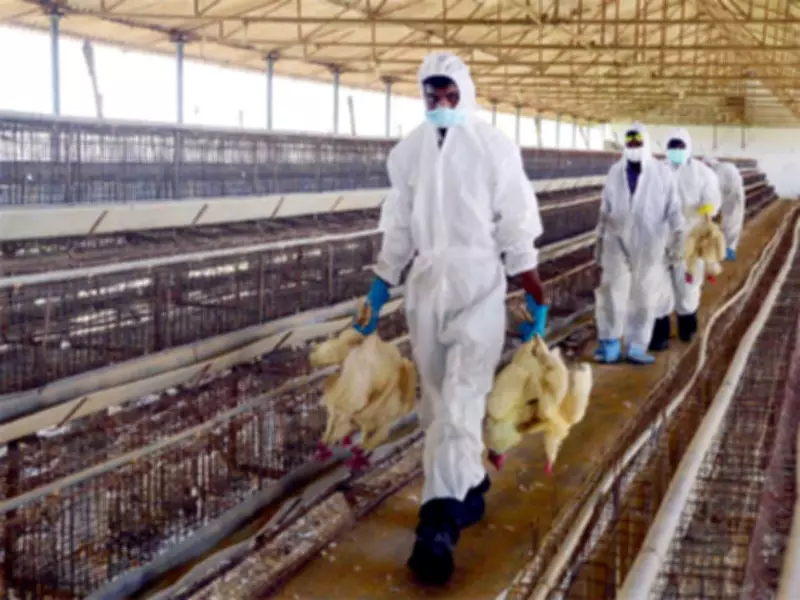
Central Expert Team Launches Ground Assessment of Chhattisgarh Bird Flu Outbreak
The central government has intervened in the avian influenza outbreak affecting Bilaspur district in Chhattisgarh. A multi-disciplinary team of specialists has initiated a comprehensive ground-level evaluation as ongoing containment protocols continue to severely disrupt the regional poultry industry, with expectations of prolonged restrictions.
Expert Inspection of Key Facilities and Containment Zones
A four-member delegation from the All India Institute of Medical Sciences (AIIMS) and the National Centre for Disease Control (NCDC) conducted detailed inspections on Monday and Tuesday. The team examined critical locations including the collectorate control room established for bird flu management, the Chhattisgarh Institute of Medical Sciences (CIMS) hospital, and the government poultry farm in Koni.
It was at the Koni farm where avian influenza, specifically the H5N1 strain, was officially confirmed last month following reports of extensive poultry fatalities. The outbreak was initially detected between March 19 and 24, prompting immediate action from authorities.

Containment measures implemented include:
- Culling of infected birds to prevent further spread
- Comprehensive disinfection campaigns across affected areas
- Strict movement restrictions within designated zones
- Destruction of contaminated materials including hatchlings, feedstock, and other potentially infectious substances
Officials have established both an infected zone and a broader surveillance perimeter to contain the outbreak and prevent potential spillover into neighboring regions.
Healthcare Preparedness and Human Safety Protocols
The central team meticulously reviewed healthcare readiness at CIMS hospital, assessing critical infrastructure including microbiology laboratory capabilities, isolation ward facilities, ventilator support systems, and overall bed capacity. Hospital records of patients presenting with suspected symptoms were thoroughly scrutinized as part of the evaluation.
Authorities report that no human infections have been confirmed to date. Samples collected from farm workers and other individuals who had contact with infected poultry have returned negative results for the H5N1 virus, providing temporary relief amid the ongoing crisis.
Expanded Surveillance and Economic Consequences
On Tuesday, surveillance operations expanded beyond the initial epicenter of the outbreak. Health screening initiatives and sample collection procedures are now underway in multiple villages within a 10-kilometer radius, including Akaltari, Khaira, and Nagoi. Public health teams are also engaging with residents in nearby urban localities to monitor for potential symptoms and evaluate exposure risks within the community.
The district administration has enforced a comprehensive ban on the sale, purchase, and transportation of all poultry products within the officially restricted zone, with continuous monitoring extending to surrounding areas.
The economic impact has been severe:
- More than 200 chicken shops in and around Bilaspur remain forcibly closed
- Hundreds of families dependent on the poultry trade face significant livelihood disruption
- Poultry traders and shop owners have organized protests, submitting formal memorandums requesting permission to resume business operations
The Bilaspur Poultry Association has emphasized its compliance with all government directives while noting that health examinations of workers in affected areas have not revealed any infections thus far. The association has additionally proposed relocating the government poultry farm away from densely populated urban areas to mitigate future outbreak risks.
Official Response and Future Considerations
District Collector Sanjay Agrawal has acknowledged the concerns raised by poultry traders, assuring them that their grievances are under active consideration. However, he clarified that any decision regarding the relaxation of current restrictions would be contingent upon the findings and recommendations contained in the central expert team's assessment report.

While the Kanan Pendari zoo has reopened following implementation of precautionary sanitization measures, authorities maintain that public health protection remains the paramount priority. With surveillance activities continuing and economic distress intensifying across the district, Bilaspur now awaits the central government's comprehensive evaluation to determine the appropriate course of action moving forward.





