

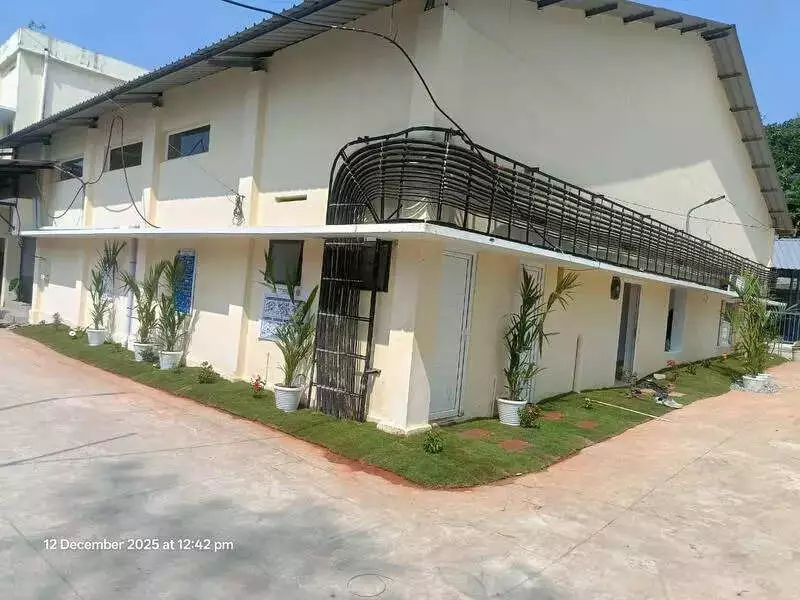
In a significant move to modernize its meat supply chain, the Thiruvananthapuram City Corporation is forging a corporate social responsibility (CSR) partnership with a private company. This collaboration aims to solve long-standing logistical hurdles in transporting livestock to the city's new state-of-the-art slaughterhouse at Kunnukuzhy.
CSR-Funded Vehicles to Ease Logistics
The core of the partnership involves the private company donating two specialised vehicles to the civic body. These vehicles will be used exclusively to transport large animals from local meat traders' shops to the modern abattoir. Corporation officials confirmed that this arrangement is expected to commence in January 2026, once the slaughterhouse is fully operational.
This initiative is a critical step in the city's broader plan to shut down informal and illegal slaughtering sites scattered across Thiruvananthapuram. By providing dedicated transport, the corporation hopes to channel all animal processing through the new, regulated facility, marking a cornerstone in the city's public health and sanitation overhaul.

Awaiting Final Clearance for Modern Abattoir
The Kunnukuzhy abattoir, described as one of Kerala's most sophisticated meat processing units, has been years in the making. With an estimated investment between Rs 10 to 15 crore and technical support from the Kerala Electrical and Allied Engineering Company Ltd, the facility was inaugurated earlier this year. However, it has not yet begun full-scale operations.
Currently, the contractor, MR Farms, is conducting a month-long trial run in coordination with the corporation. Following this assessment, the facility must obtain its final operational clearance from the Kerala State Pollution Control Board (KSPCB). Corporation Secretary Jahamgeer S expressed optimism for a mid-January launch, stating that the trial run was successful and that a chilling unit is already in place at the site.
Balancing Modernization with Trader Concerns
Once fully functional, the abattoir will feature modern infrastructure including effluent treatment plants, biogas units, chilling rooms, and odour control systems. It is designed to process 50-75 large animals and up to 50 small animals daily. This facility is the first of its kind in the state capital, intended to replace the unregulated slaughter that proliferated after the old corporation-owned slaughterhouse was closed in 2012 due to environmental violations.
To ensure adoption, the corporation has held stakeholder meetings with local butchers and meat traders, urging them to use the new system and the dedicated transport. The civic body charges a slaughtering fee of Rs 1,500 for large animals and Rs 300 for small animals.
However, the transition faces challenges. Some meat traders have voiced concerns that the new fee structure, combined with potential transport charges, could increase retail meat prices. The corporation acknowledges these economic realities for small business owners and reports that discussions are ongoing to address these concerns while steadfastly pursuing its public health goals.






