

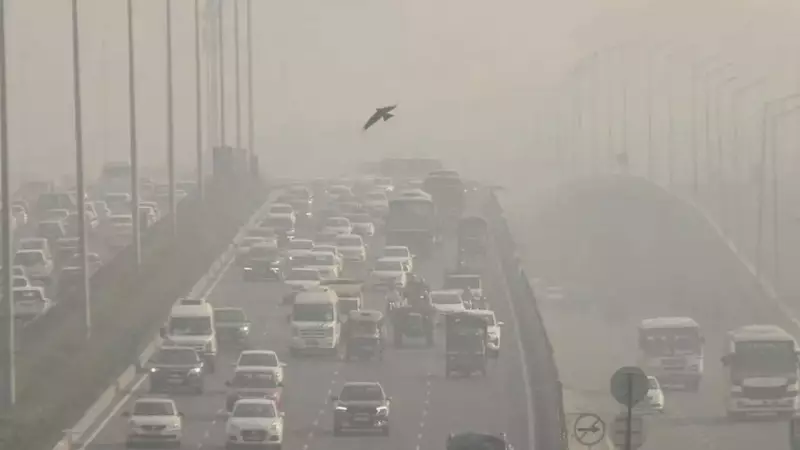
A new report has laid bare the severe human and economic cost of Delhi's air pollution crisis, revealing that a staggering 40% of the city's residents are now considering moving out to escape the toxic air. The findings highlight how pollution is no longer just an environmental issue but a fundamental threat to daily life, health, and the future of the capital.
Pollution Reshapes Life and Drives People Away
The report, titled 'Countering Delhi NCR Air Pollution & Aligning Solutions: Clean Air as a Right to Life (Article 21)', was released by the Illness to Wellness Foundation with support from the CII–ITC Centre of Excellence for Sustainable Development. Based on a survey of 17,000 residents, it found that four in every ten people would prefer to relocate due to the health impacts of polluted air.
This desire to leave is just one symptom of a deeper disruption. The report notes that severe smog leads to school closures for 10–15 days each year, disrupting education and putting pressure on families. Footfall in retail, tourism, and hospitality sectors drops significantly, while travel and discretionary spending are suppressed during high-pollution periods.

A Structural, Year-Round Public Health Emergency
Contrary to the perception of pollution being a winter phenomenon, the report stresses that Delhi's crisis is structural and persists throughout the year. Delhi remained the world's most polluted capital in 2023, with Air Quality Index (AQI) levels routinely above 200 and spiking to 300–400 in winter.
The health consequences are devastating. Long-term exposure to fine particulate matter (PM2.5) is estimated to reduce life expectancy in Delhi by 8.2 years. It significantly increases the risk of heart disease, chronic lung illness, and stroke. Doctors are now warning of a rising neurological toll.
Dr. Daljit Singh, Vice Chairman and Head of Neurosurgery at Max Smart Super Speciality Hospital, stated that air pollution has become a major risk factor for stroke, with nearly 17% of global cases linked to polluted air. Hospitals see clear spikes in stroke admissions during high-pollution months, and growing links to dementia, Alzheimer's, and Parkinson's disease are being observed.
Launching the report, Rajesh Bhushan, former Union Health Secretary, emphasized that air pollution must be treated as a core public health issue, as prolonged exposure adds years of chronic illness and reduces productivity.
Economic Cost and the Path Forward
The economic burden is colossal. Nationally, air pollution costs India USD 36.8 billion annually, a figure that balloons to USD 95 billion (about 3% of GDP) when productivity losses and premature deaths are factored in. For Delhi alone, a cited CREA analysis estimates annual losses at a staggering Rs 64,250 crore, or 5.8% of the city's GDP.
The report identifies the primary sources of Delhi's particulate emissions: vehicles (32%), construction and road dust (28%), industry (17%), crop residue burning (9%), thermal power plants (8%), and household sources (6%). These year-round emissions overwhelm short-term emergency measures like the Graded Response Action Plan (GRAP).
Pulmonologist Dr. G C Khilnani of PSRI Hospital described the situation as a man-made public health emergency, where ultra-fine particles silently damage multiple organs. He asserted that real change will come only when society recognizes its role in the crisis.
The report concludes that short-term steps are insufficient. Drawing lessons from cities like London, Beijing, and Singapore, it advocates for lasting clean-air gains through continuous enforcement, clean mobility, and long-term urban planning. Clean air, it stresses, is a basic right under Article 21 of the Constitution, and coordinated action across healthcare, policy, and public awareness cannot wait.






