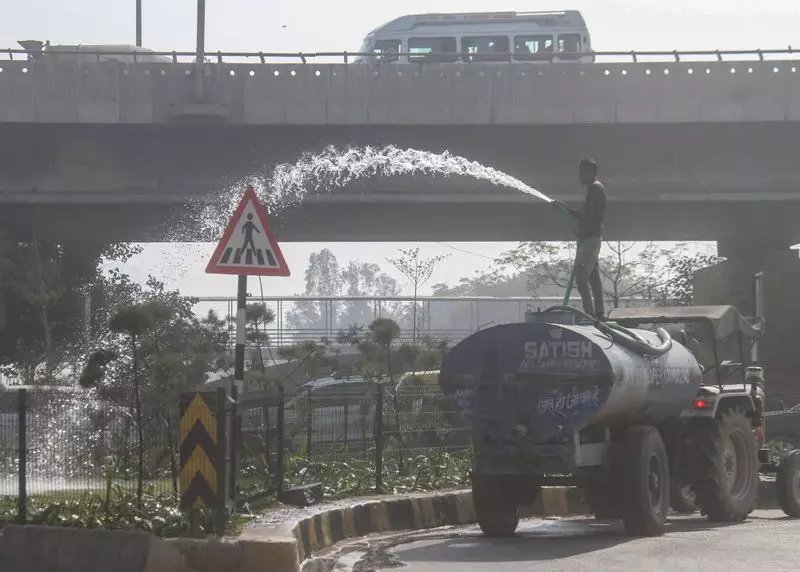
Residents of India's capital breathed a tiny bit easier on Monday as the city's notorious air pollution levels showed a marginal improvement. After a prolonged spell of hazardous air, Delhi's overall air quality index (AQI) shifted from the 'very poor' category into the 'poor' category, according to official monitoring agencies.
Current Air Quality Status and Data
The Central Pollution Control Board (CPCB) recorded the 24-hour average AQI for Delhi at 290 on Monday morning. This figure falls squarely within the 'poor' category, which ranges from 201 to 300 on the national index. The data from the System of Air Quality and Weather Forecasting and Research (SAFAR) was slightly more optimistic, showing an overall AQI of 283 for the city.
This improvement marks a change from the previous day's conditions. On Sunday, the capital's average AQI was lodged in the 'very poor' zone, recorded at 301. The shift, while modest, indicates a positive trend driven by specific meteorological changes.

Meteorological Factors Behind the Change
The primary reason for this slight relief from toxic air is attributed to an increase in wind speed. Meteorologists and pollution monitoring bodies noted that faster winds have helped in dispersing the accumulated pollutants that blanket the city. This natural ventilation is a crucial factor in managing Delhi's winter pollution crisis.
Forecasts from SAFAR suggest that this trend may continue. The agency predicts that air quality is likely to remain in the 'poor' to the lower end of the 'very poor' category over the next few days. The expectation of sustained wind speed offers a glimmer of hope for further dispersion of pollutants.
Neighbouring Cities Still Struggle
While Delhi saw some improvement, the grim reality of the Indo-Gangetic plain's pollution was evident in neighbouring cities. On the same Monday morning, several towns continued to gasp under severe conditions. Ghaziabad recorded an AQI of 338, Greater Noida 314, Gurugram 305, and Noida 303—all firmly in the 'very poor' category. This highlights the regional nature of the air quality crisis, which is not confined to the capital's boundaries.
The AQI scale serves as a critical public health tool. An index between 0 and 50 is considered 'good', 51 to 100 'satisfactory', 101 to 200 'moderate', 201 to 300 'poor', 301 to 400 'very poor', and 401 to 500 'severe'. The shift from 'very poor' to 'poor', therefore, represents a meaningful, though incremental, change for public health.
The improvement, however slight, is a welcome development for Delhi's citizens who have been battling a persistent smog cover. Health experts consistently warn that prolonged exposure to 'very poor' and 'severe' air can lead to significant respiratory and cardiovascular illnesses. The current 'poor' category still advises reduced outdoor activity for sensitive groups, including children, the elderly, and those with pre-existing health conditions.
Authorities continue to monitor the situation closely. The relief offered by the winds is often temporary in the winter months, when calm conditions and low temperatures typically trap pollutants close to the ground. The implementation of the central government's Graded Response Action Plan (GRAP) measures remains in force to combat pollution from local sources like vehicles, dust, and industrial emissions.