

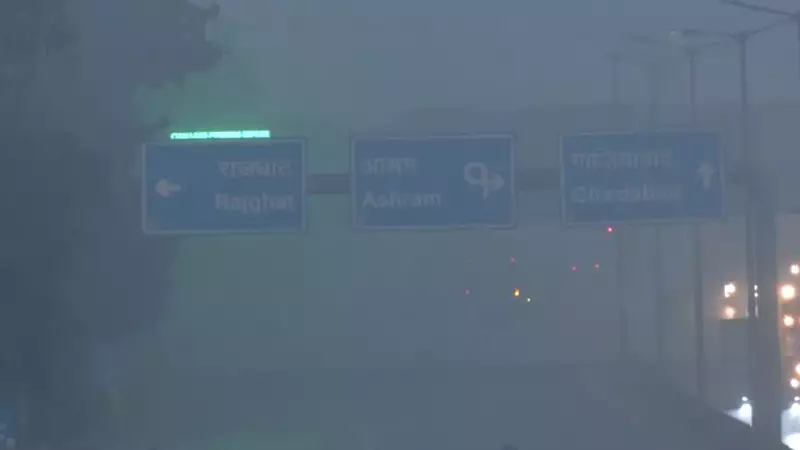
New Delhi continued to gasp for breath on Friday as a toxic blanket of smog enveloped the city, pushing air quality into the 'severe' zone and prompting authorities to roll out the highest level of anti-pollution measures.
Capital Chokes Under 'Severe' Air, Key Areas Worst Hit
The national capital's air quality deteriorated alarmingly, with several monitoring stations recording hazardous levels. According to data from the Central Pollution Control Board (CPCB), the Air Quality Index (AQI) was recorded at a severe 447 in Palam, 442 in Ghazipur, and 409 in ITO. On Thursday, the situation was even more critical in Anand Vihar, which registered a reading of 441, placing it in the 'severe-plus' category.
Out of 40 monitoring stations across Delhi, 15 reported 'severe' pollution levels on Thursday, while 24 others were in the 'very poor' category. The city's average AQI on Friday morning stood at 358, which is classified as 'very poor'.

Emergency Measures and Widespread Disruption
In response to the escalating crisis, the Commission for Air Quality Management (CAQM) has activated all measures under GRAP Stage-IV in Delhi and the National Capital Region (NCR). This represents the highest level of the Graded Response Action Plan.
The hazardous air has been compounded by dense fog, severely disrupting aviation. Flight operations at Delhi's Indira Gandhi International Airport are being conducted under CAT III conditions, leading to significant delays for multiple flights.
Health authorities have issued urgent advisories, urging children, the elderly, and individuals with respiratory or heart conditions to avoid outdoor activities and limit exposure to the polluted air.
What's Polluting Delhi's Air? A Breakdown of Sources
Data from the Decision Support System for Air Quality Management pinpoints the major contributors to the capital's foul air. The analysis reveals:
- Transport is the single largest source, responsible for 18.3% of the pollution.
- Industries in Delhi and nearby areas contribute 9.2%.
- Residential sources account for 4.5%.
- Construction activities add 2.5%.
A significant portion of the pollution is also blowing in from neighbouring NCR districts. Jhajjar contributes 12.3%, followed by Sonipat (8.8%), Rohtak (4.8%), Jind (3.1%), Bhiwani (1.4%), and Gurugram (1.1%). Other sources like waste burning, road dust, and power generation make up smaller percentages.
Grim Forecast: More 'Very Poor' to 'Severe' Days Ahead
The outlook offers little respite. The Air Quality Early Warning System for Delhi forecasts that air quality will remain in the 'very poor' category on Friday and Saturday. Alarmingly, conditions are predicted to worsen further, potentially deteriorating to the 'severe' category by Sunday.
With the city facing a prolonged period of dangerous air, the enforcement of GRAP Stage-IV measures and public adherence to health advisories remain critical for mitigating the impact on millions of residents.






