

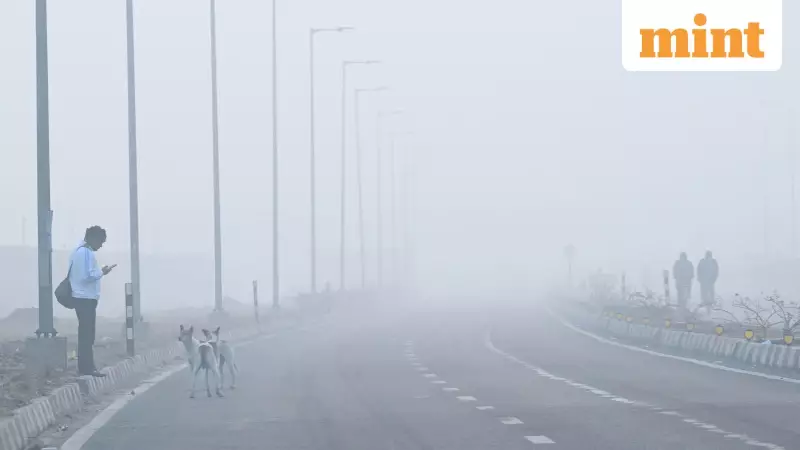
The national capital continued to grapple with hazardous air on Sunday, with pollution levels firmly entrenched in the 'very poor' category. The Central Pollution Control Board (CPCB) recorded an overall Air Quality Index (AQI) reading of 390 for Delhi, indicating a significant health risk to residents.
Local Hotspots Paint a Grimmer Picture
While the city's average was alarming, data from the CPCB's Sameer App revealed an even more critical situation at the local level. As many as 19 AQI monitoring stations across Delhi recorded air quality in the 'severe' category. The Anand Vihar area was the worst affected, with its AQI soaring to a dangerous 457.
The pollution surge marks a reversal from slightly better conditions earlier in the week. After witnessing some improvement on Wednesday and Thursday, air quality began deteriorating again from Friday, with readings nearing the severe threshold. By Saturday morning, the AQI had crossed 300 in many areas, slipping back into the 'Very Poor' category.

Dense Fog and Calm Winds Worsen Conditions
Compounding the pollution crisis is a challenging weather forecast. The India Meteorological Department (IMD) has issued an orange alert for Monday, predicting very dense fog across the capital. This is expected to create difficult commuting conditions for residents.
On Sunday, the humidity level reached 100% at 5:30 PM, contributing to heavy fog and smog formation. Meteorological officials explained that cold weather, calm winds, and dense fog are trapping pollutants close to the ground, leading to persistent haze. The maximum and minimum temperatures for Monday are likely to be around 22 and 7 degrees Celsius, respectively.
Sunday's weather showed a significant gap between day and night temperatures. The city recorded a minimum of 6.3 degrees Celsius, which is 0.5 degrees below the seasonal average. Meanwhile, the maximum temperature settled at 22.5 degrees Celsius, 2.1 notches above the average.
No Immediate Relief in Sight
Forecasts indicate that the poor air quality is likely to persist in the coming days. With the current weather pattern expected to continue, pollutants will remain trapped, leading to sustained 'very poor' air quality. This situation has prompted continued monitoring and calls for stricter pollution-control measures.
To understand the severity, the CPCB classifies AQI as follows:
- 0-50: Good
- 51-100: Satisfactory
- 101-200: Moderate
- 201-300: Poor
- 301-400: Very Poor
- 401-500: Severe
Delhi's current average of 390 and readings like Anand Vihar's 457 underscore the severe public health challenge facing the city's inhabitants.






