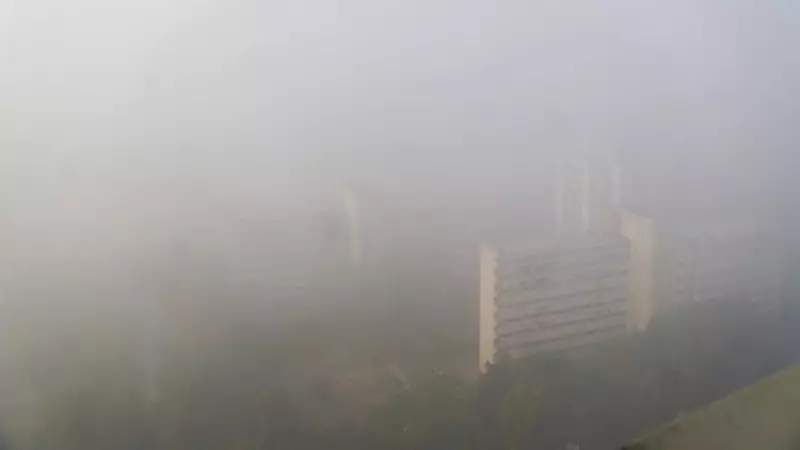
The national capital continued to grapple with hazardous air on Sunday, November 17, as its overall air quality was recorded in the 'Very Poor' category. A persistent layer of haze reduced visibility across the city, painting a grim picture of the ongoing pollution crisis.
AQI Data and Monitoring Agency Reports
According to data from the Central Pollution Control Board (CPCB), the 24-hour average Air Quality Index (AQI) for Delhi stood at 398 at 4 pm. This reading falls squarely within the 'Very Poor' classification, which ranges from 301 to 400. The System of Air Quality and Weather Forecasting and Research (SAFAR) also reported similar conditions, indicating widespread pollution.
Monitoring stations across the city reflected the severity of the situation. Key areas recorded alarming AQI levels. At Anand Vihar, the AQI was a severe 423. The station at IGI Airport (T3) reported an AQI of 413, also in the 'Severe' category. Other notable readings included 402 at RK Puram and 401 at ITO.

Visibility Drops as Haze Blankets the City
The poor air quality had a direct and visible impact on the city's atmosphere. A thick haze lingered over Delhi throughout the day, significantly reducing visibility. This persistent smog disrupted daily life and raised serious health concerns for residents.
Meteorological factors played a crucial role in trapping pollutants close to the ground. Officials noted that calm wind conditions and low temperatures were preventing the effective dispersion of harmful particulate matter. These conditions allowed pollutants to accumulate, leading to the sustained 'Very Poor' and 'Severe' air quality readings.
Ongoing Measures and the GRAP Framework
In response to the deteriorating air, authorities are actively implementing measures under the Graded Response Action Plan (GRAP). This anti-pollution framework mandates specific steps based on AQI levels. For the 'Severe' and 'Very Poor' categories, these actions include intensified efforts to control dust from construction sites, stricter enforcement on garbage burning, and heightened vigilance against industrial emissions.
The situation underscores the critical and recurring challenge of air pollution that Delhi faces every winter. The combination of local emissions, vehicular pollution, and adverse weather patterns creates a perfect storm for hazardous air. Experts continue to urge vulnerable groups, including children, the elderly, and those with respiratory conditions, to limit outdoor exposure and take necessary precautions until the air quality shows significant improvement.