

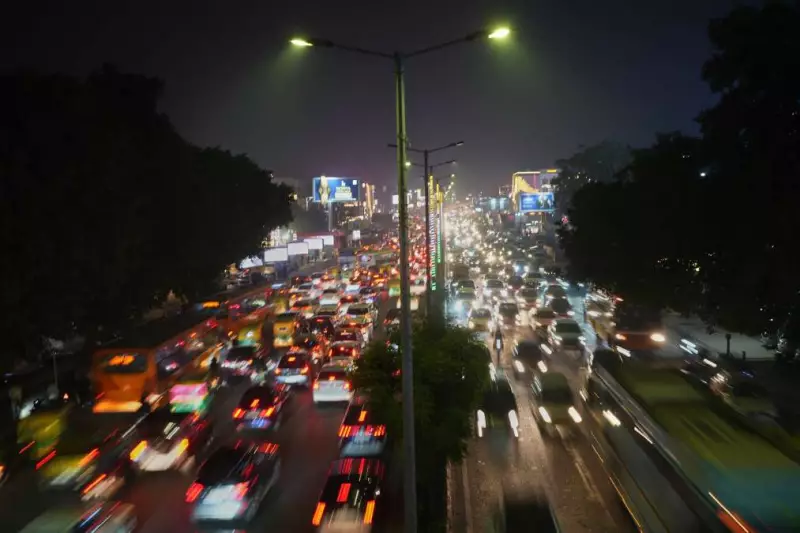
Delhi's air quality has taken a sharp and dangerous turn for the worse, with pollution levels skyrocketing across the national capital. On Friday, December 27, 2024, the Air Quality Index (AQI) breached the critical 400 mark in several key areas, officially pushing the city's air into the 'severe' category. This alarming spike has triggered widespread health concerns and renewed calls for immediate action.
Widespread Deterioration Across the City
Data from the Central Pollution Control Board (CPCB) painted a grim picture of the city's atmosphere. The overall 24-hour average AQI for Delhi was recorded at a hazardous 402. The situation was particularly dire in specific localities. At the IGI Airport (T3) area, the AQI soared to a staggering 463, placing it among the worst-affected zones. Other areas were not far behind, with Nehru Nagar registering 447, and the Delhi Technical University (DTU) area hitting 423. These readings signify a severe health risk for all residents, with even healthy individuals likely to experience breathing difficulties.
The rapid decline in air quality has been attributed to a combination of adverse meteorological conditions. A significant drop in wind speed and a dip in temperatures have led to the accumulation of pollutants close to the ground. This phenomenon, known as inversion, traps toxic particles and prevents their dispersion, creating a thick blanket of smog over the city.

Health Advisories and Graded Response
In response to the escalating crisis, the Commission for Air Quality Management (CAQM) has invoked Stage III of the Graded Response Action Plan (GRAP). This 'severe' stage mandates a series of emergency measures aimed at curbing pollution emissions. The restrictions include a ban on most construction and demolition activities across the entire National Capital Region (NCR). Exemptions are only granted for essential projects like railways, metros, airports, and national security-related work.
Furthermore, authorities have intensified ground-level enforcement. Teams are conducting rigorous checks to prevent the use of coal and firewood in hotels and restaurants, and to clamp down on garbage burning and dust pollution from construction sites. The public has been strongly advised to limit outdoor activities, especially during the morning and evening hours when pollution concentration is at its peak. Vulnerable groups, including children, the elderly, and those with pre-existing respiratory or cardiac conditions, have been urged to exercise extreme caution and remain indoors as much as possible.
A Persistent and Recurring Challenge
This severe air quality episode is not an isolated incident but part of a recurring pattern that plagues Delhi and the broader NCR, particularly during the winter months. While local emissions from vehicles, industry, and dust play a major role, the period often sees the additional impact of stubble burning in neighboring states, which contributes to the toxic mix.
The return of 'severe' air quality so soon after previous improvements highlights the fragile and complex nature of Delhi's pollution problem. It underscores the need for sustained, year-round measures rather than reactive steps taken only during peak crisis periods. Experts emphasize that long-term solutions involving a shift to cleaner energy, enhanced public transport, and stringent industrial controls are imperative to break this annual cycle of hazardous air.
For now, Delhiites are facing another bout of toxic air, with the immediate forecast offering little relief until wind conditions improve to help disperse the deadly pollutants blanketing the city.






