

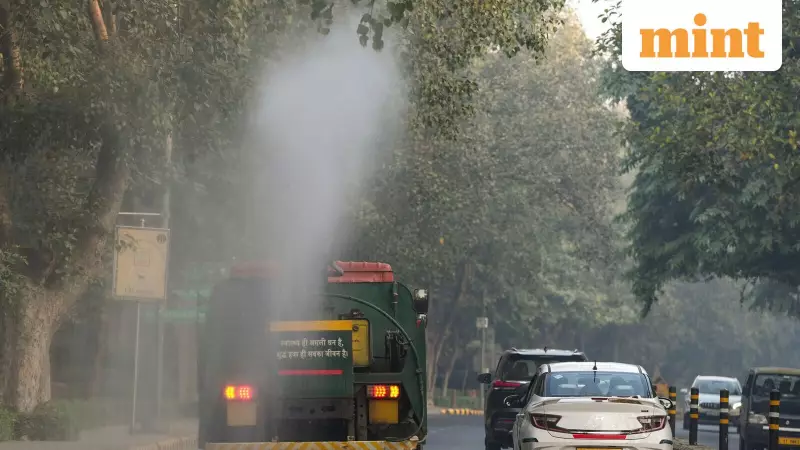
Residents of India's capital city, Delhi, were greeted on Monday, December 8, by yet another thick layer of toxic smog, as air pollution levels stubbornly persisted in the "very poor" category. This hazardous haze has now become a grim fixture over the city for several consecutive weeks.
Widespread 'Very Poor' Air Quality Grips the Capital
According to data from the Central Pollution Control Board's (CPCB) Sameer App, the situation remained critical on Monday morning. Out of the 40 air quality monitoring stations in the city, a staggering 29 reported air in the "very poor" category. The worst-hit areas included Mundka, Vivek Vihar, and Anand Vihar, where the Air Quality Index (AQI) touched 355. The Akshardham area recorded an AQI of 354. The remaining 11 stations reported "poor" air quality.
By 10 am, the city's overall air quality stood at 318. The 24-hour average AQI was logged at 308. As per CPCB standards, an AQI between 301 and 400 is classified as "very poor," which can cause respiratory illness on prolonged exposure.

What's Causing Delhi's Pollution Crisis?
Analysis from the Decision Support System for Delhi's Air Quality Management pinpointed the major contributors to the city's toxic air. Local transport emerged as the single largest source, responsible for 16.5% of the pollution. This was followed by emissions from industries in Delhi and its periphery (8.1%), residential activities (4%), and construction (2.3%).
The pollution load is also significantly influenced by neighbouring districts in the National Capital Region (NCR). Jhajjar contributed 12.9%, Sonipat 6%, Rohtak 5.4%, and Jind 2.5% to Delhi's foul air.
Government Action and Mumbai's Parallel Struggle
In response to the ongoing crisis, the Delhi government has launched a city-wide cleanliness and dust-control drive. This initiative focuses on clearing garbage, removing debris, and curbing dust pollution. As part of an intensified crackdown, authorities have imposed penalties worth ₹7 crore, shut down 48 construction sites, and conducted over 1,750 inspections.
While Delhi battles severe pollution, Mumbai is also grappling with deteriorating air quality. On Monday morning, a light haze enveloped the Bandra Reclamation area, with the AQI dropping to 125, placing it in the "moderate" category. The Maharashtra Pollution Control Board (MPCB) has taken action by ordering the closure of 19 ready-mix concrete (RMC) plants in and around the city to combat the rising pollution levels.
The air quality trajectory in Delhi has been fluctuating between "poor" and "very poor" over the past week. The city recorded an AQI of 279 on Sunday, November 30, which spiked to 372 on Tuesday, December 2, before settling at 308 on Sunday, December 7, highlighting the persistent and severe nature of the problem.






