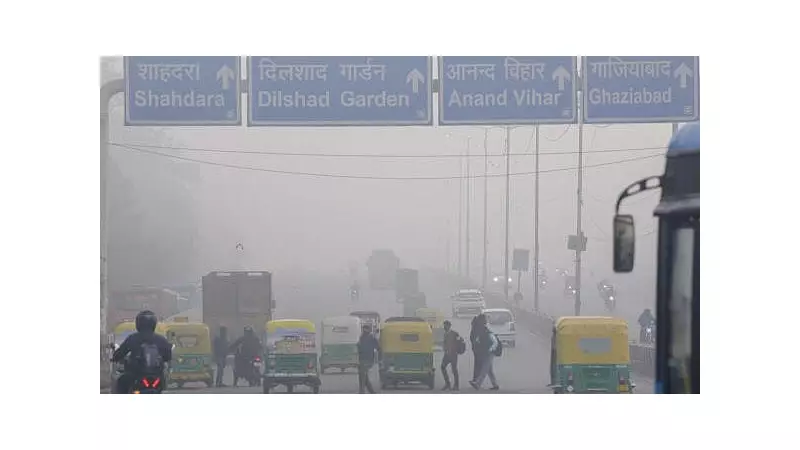
A dense, grey blanket of smog descended upon the Delhi-National Capital Region (NCR) on Sunday morning, dramatically reducing visibility and plunging air quality into the 'severe' category. The hazardous conditions caused significant disruptions to both air and rail travel, throwing schedules into chaos and raising serious health concerns for residents.
Travel Chaos as Smog Grounds Flights and Delays Trains
The impact on transportation was immediate and severe. At the Indira Gandhi International (IGI) Airport, at least 10 flights were diverted due to the dangerously low visibility. Airlines were forced to reroute aircraft to nearby cities like Jaipur and Ahmedabad. Passengers faced long delays and uncertainty as operations struggled to normalize.
The smog's grip extended to the railways as well. 28 trains arriving in Delhi were delayed by several hours, with some running behind schedule by up to four to six hours. The Northern Railway attributed the delays to the reduced visibility, which compelled trains to operate at much slower speeds for safety.

Air Quality Plummets to 'Severe' Levels
The air quality index (AQI) told a grim story. By 9 am on Sunday, the overall AQI for Delhi was recorded at 447, firmly in the 'severe' zone. The situation was particularly dire in specific areas. Anand Vihar registered a staggering AQI of 999 for PM2.5 pollutants, while the PM10 concentration there was 861, also in the 'severe' category. Other monitoring stations, including those at RK Puram and IGI Airport (T3), reported AQI levels well above 450.
Meteorological officials pointed to a combination of factors for the crisis. The primary culprit was very low wind speed and calm conditions, which prevented the dispersion of pollutants. Additionally, a shift in wind direction to northwesterly winds began transporting smoke from stubble burning in Punjab and Haryana towards the capital region, exacerbating the already poor air quality.
Official Response and Public Health Advisory
In response to the escalating crisis, the Commission for Air Quality Management (CAQM) decided to re-impose Stage III of the Graded Response Action Plan (GRAP). This stage involves enforcing a ban on non-essential construction work and the operation of certain categories of polluting vehicles. The authorities are closely monitoring the situation for any further deterioration.
Health experts have issued urgent advisories, especially for vulnerable groups. Residents, particularly children, the elderly, and those with pre-existing respiratory or cardiovascular conditions, have been advised to:
- Avoid outdoor activities and strenuous exercise.
- Wear N95 or KN95 masks when stepping outside.
- Keep doors and windows closed to prevent polluted air from entering homes.
- Use air purifiers indoors where possible.
The persistent smog episode highlights the recurring and severe nature of Delhi's winter air pollution problem, demanding sustained and effective action from both policymakers and the public.