Hundreds of daily wage labourers in Delhi are facing severe hardship as stringent anti-pollution measures have brought construction work to a complete halt, leaving them without income and with little hope of accessing a promised government relief package.
Empty-Handed at Labour Chowk
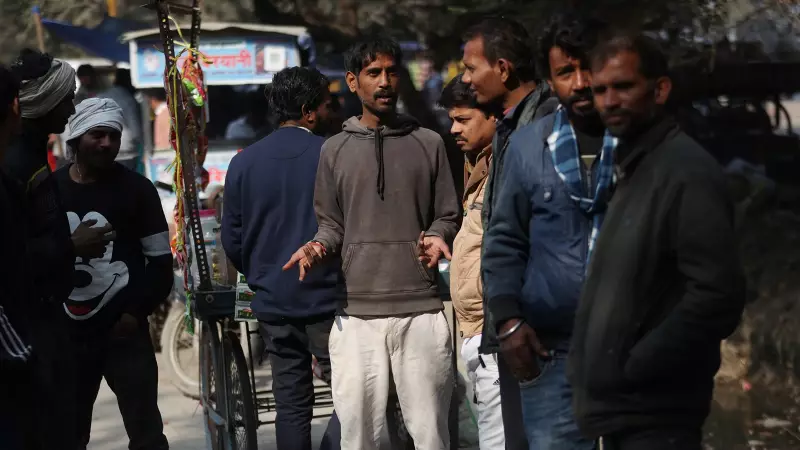
Every day, around 150 men and women gather at Labour Chowk in Madanpur Khadar, hoping to be picked up for work. However, since Saturday, December 14, 2025, the enforcement of the strictest stages of the Graded Response Action Plan (GRAP) has banned all construction and demolition activities across Delhi-NCR. This has turned their daily wait into a futile exercise.
Dilip, a 27-year-old manual labourer, arrives with his lunch bag, unsure if he will earn the Rs 500 needed for his daily survival. "If we get work, we will eat at the site; if not, we will go back home. The situation is very bad," he said. The workers now hope for plumbing or cleaning jobs, but opportunities are scarce, with only about 30 people finding any work by midday.

A Relief Package Out of Reach
On Wednesday, December 18, Delhi Labour Minister Kapil Mishra announced a one-time compensation of Rs 10,000 for construction workers rendered jobless due to GRAP 3 and 4 measures. The critical caveat is that this aid will be transferred directly only to the bank accounts of workers registered with the Delhi Building and Other Construction Workers Welfare Board (DBOCWWB).
This leaves a vast majority in the lurch. Dilip, like many others, only possesses Aadhaar and PAN cards. "I do not know where to get registered with the government and get a labour card made," he admitted. Activist Sunil Kumar Aledia estimates the actual number of construction workers in Delhi is three to four times the 2.57 lakh currently registered.
The barriers to registration are significant. "There is a lack of awareness among workers and the portal to register also does not work most of the time," said Aledia. He added that officials often demand numerous documents, and the high pendency, coupled with a lack of smartphones among workers, makes the process daunting.
Health, Hunger, and Hopelessness
The crisis has pushed workers and their families to the brink. Sundari Devi (50), a mason, and her neighbour Vimla (35) returned from Labour Chowk with no work. "One day we eat rotis, the next day we eat just chutney. Vegetables are too expensive these days," Sundari said. While she has a lapsed labour card, Vimla is unaware such a card exists.
The pollution itself is taking a direct health toll. Rahul (28), a plumber, described experiencing breathlessness and burning eyes. "At first, I thought it was the cold, but when my eyes started burning, I realised that it was because of pollution," he said. For him, visiting a government hospital means losing a day's precious income, so he resorts to eating jaggery year-round for relief.
The desperation for work also forces them to risk penalties. Vimla revealed that police have picked them up for working illegally during GRAP curbs. "We know this happens every year because of pollution, but how do we find alternative work? We can only pray that next year is less polluted, and we can work," she lamented.
Union leader Jaiprakash highlighted that the government has stopped holding registration camps since 2018, making it even harder for migrant workers to navigate the bureaucratic maze. The announced relief, while a necessary step, currently serves as a stark reminder of the gap between policy and on-ground reality for Delhi's invisible workforce.