

New Delhi is once again shrouded in a toxic blanket of smog, with air quality deteriorating to hazardous levels. The city government has been compelled to roll out the most stringent anti-pollution measures under the Graded Response Action Plan (GRAP) to protect public health.
Pollution Soars in Key Areas
According to data from the Central Pollution Control Board (CPCB), several prominent locations in the national capital have recorded alarming pollution readings. On Wednesday, the Air Quality Index (AQI) at Anand Vihar and Ghazipur touched 410, which falls into the 'severe' category. Nearby, AIIMS and India Gate registered AQI levels of 397 and 380 respectively, categorised as 'very poor'.
Stringent GRAP Stage-IV Measures Announced
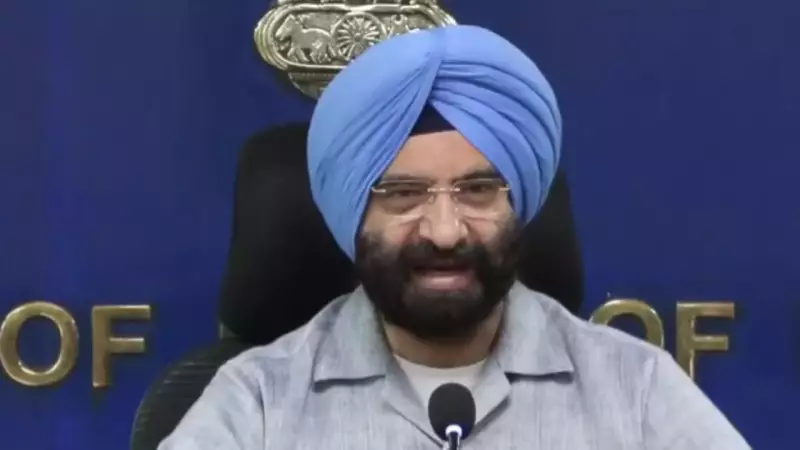
Delhi Environment Minister Manjinder Singh Sirsa announced a full suite of actions under Stage-IV of GRAP, the highest level of restrictions. He warned that the situation is not expected to improve significantly in the coming days compared to last year's figures.

The key measures announced include:
- 50% work from home for offices in Delhi.
- A mandatory Pollution Under Control (PUC) certificate for all vehicles. From Thursday, petrol pumps will deny fuel to vehicles without a valid PUC.
- A ban on the entry of trucks carrying construction materials into Delhi.
- Only Bharat Stage VI (BS6) compliant vehicles registered outside Delhi will be permitted to enter the city as long as GRAP Stage-IV is in force.
- All construction activity remains prohibited.
Sirsa appealed to citizens to cooperate, stating, "We are continuously working to improve air quality in the coming week."
Political Blame and Long-Term Challenges
The crisis has sparked a political blame game. Minister Sirsa accused the previous Aam Aadmi Party government of leaving behind a "disease of pollution," claiming his administration is working to fix it. He, however, acknowledged the scale of the challenge, saying, "It is impossible for any elected government to reduce AQI in 9-10 months."
Chief Minister Rekha Gupta framed the issue as a legacy problem. Speaking in Pitampura, she attributed the current smog to 27 years of neglect, arguing that her government needs at least 27 months to clear the backlog.
Relief and Enforcement
Alongside restrictions, the government announced some relief measures. Construction workers affected by the ban will receive financial assistance of Rs 10,000. To curb biomass burning, 10,000 heaters are being distributed to guards and watchmen through Sub-Divisional Magistrates (SDMs), with an appeal to the public not to light fires outdoors.
With residents facing severe health risks from prolonged exposure, officials are urging strict compliance to prevent further deterioration of Delhi's air quality.






