

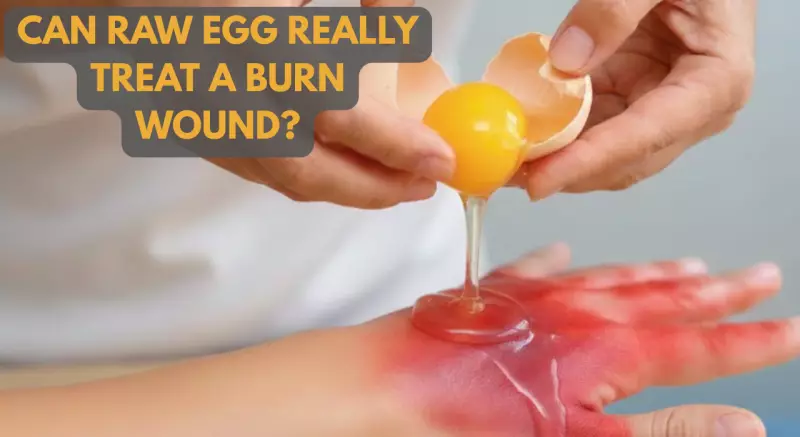
Scrolling through your group chats after a kitchen mishap, you've likely seen it: a well-meaning friend sharing a "miracle" cure for burns. Among the usual suspects like ice, toothpaste, or butter, one suggestion has shown stubborn persistence online: crack a fresh egg and smear the white directly onto the burned skin.
The Viral Myth and Medical Reality
On platforms like Facebook and WhatsApp, posts touting egg whites as a "natural collagen" treatment have been shared hundreds of thousands of times. These posts often come packed with emotional personal anecdotes and captions urging users to "share and save a life." However, burn specialists deliver a clear and urgent counter-message: this practice is not only unproven but can be dangerously harmful.
In 2021, a Reuters Fact Check investigation scrutinized these viral egg-white "remedies." One widely circulated Facebook post, later flagged by the platform as "False Information," featured dramatic stories. It described a young man allegedly saved from pesticide burns by a neighbor applying layers of raw egg white and a woman whose scalded hand was supposedly restored "like a baby's skin." Medical experts unanimously rejected these claims.

"There is no scientific evidence to support this treatment and using egg whites can be very dangerous," stated Dr. Alejandro Garcia, Director of the Paediatric Burn Program at Johns Hopkins Children's Center. In an email to Reuters, he explained the critical risk: raw eggs may contain salmonella bacteria. Applying this to an open burn wound can lead to serious local infections and potentially catastrophic systemic infections like sepsis.
Dr. Matthew Sztajnkrycer, an emergency medicine physician at the Mayo Clinic, echoed this warning. "Burns are very prone to infection and salmonella infection may be catastrophic," he emphasized, noting that skin's primary role is to protect the body from pathogens.
Why the "Study" Argument Doesn't Hold
Proponents of the egg-white remedy sometimes point to a small Iranian study where an egg-white-based ointment appeared to aid healing. Dr. Sztajnkrycer stressed this is "very different than simply placing raw egg white on a fresh burn." The study was a controlled experiment in a specialist burn centre with excluded high-risk patients. Crucially, the egg white was combined with a prescription-only topical antimicrobial agent. This controlled medical application bears no resemblance to cracking a supermarket egg over a burn at home.
Burn surgeon Dr. Laura Johnson from MedStar Washington Hospital Center advised Reuters that for optimal long-term results, people should consult a burn specialist before applying anything other than water to a burn. She noted the existing data on eggs for burns is scant and involves combination with prescription antimicrobials that reduce infection risk—a key factor absent from the kitchen-counter version.
Beyond infection, there's a basic allergy concern. Egg is a common allergen. Smearing raw egg white on broken skin can trigger immediate and potentially severe allergic reactions in sensitive individuals, compounding the initial injury.
Correct First Aid for Minor Burns
Major health bodies like the World Health Organization, the US National Institute of General Medical Sciences, and the Mayo Clinic offer consistent, evidence-based guidance for minor burns:

- Cool the Burn: Immediately hold the affected area under cool (not ice-cold) running water for about 20 minutes. This reduces tissue temperature and pain.
- Apply Lotion: After cooling, a simple moisturizer like aloe vera gel or an over-the-counter antibiotic ointment can be used.
- Cover Loosely: Protect the area with a clean, non-stick, non-fluffy bandage or sterile dressing.
- Manage Pain: Over-the-counter pain relievers like paracetamol or ibuprofen can help with discomfort.
Understanding burn severity is crucial. First-degree burns (red, painful, like sunburn) and very small second-degree burns (blistering, wet-looking) can often be managed at home if not on the face, hands, feet, genitals, or major joints. Seek urgent medical help for larger burns, third-degree burns (white or charred skin), chemical/electrical burns, or if signs of infection (increased pain, pus, spreading redness) appear.
Other Kitchen Remedies to Avoid
Egg whites are part of a broader pattern of misguided home treatments that can worsen burns:
- Butter & Oils: They trap heat in the skin, slowing cooling and potentially deepening the burn. They can also carry bacteria.
- Toothpaste: The cooling sensation from menthol is misleading. Toothpaste is not sterile, can be abrasive, and its chemicals irritate raw skin, increasing infection risk.
- Ice: Extreme cold can further damage tissue and reduce blood flow, impeding healing.
- Flour, Mustard, Mayonnaise: These trap heat, are unsterile, and make proper wound assessment by a clinician difficult later.
Burn specialists also warn against popping blisters (they are a natural sterile barrier) and using tight bandages (they restrict circulation). The safest rule is simple: if a remedy comes from a kitchen cupboard or an unverified social media forward, do not put it on broken skin. Stick to cool water, approved topical products, and professional medical advice.





