

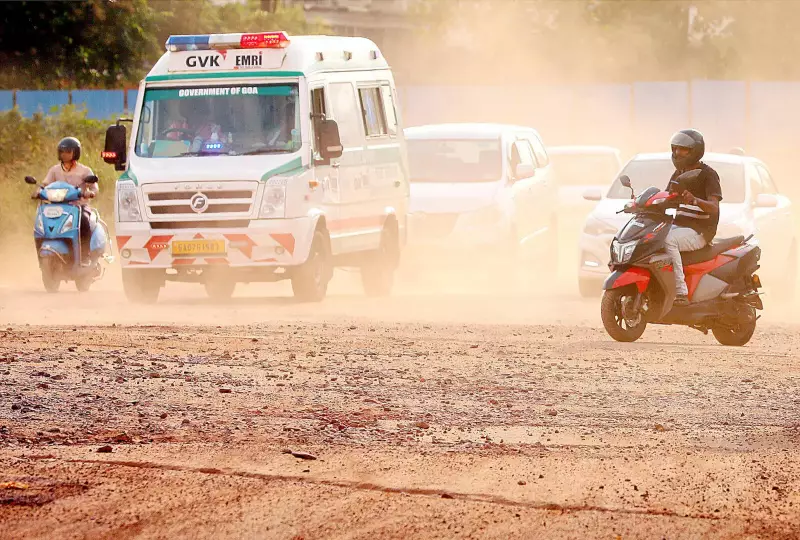
A dangerous combination of construction dust, vehicle fumes, and morning dew is triggering a significant public health crisis in parts of North Goa. Medical professionals in Panaji and Porvorim are reporting a sharp surge in patients suffering from severe respiratory symptoms, directly linking the rise to deteriorating local air quality.
Doctors Sound Alarm on Rising Patient Numbers
Pulmonologists, specialists in respiratory health, are witnessing an alarming influx of new cases. Dr. Haradatt Karande, a consultant pulmonologist, states he sees 10 to 15 new patients every week with conditions like bronchial asthma and allergic rhinitis, specifically attributed to dust pollution along the Porvorim stretch. Symptoms commonly include sneezing, nasal congestion, breathlessness, and wheezing.
"Those with pre-existing conditions like asthma or Chronic Obstructive Pulmonary Disorder (COPD) are experiencing frequent and severe flare-ups," Dr. Karande explained. He highlighted that the early morning fog or dew has exacerbated the situation by trapping pollutants closer to the ground. Treatment often requires antibiotics, anti-allergy drugs, and steroids, with delays potentially leading to hospitalization.

The Dew-Dust Combination Worsens the Crisis
The situation has notably deteriorated over the past two weeks. Dr. Rylind Pereira, a pulmonologist at JMJ Hospital in Porvorim, confirms receiving 10-15 patients daily, including older children, complaining of throat irritation and coughing. He pinpoints the culprit as a toxic mix of vehicle exhaust, concrete dust from highway projects, and mud from road-digging work, all held near the breathing zone by dew.
"The cold weather is triggering more pollution-related side effects. The dew prevents the dust from rising, keeping it at ground level," Dr. Pereira said. He reports that even recovered patients are suffering relapses. His urgent recommendations include wearing a two-ply mask while traveling on highways, especially in the early morning, and more frequent water spraying at construction sites to settle dust.
Long-Term Health Risks and Calls for Action
The consequences of prolonged exposure extend beyond immediate discomfort. Experts warn that severe dust pollution can cause permanent lung damage, including COPD, and stunt lung development in children. Dr. Anil Mehndiratta, a pulmonologist from Vasco, cautions that untreated symptoms can worsen, and long-term exposure to poor air increases the risk of heart disease and stroke.
Echoing the need for systemic change, Dr. Durga Lawande, former head of GMC’s respiratory medicine department, stated that Goa's rising vehicle density could lead to a sustained increase in respiratory illnesses. "We are lucky the situation isn't as alarming as Delhi yet, but we must take preventive measures now," she urged. Her recommendations include phasing out old, polluting vehicles and implementing stricter pollution control policies with political will. She also called for restricting firecrackers to protect the younger generation from harmful air pollution.
The medical community's consensus is clear: the dust pollution in Panaji and Porvorim is a pressing health emergency requiring immediate individual precaution, like using N95 masks in dusty areas, and decisive regulatory action to safeguard public health.






