

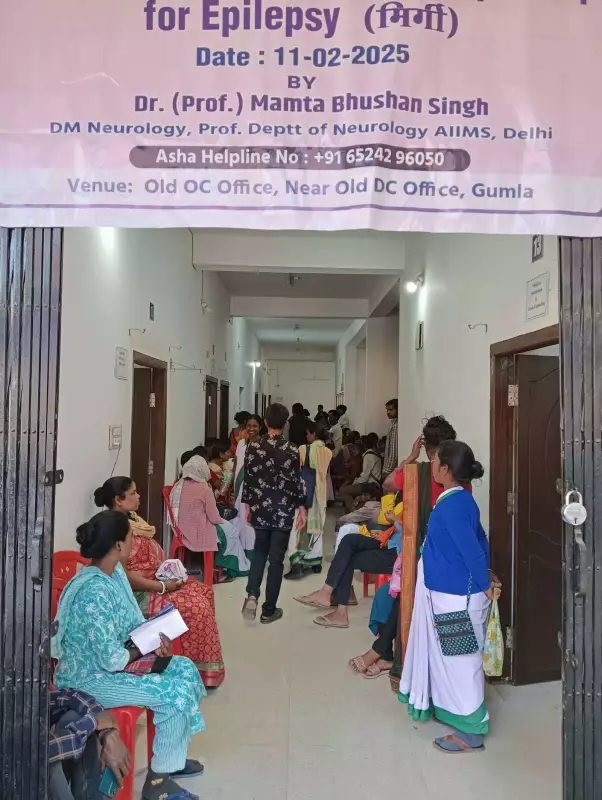
Epilepsy Crisis Claims Lives in Rural Jharkhand
Gumla district in Jharkhand has witnessed at least 40 deaths from epilepsy-triggered incidents between 2020 and August 2025, according to the district health department. The persistent fatalities highlight a severe healthcare gap in the state's rural areas where treatment and awareness remain critically low.
Tragic Stories Behind the Statistics
The most recent tragedy occurred on August 29, 2025, in Gumla town's Chetar locality, where 22-year-old Shrawan Oraon, a Class 11 student, drowned in a pond after experiencing convulsions while washing his hands following open defecation. His mother, Saro Oraon, a sweeper with Gumla Nagar Parishad, revealed her son had been suffering from epileptic fits for the past year and was treated only with local herbs.
Other districts report similar patterns. East Singhbhum recorded 42 suspected epilepsy deaths in just 18 months, while West Singhbhum saw two children—8-year-old Didiu Purty and Mangal Mudi—succumb to epilepsy episodes in August 2025. In Bokaro, 45-year-old Mahendra Singh, a CCL employee, died from an epileptic fit.

Superstition Worsens Healthcare Crisis
Deep-rooted superstitions have exacerbated the situation, leading to preventable deaths. 32-year-old Landra Pradhan died in a paddy field in 2024 when fellow workers fled instead of helping him during a seizure, fearing the disease would spread through touch. Similarly, 16-year-old Shiba Oraon was abandoned by friends when a seizure struck while preparing a paddy field.
Dr P K Sinha, state surveillance officer of the integrated diseases surveillance programme, warned that "the number of seizure-related deaths could be alarming if a survey is conducted across the state."
Systemic Failures in Epilepsy Care
The fatalities underscore a massive treatment gap in rural Jharkhand, where no epilepsy-specific national or state health programme exists. According to the National Mental Health Survey of India 2015-16 by NIMHANS, nearly 1 in 200 people in Jharkhand are affected by epilepsy.
Dr Thomus Minj, former neurosurgeon at Rims Ranchi, identified key problems: "Non-availability of treatment at district level, marginalized economic background of patients, and lack of follow-up in treatment are the main reasons for fatalities." He emphasized that rural communities still widely depend on local treatment rather than proper medical care.
The healthcare infrastructure remains critically inadequate. Dr Surendra Kumar, HOD of neurology at Rims Ranchi, revealed that neurology departments exist only at Rims in Ranchi, with just two neurologists serving the entire state. No government medical college in Jharkhand has a neurology department, and no degree courses have been started to address the shortage.
Dr Mayank Sharma, neurologist at AIIMS New Delhi, delivered a stark warning: "Every untreated seizure is a gamble with life, leading to preventable death and devastating disabilities."
Most deaths occurred when patients fell into water bodies during daily activities like bathing, washing clothes, or fetching water. Others suffered fatal injuries after falling on burning hearths or from trees during convulsions.
Despite epilepsy being a treatable neurological disorder that allows patients to lead normal lives with proper medication, the combination of stigma, misconceptions, and inadequate healthcare infrastructure continues to claim lives across rural Jharkhand.






