

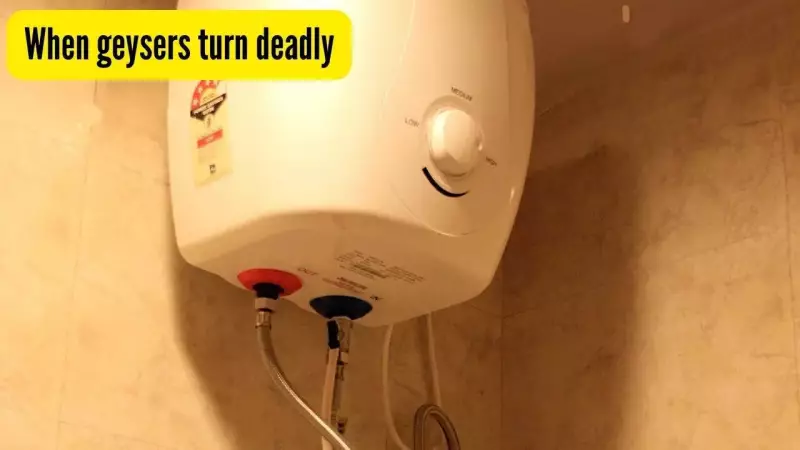
For countless Indian households, the morning ritual is incomplete without the comforting flow of hot water from a geyser. These essential appliances, available from as low as Rs 1500, come in instant and storage types, powered by electricity or gas. Yet, a series of recent, heartbreaking incidents serve as a grim reminder that this common convenience can turn deadly if safety is taken for granted.
Tragic Incidents Expose Fatal Risks
The comfort of a hot shower masks a potential hazard, as proven by several fatal accidents across India. In a devastating case, 30-year-old Ashwini Kedari from Pune district, who topped the girls' list in the 2023 Maharashtra PSI exam, lost her life to severe electrocution and burns. The tragedy occurred when she touched her geyser to check the water temperature; the unit gave her a shock and spilled scalding water, causing burns over 80% of her body.
In a separate incident in Aligarh, Uttar Pradesh, a 12-year-old girl died from suffocation in a bathroom caused by a gas geyser. Meanwhile, in Deoria district, a woman was electrocuted while simply plugging in a geyser. These are not isolated events but symptoms of widespread neglect and misunderstanding of the risks associated with water heaters.

Why Do Geysers Become Death Traps?
Safety experts point to a combination of technical failures and human oversight. A primary culprit is hard water, which causes scaling on the heating element over time, leading to frayed internal wires. This damage, combined with erratic voltage spikes common in Indian homes, can turn the appliance into a live hazard.
Improper earthing is another silent killer. If the metal body of the geyser becomes electrically charged, a single touch with wet hands can be fatal. For gas geysers, the danger shifts to carbon monoxide (CO) leakage in poorly ventilated spaces, which can cause unconsciousness and death. Explosions are also a risk if pressure release valves fail, leading to tank ruptures. Alarmingly, 80% of such accidents are traced back to DIY repairs or skipped professional servicing.
Comparing the Common Types: Risks and Rewards
Understanding the specific dangers of each geyser type is crucial for safety.
Electric Immersion Rods: These are affordable and portable but carry the highest shock risk. They lack automatic thermostats in basic models, leading to overheating. Safety is only possible with an ISI-marked rod, ensuring it is fully submerged, and never touching water while it's on.
Gas Geysers: They provide fast, continuous hot water and can be economical. However, they pose a real risk of gas leaks and carbon monoxide poisoning if installed indoors without strong, permanent ventilation. They are safer only when mounted in open areas like balconies, with quality fittings and annual servicing.
Electric Geysers (Instant & Storage): Generally considered safer due to no flame or fuel, modern units come with thermostats and cut-off mechanisms. The key risks arise from bad wiring, low-quality brands, or poor plumbing. Ensuring proper earthing, along with MCB and ELCB/RCCB protection, is non-negotiable.
The Underlying Safety Crisis
The root of the problem often lies in complacency. Many homes use decade-old units that lack modern safety certifications and features like auto-cutoff. People overload electrical circuits not designed for the 2-3 kW power draw of a geyser, leading to short circuits and fires. In cramped urban bathrooms, which often double as storage, towels and clothes near a faulty unit can ignite quickly.
The message from these tragedies is clear: the convenience of instant hot water must be paired with unwavering caution. Regular professional maintenance, investing in certified products, and ensuring proper installation and ventilation are not optional expenses—they are vital measures that can prevent the unthinkable from happening in your home.






