

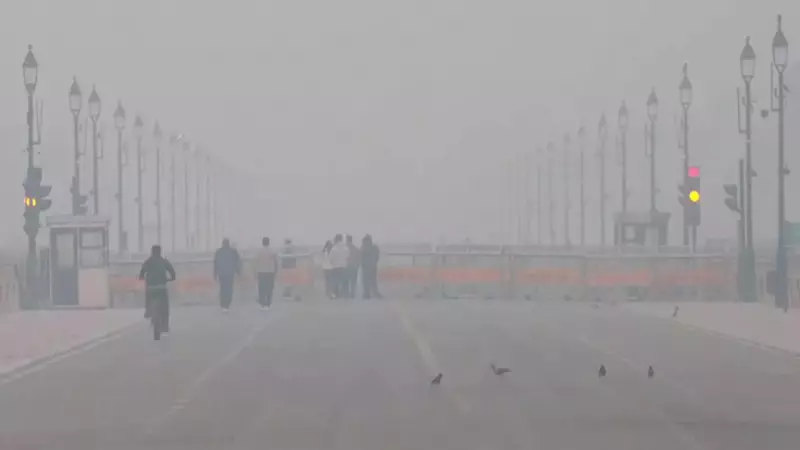
The Union Environment Ministry has informed Parliament that there is currently no conclusive data which establishes a direct cause-and-effect relationship between higher levels of air pollution and specific lung diseases. This statement was made in a written reply to the Rajya Sabha on Thursday.
Parliamentary Response on Pollution and Health
In response to a question posed by BJP member Laxmikant Bajpayee, the ministry clarified its stance. The MP had asked whether the government was aware of studies confirming that prolonged exposure to hazardous Air Quality Index (AQI) levels in Delhi-NCR leads to irreversible conditions like lung fibrosis and a drastic reduction in lung capacity. He specifically inquired if lung elasticity among Delhi-NCR residents had fallen by almost 50% compared to people in cities with good air quality.
The ministry's reply, however, maintained a consistent position it has held in recent years. While denying the availability of exclusive data to pin deaths solely on air pollution, it unequivocally stated that air pollution is one of the triggering factors for respiratory ailments and associated diseases. It emphasized that health outcomes are influenced by a multitude of factors including individual lifestyle, genetics, occupation, and socio-economic status, alongside environmental factors.

Government's Health and Awareness Initiatives
Addressing concerns about protecting citizens, the ministry outlined several measures underway. It highlighted that dedicated training modules on air pollution have been developed for a wide range of stakeholders. This includes:
- Programme managers and medical professionals like doctors and nurses.
- Frontline health workers such as ASHA workers.
- Vulnerable groups including women and children.
- Occupationally exposed groups like traffic police and municipal workers.
Furthermore, the ministry pointed to the development of Information, Education, and Communication (IEC) materials in English, Hindi, and regional languages focusing on air pollution-related illnesses. The National Programme on Climate Change and Human Health (NPCCHH) has also created customized awareness materials targeting school children, women, and workers in high-exposure jobs.
A Recurring Parliamentary Dialogue
This is not the first time the government has presented this nuanced view in Parliament. On July 24 of this year, the ministry told the Upper House that there is no conclusive data available to establish a direct correlation of death exclusively by air pollution. A nearly identical response was also provided on July 25 of the previous year.
The latest query from MP Bajpayee also sought to know if the government had a solution to save millions in Delhi-NCR from growing threats of pulmonary fibrosis, COPD, emphysema, and declining lung function. The ministry's response focused on the ongoing awareness and training programs as key components of the public health strategy to mitigate the impact of air pollution.






