

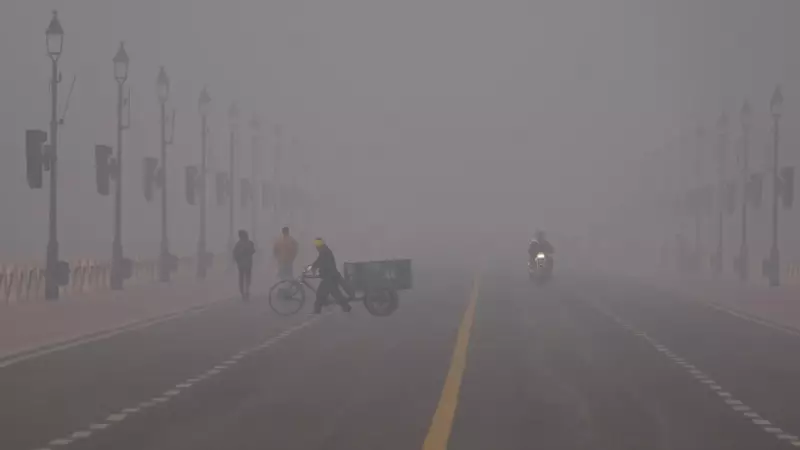
In a significant move, the Commission for Air Quality Management (CAQM) for the National Capital Region and adjoining areas has withdrawn the stringent Stage-IV restrictions of the Graded Response Action Plan (GRAP) with immediate effect. This decision came on Wednesday, even as the air quality across large parts of Delhi stubbornly remained in the 'very poor' category.
Persistent Pollution Despite Eased Curbs
The revocation of GRAP Stage-IV, which is typically enforced when the Air Quality Index (AQI) surpasses 450 into the 'severe+' zone, does not signal a clean bill of health for the capital's air. Data from the Central Pollution Control Board (CPCB) painted a grim picture, with areas like ITO and India Gate recording AQI levels crossing 350. This underscores the persistent and hazardous nature of the air pollution crisis in Delhi.
The commission clarified that its order dated December 13, 2025, which had invoked Stage-IV actions, now stands revoked. However, measures under Stage I, Stage II, and Stage III of the GRAP will continue to be implemented. These ongoing measures are based on the modified GRAP dated November 21, 2025.

Court Questions GST on Air Purifiers
The easing of curbs came just hours after the Delhi High Court issued a directive that added a new dimension to the pollution debate. The court directed the GST Council to meet at the earliest to consider lowering the Goods and Services Tax (GST) imposed on air purifiers. This intervention was made in view of the worsening air quality in the region.
During the hearing, the bench expressed strong displeasure over the lack of action on the matter and questioned the Centre over the 18% GST rate on these essential devices. The court emphatically observed that every citizen is entitled to clean air, highlighting the urgency of making mitigation tools more accessible to the public.
What GRAP Stage-IV Entailed
Earlier, GRAP Stage-IV measures had been enforced across Delhi-NCR in a bid to curb the dangerously rising pollution levels. The restrictions under this stage were primarily targeted at vehicular pollution, though they did not impose a complete ban on private vehicles.
The curbs were dependent on emission norms and fuel type:
- Vehicles meeting the prescribed Bharat Stage (BS) standards were allowed to operate.
- BS-III petrol and BS-IV diesel vehicles were not permitted to ply in Delhi-NCR during this phase, except for those providing essential services.
- Older vehicles, in general, faced stricter restrictions.
The decision to lift the highest level of restrictions while lower-tier measures remain in place indicates a calibrated response from the CAQM. It reflects a shift from emergency-level actions, even as the city continues to grapple with air quality that poses significant health risks to its residents. The concurrent push from the judiciary on the economic aspect of pollution mitigation underscores the multi-faceted challenge Delhi faces every winter.






