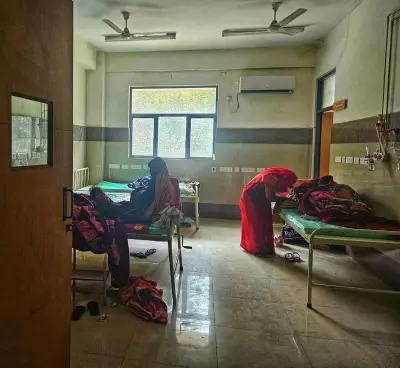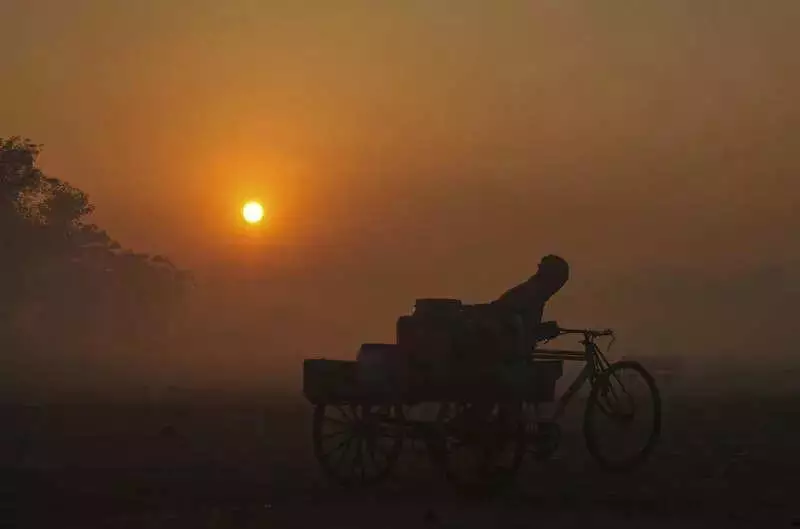
The air quality in several Haryana cities remained dangerously poor on Wednesday, with Rohtak continuing to gasp for breath. Despite a slight improvement from the previous day's severe levels, the city's Air Quality Index (AQI) was recorded at 385, firmly in the 'very poor' category.
Statewide Smog Blanket: Key Cities Affected
Rohtak was not alone in this public health crisis. Panchkula emerged as the second most polluted city in the state with an AQI of 330. Other urban centres reporting 'very poor' air quality included Bahadurgarh at 303 and Ballabhgarh at 300. A wider list of cities and districts found themselves in the 'poor' to 'very poor' categories, highlighting a regional problem.
This list included Sonipat (286), Gurugram (279), Ambala (253), Manesar (238), Yamunanagar (227), Jind (218), Narnaul (216), and Karnal (216).

Officials Pinpoint Causes and Highlight Local Efforts
Pollution control authorities identified specific reasons for the deteriorating air, particularly in Rohtak and Sonipat. They pointed to the heavy traffic movement on national highways passing through these cities towards Delhi, combined with the impact of smog drifting from the national capital.
In a contrasting note, Faridabad fared relatively better with an AQI of 197. Local officials credited this improvement to persistent measures like the non-stop use of anti-smog guns and sprinklers, along with round-the-clock mechanical road cleaning.
Administrative Action and Future Focus
A senior official from the Haryana State Pollution Control Board acknowledged the challenges while outlining the strategy. "Certain issues are beyond our control," the official stated, but added that local authorities have been more proactive recently. The official claimed positive results are visible in the NCR areas of Gurugram, Faridabad, Palwal, and Nuh, and that the focus is now shifting to Sonipat and Rohtak.
On the ground, Rohtak officials claimed to have issued an advisory for water sprinkling and the use of anti-smog guns. In Sonipat, the local administration has already invoked the stringent Stage 4 restrictions of the Graded Response Action Plan (GRAP) to combat the severe pollution.