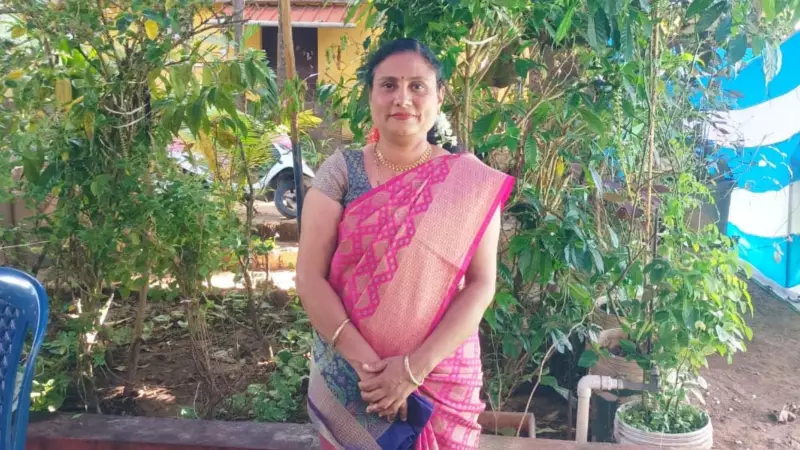
For Maya Kate, what began as a young marriage in 2000 soon turned into a life-altering health crisis that would test her resilience for decades. Today, at 44, she stands as a beacon of hope for countless others living with HIV, proving that with proper treatment and determination, life continues beyond diagnosis.
From Tragedy to Transformation
The year 2005 marked a devastating turning point in Maya's life. She lost both her husband and newborn son to AIDS within a short span, leaving her as the sole parent for her three-and-a-half-year-old daughter. "I kept having nightmares that I would be the next," Maya recalls. "I lived only for my daughter."
Her journey with HIV began when routine pregnancy tests revealed her positive status. Doctors then tested her husband, uncovering the truth about his frequent illnesses—fever, fatigue, and recurrent herpes that had plagued him since 2003. The young couple from Pune found themselves navigating uncharted territory filled with fear and social stigma.

The Long Road to Treatment
Maya's initial CD4 count stood at 450 cells/mm³, slightly below the normal range of 500-1,500. She began volunteering at Bel-Air Hospital in Panchgani, Maharashtra, where Father Tomy Kariyilakulam encouraged her to share her story with critically ill patients. However, as her CD4 count dropped to 250, the reality of her condition became undeniable.
In 2007, she started antiretroviral therapy (ART) when her weight had plummeted to just 38 kg. Her first regimen involved Triomune, a combination tablet taken twice daily. "Initially I would vomit and couldn't bear it," she remembers. The treatment journey proved challenging with multiple medication changes due to side effects—from ZLN (Zidovudine, Lamivudine and Nevirapine) causing severe anemia to TLE (Tenofovir, Lamivudine, Efavirenz) that she maintained from 2010 to 2022.
The Ongoing Journey and Current Challenges
Even after two decades, Maya's treatment requires dedication. She currently makes monthly journeys of one-and-a-half hours each way to Satara Civil Hospital to collect her second-line treatment medications. "It's tiring, but worth it because I am adjusting well," she states.
According to the India HIV Estimations 2024 report, the country has approximately 2.6 million people living with HIV, including 70,000 children. The report recorded 64,000 new infections and 32,000 AIDS-related deaths in 2024—equivalent to four deaths every hour.
Dr I S Gilada, President Emeritus of AIDS Society of India, highlights the progress made: "The biggest global challenge—access to ART—was overcome largely due to India's pivotal role in making treatment affordable and accessible to almost 92% of people living with HIV globally."
However, significant challenges remain. Stigma and discrimination continue to be major barriers, while newer hotspots in northeastern states and Punjab driven by injectable drug use require urgent attention.
Hope for the Future
Today, Maya's viral load is undetectable, and she draws strength from her daughter—who fortunately tested negative for HIV—now married and settled. Her work as a peer counselor at Bel-Air Hospital allows her to transform her painful experiences into support for others facing similar challenges.
As Dr. Gilada emphasizes, "Each new HIV case is a 'missed opportunity.' Every AIDS-related death is a grim reminder that it could have been prevented—we have the tools to make AIDS deaths history."
Maya's story stands as powerful testimony to this truth, demonstrating that with proper treatment, support, and resilience, life with HIV can not only continue but find new purpose and meaning.