

Two decades ago, Kamakshi* faced an unimaginable ordeal. After her husband's death at the Government Hospital for Thoracic Medicine in Tambaram, she found herself alone. Because he was HIV-positive, no one was willing to help transport his body. In desperation, she paid an auto-rickshaw driver extra, pretending her husband had merely fainted, to carry him home for his final rites. "He didn't tell me about his status until a day before he died," she recalls, highlighting the intense stigma of the time.
A Personal Tragedy Transforms into a Mission
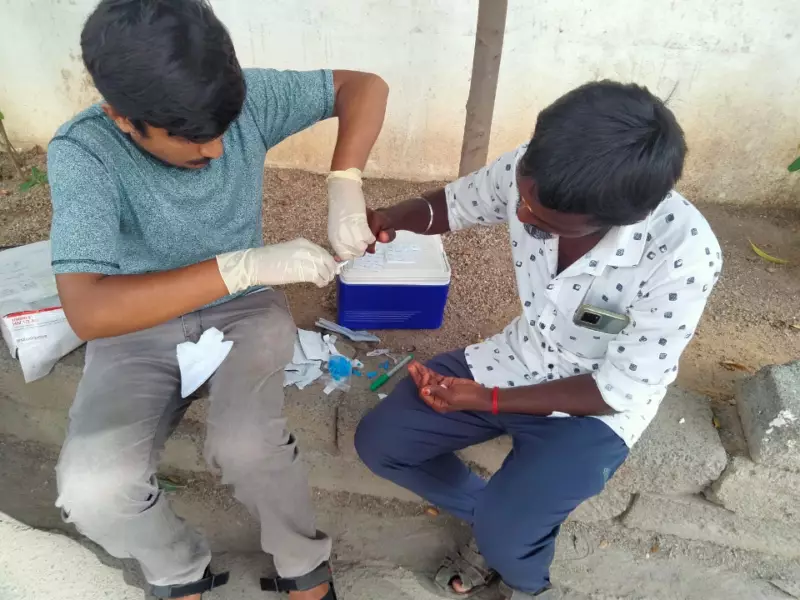
Kamakshi's own world shattered further when, just three months later, she tested positive for HIV. A decade after that, she endured another profound loss when her only daughter, unable to bear the societal weight of her parents' condition, succumbed to depression. Yet, from this deep well of personal grief, Kamakshi forged a powerful purpose. Today, she has become the supportive figure she once desperately needed. She travels door-to-door across Chennai, escorting HIV-positive individuals to treatment centres and ensuring they receive their medicines.
Officials credit dedicated outreach workers like Kamakshi, alongside healthcare staff, for Tamil Nadu's success in combating the virus. The state now maintains one of the lowest HIV prevalence rates in India. The adult prevalence rate has shown consistent improvement, dropping to 0.2% in 2024 from 0.21% in 2023. A landmark achievement is the state reporting zero mother-to-child transmission of HIV, overcoming what was once a major challenge.

The Three-Tiered System and Ongoing Challenges
HIV care in Tamil Nadu is structured through a three-layer system under the Tamil Nadu State AIDS Control Society (TANSACS). This includes Sexually Transmitted Infection (STI) centres for prevention, Integrated Counselling and Testing Centres (ICTCs) for diagnosis, and Antiretroviral Therapy (ART) centres for treatment. Chennai alone has 14 STI centres, 123 ICTCs, and 5 ART centres. Statewide, 136,597 people are registered for ART, with 8,357 of them in Chennai as of September.
However, the battle extends beyond medical infrastructure. R Seethalakshmi, Member-Secretary of TANSACS, points out a critical hurdle: "The state screens 94% of potential cases, but the real challenge begins after disclosure. When we inform them they have HIV, some run away. That's why the retention rate post-disclosure drops to 89%." This is where outreach workers step in, striving to bring back those who are scared or in denial.
At the Rajiv Gandhi Government General Hospital (RGGGH), a major ART centre in Chennai, about 150 patients visit daily. Of the city's 8,000-plus HIV-positive residents, roughly 3,000 receive treatment here. Dr S Sekar, a medical officer, notes that despite the promising numbers, stigma persists. "People still don't accept their diagnosis confidently. It often takes five sittings for patients to admit they had unprotected sex," he reveals.
Evolving Risks and New Strategies
While overall prevalence is low, new cases continue to emerge from high-risk groups such as men having sex with men (MSM), commercial sex workers, migrant labourers, and intravenous drug users. Targeted intervention groups are adapting their strategies to changing behaviours. A Jaya, Chennai Project Director at the Sahodaran NGO, explains a modern complication: "Earlier, MSM high-risk groups were concentrated in specific city pockets. Now, with online apps, they're everywhere. We're mapping informal hotspots to guide, sensitise, and prevent more infections." Her organization works with about 3,000 MSM beneficiaries.
The story of Tamil Nadu's HIV control is thus a dual narrative. It is a public health success story built on a robust administrative framework and impressive data. Simultaneously, it is a deeply human story of resilience, where individuals like Kamakshi turn personal anguish into a lifeline for others, proving that compassion remains the most potent tool in the long fight against stigma and disease.
*Name changed to protect privacy.






