

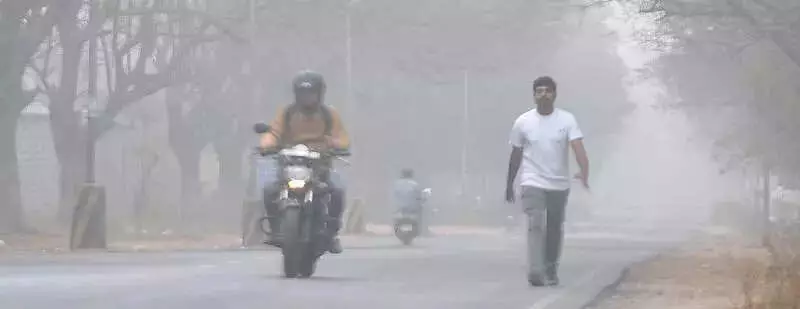
As winter deepens its hold over Hyderabad, the city is grappling with a severe and worsening air pollution crisis, with current pollutant levels significantly exceeding those recorded last year.
Alarming Spike in Particulate Pollution
Data reveals a disturbing trend: PM2.5 concentrations have surged to 176 this winter, a sharp increase from around 140 during the same period last year. Similarly, PM10 levels have climbed to 185, up from nearly 150 in the winter of 2024. The areas most affected include Sanathnagar, Gachibowli, and the Old City.
The scale of the problem is stark when compared to global health standards. The current PM2.5 levels are as much as 35 times higher than the World Health Organization's (WHO) safe limit of 5. PM10 levels are also 37 times above the WHO guideline.

Multiple Pollutants Exceed Safe Limits
The pollution crisis is not limited to particulate matter. Earlier this week, ozone levels in the area spiked to 196, which is close to three times the WHO's recommended limit of 60. Furthermore, carbon monoxide levels in Gachibowli and Patancheru reached as high as 120, exceeding WHO guidelines by nearly 30 times.
Environmental experts point to a combination of meteorological factors for this sharp deterioration. Colder temperatures, calm wind conditions, and a phenomenon known as temperature inversion—common in winter—are trapping pollutants close to the ground, preventing their dispersion.
Health Impacts and Citizen Anguish
The deteriorating air is already taking a toll on residents' health. Krishna V, a bank official from Abids, described the visible and palpable change: "Pollution levels worsened noticeably since last week's cold wave, with hazy conditions becoming increasingly frequent. It's tough even to leave the house. It's smog in the morning and traffic-induced pollution during the rest of the day."
For those with pre-existing conditions, the situation is particularly dire. Lavanya K, a 39-year-old resident of Attapur, shared her distressing experience: "When I wake up in the morning, I feel a burning sensation in my throat and have difficulty breathing. I already suffer from asthma, and my doctor told me the problem is being worsened by the poor air quality."
Call for Concrete Action
Beyond weather, human activities are major contributors. Vehicular emissions, dust from construction sites, and the burning of waste and biomass during winter months have further aggravated the air quality.
Environmentalist BV Subba Rao emphasized the urgent need for action. "Pollutants released from vehicles, industries, and construction sites are pushing particulate levels dangerously high. It is time to move beyond discussions and implement concrete measures," he stated. He advocated for promoting carpooling to tackle vehicular emissions—a major source of PM2.5 and PM10. Rao also stressed the need for more air-quality monitoring stations, relocating industries away from the city, and fostering greater environmental awareness and proactive citizen participation.
The current air quality crisis in Hyderabad underscores a pressing public health emergency, demanding immediate and sustained intervention from authorities and the community alike.






