

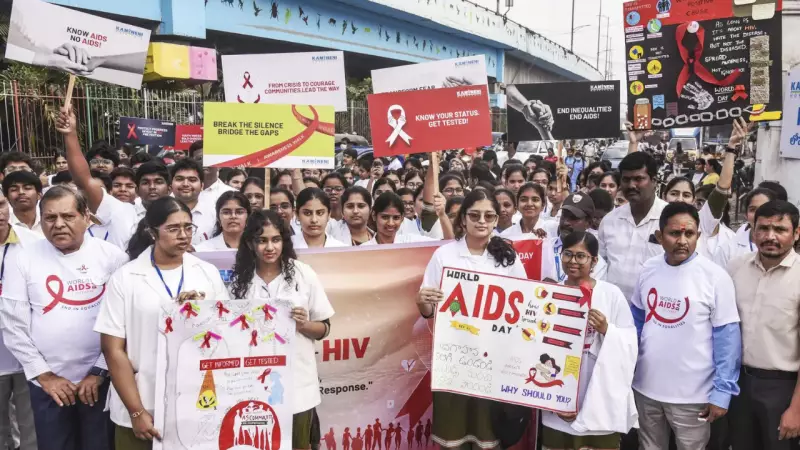
India's long-running battle against HIV/AIDS showcases a nation of stark contrasts, according to the latest official estimates. While the country celebrates significant national progress, alarming new hotspots have emerged, threatening to undermine the broader success story.
National Gains and Global Leadership
Union Health Minister Jagat Prakash Nadda unveiled the India HIV Estimation 2025 report at the national World AIDS Day event in New Delhi's Vigyan Bhawan on Monday. The findings confirm that India's epidemic is in overall decline. Adult HIV prevalence has remained steady at a low 0.2%, and the country has achieved one of the steepest global reductions in AIDS-related mortality, with deaths plummeting by 81% since 2010.
New infections have fallen by nearly 49%, a rate that outpaces worldwide trends. Minister Nadda highlighted the program's strength, noting that HIV testing has increased from 4.1 crore to 6.6 crore, and the number of people on life-saving treatment has grown from 14.9 lakh to 18.6 lakh. Viral load testing has nearly doubled to 16 lakh.

"India has achieved a 35% drop in new HIV infections and a 69% decline in HIV-related deaths, outperforming global averages," Nadda stated. The country is firmly on track to meet the ambitious 95-95-95 targets by 2030, with current figures showing 85% of people with HIV know their status, 88% are on treatment, and 97% have achieved viral suppression.
The Troubling Regional Divide
Beneath this encouraging national picture lies a disturbing geographical shift. The report, developed by the National AIDS Control Organisation (NACO) under the Indian HIV Estimation and Survey Enhancement (IESE) framework, points to sharp surges in several states, particularly in the Northeastern region.
The states of Mizoram and Nagaland now record an HIV prevalence of above 1%—more than five times the national average. Mizoram's new infection rate is a staggering 0.9 per 1,000 uninfected population, which is nearly 18 times higher than the country's average.
Other states, including Meghalaya and Punjab, are also reporting spikes. The report links these increases to factors such as injecting drug use and changing sexual behaviour among young adults. This regional concentration presents a clear challenge to the nation's unified control strategy.
Persistent Challenges and the Road Ahead
Nationally, India was estimated to have 25.6 lakh people living with HIV in 2024, comprising nearly 14 lakh men and 11 lakh women. The burden remains concentrated, with Maharashtra, Andhra Pradesh, and Karnataka carrying the largest shares. Together with six other states, they account for 74% of all People Living with HIV (PLHIV) in the country.
Despite the low national prevalence among youth (15–24 years) at 0.06%, the emerging trends in specific regions are a cause for concern. Minister Nadda cautioned that HIV-TB co-infection and poor adherence to Antiretroviral Therapy (ART) remain major hurdles. He emphasized the need for intensified counselling and robust community support systems to address these persistent issues.
The comprehensive report, led by the ICMR–National Institute for Research in Reproductive and Child Health and Digital Health Sciences (ICMR–NIRDHDS) with support from nine national institutes and state AIDS control societies, covers 34 States and Union Territories and 762 districts. It serves as both a testament to India's public health achievements and a crucial map highlighting the next frontiers in the fight against HIV.






