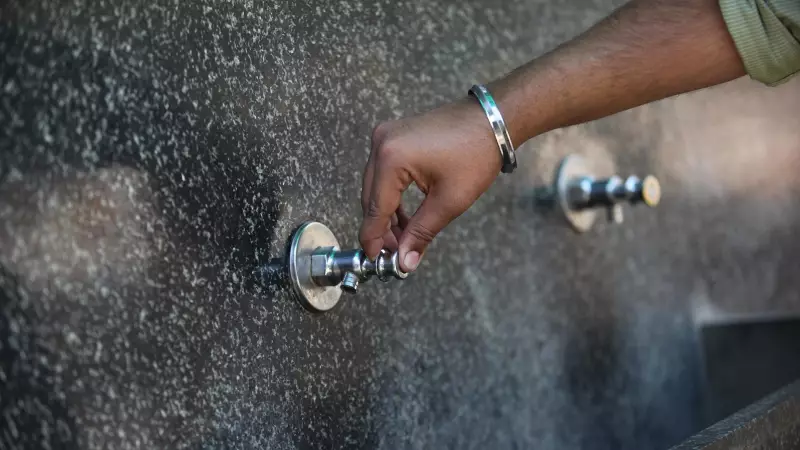
A shocking case of civic negligence has led to a deadly water contamination crisis in Madhya Pradesh's Indore district, claiming seven lives. Investigations have revealed that a toilet was constructed directly above a main drinking water pipeline without the mandatory safety tank, allowing sewage to seep into the potable water supply.
The Fatal Lapse in Infrastructure
Indore Municipal Corporation Commissioner Dilip Kumar confirmed the findings to The Indian Express. The investigation found that no safety tank was constructed beneath the improperly built toilet near a police outpost. This critical lapse, combined with a detected leakage in the main water supply pipeline, created the perfect conditions for contamination. Commissioner Kumar stated that chambers intersecting the distribution line are being diverted, while awaited water test reports will determine the full extent of the pollution and the next steps.
The revelation came as Mayor Pushyamitra Bhargav reported seven deaths linked to the outbreak, though the health department has officially confirmed three fatalities so far. The human toll is severe, with over 149 people still hospitalized. Authorities have discharged 36 patients, but more than 116 remain under treatment as medical teams scramble to contain the situation.
Accountability and Administrative Action
In response to the tragedy, the authorities have taken swift disciplinary action. The water supply Assistant Engineer has been suspended, the sub-engineer relieved of duty, and the Zonal Officer suspended for failing to ensure proper oversight and coordination. Commissioner Kumar emphasized accountability, stating the zonal officer was suspended because he should have overseen overall coordination.
District Magistrate Shivam Verma outlined the scale of the containment operation. Survey teams are going door-to-door, having covered 2,700 houses initially, with the survey now extended to nearby areas to check if contamination has spread beyond the initial epicentre of Bhagirathpura. As a precautionary measure, Auxiliary Nurse Midwives and ASHA workers are distributing oral rehydration solution (ORS) to residents.
Grief-Stricken Families Demand Answers
The crisis has left families devastated and questioning how their basic drinking water turned into a silent killer. Jitendra Prajapat recounted the sudden death of his 50-year-old sister, Seema. "She suddenly started suffering from vomiting and diarrhoea... She died on the way to the hospital," he said, his voice breaking. "One moment she was at home, the next she was gone."
Another victim, Manjulata, an elderly woman, passed away within hours of falling ill, leaving behind five daughters and her husband, Digambar. He revealed residents had noticed the danger signs. "For the past several days, the water had been coming out dirty. We even filed complaints, but nothing was done," he said in disbelief.
Siddharth lost his 75-year-old father, Nandlal Pal. "We thought it was something he ate, never imagined the water we drink every day could kill him," he shared. Chandrakala Yadav's 70-year-old mother-in-law, Urmila Yadav, died a day after drinking tap water. "She used to tell us the water tasted strange, but we never thought it could be this dangerous," Yadav lamented.
For Bihari Kori, whose 29-year-old wife Uma succumbed, the tragedy is incomprehensible. "My children have lost their mother because someone failed to do their job," he said, calling for accountability.
Residents had noticed a bitter, metallic taste in the water for days but boiled it, assuming it was an excess of purification chemicals. "We had no idea contamination could be this severe," Jitendra Prajapat stated, highlighting the community's unawareness of the grave danger lurking in their taps. The incident underscores a catastrophic failure in urban civic management, turning a fundamental life source into a vehicle of death.