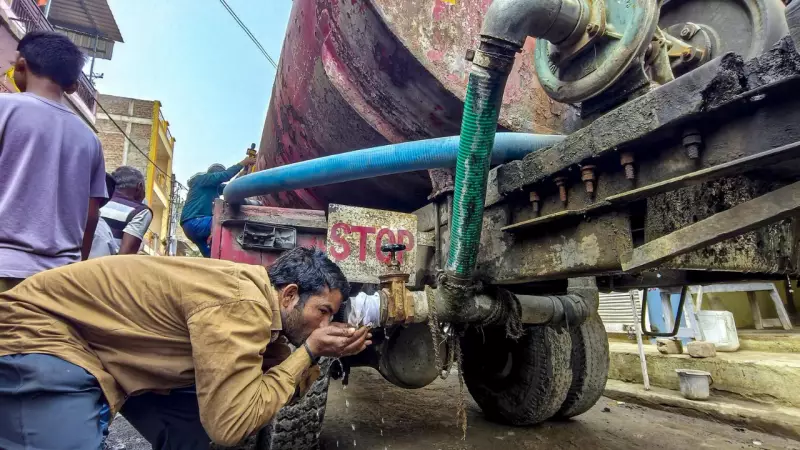
A severe water contamination crisis has struck Indore, the commercial capital of Madhya Pradesh, shattering the city's reputation as India's repeatedly crowned cleanest city. The tragedy has led to widespread fear and a deep loss of trust in the municipal tap water supply, forcing a financial strain on low- and middle-income households who must now buy expensive bottled water for daily survival.
Outbreak Claims Lives, Sparks Conflicting Reports
Officials have confirmed that at least six people have lost their lives following an outbreak of vomiting and diarrhoea linked to contaminated drinking water in the Bhagirathpura area. Over 200 individuals have been hospitalised due to the illness. However, the death toll remains a point of contention. While the administration officially acknowledges six fatalities, Indore Mayor Pushyamitra Bhargava earlier suggested the number could be as high as 10. Distressed residents claim the toll is even higher, reaching 16, and includes the tragic death of a six-month-old infant.
A City's Trust Evaporates, Financial Burden Rises
The crisis has fundamentally altered daily life for Indore's citizens. "Yes, we are now scared of drinking municipal water. We need proof that it is safe before we consume it," Sunita, a resident of Marathi Mohalla, told PTI. She revealed that her family is now purchasing drinking water jars from the market at ₹20 to ₹30 per jar. Sunita alleged that dirty water from taps has been a persistent issue for two to three years, with repeated complaints falling on deaf ears. "For a long time, we have been adding alum and boiling water before drinking," she added, highlighting a long-standing problem.

The distrust is so pervasive that even local businesses like tea stalls are adapting to reassure customers. Tea vendor Tushar Verma stated, "We are making tea using bottled water, but we haven't increased prices," demonstrating the extent to which confidence in the public water system has collapsed.
Administrative Response: Transfers, Chlorination, and Awareness Drives
In response to the escalating crisis, the district administration has intensified efforts to control the outbreak and rebuild public confidence. District Magistrate Shivam Verma said an Information, Education and Communication (IEC) campaign is active in Bhagirathpura, with NGO workers advising residents to boil water for at least 15 minutes and use only drinking water supplied via municipal tankers. Simultaneously, chlorination of municipal pipelines and tube wells in the affected zone is underway. Health experts affirm that chlorination is one of the most effective methods to eliminate disease-causing pathogens and prevent water-borne infections.
The political and administrative fallout has been swift. Chief Minister Mohan Yadav ordered the transfer of Municipal Commissioner Dilip Kumar Yadav and the suspension of Additional Municipal Commissioner Rohit Sissoniya and Public Health Engineering department in-charge Sanjeev Shrivastava. In a status report to the High Court, the state government asserted that the diarrhoeal outbreak is now under effective control, with continuous monitoring to prevent a resurgence.
Indore sources its water from the Narmada river through pipelines from Jalud in Khargone district, nearly 80 km away, with households receiving tap water on alternate days. The current tragedy underscores a critical failure in maintaining the safety of this vital supply chain for a city known for its cleanliness.