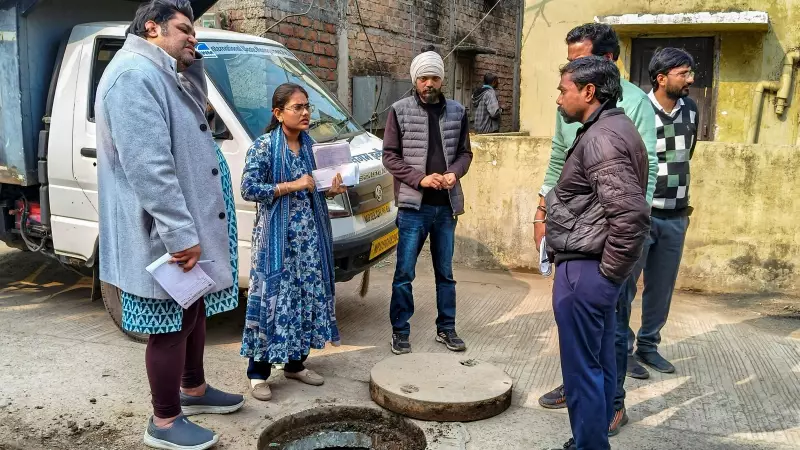
The Madhya Pradesh government has taken stringent action against senior civic officials in the fallout of a severe water contamination crisis in Indore, which has resulted in at least 10 deaths and over 200 hospitalisations. In a decisive move, the state administration has removed the Chairman of the Indore Municipal Corporation (IMC) and suspended several other high-ranking officers for their alleged failure in preventing the tragedy.
Top Brass Held Accountable for Systemic Failure
The crackdown, initiated on January 3, 2026, saw the immediate removal of IMC Chairman and the suspension of the Additional Commissioner of IMC, along with the in-charge Superintending Engineer of the waterworks section. Government sources cited a catastrophic breakdown in coordination, where lower-level officials reportedly "wilfully disregarded senior officials". The failure to repair a broken water pipeline and delays in processing a crucial tender for fixing water lines were identified as key lapses that led to the public health disaster.
Additional Commissioner Rohit Sisonia, a 2017-batch IAS officer, has been transferred to the Department of Farmer Welfare and Agriculture Development as a deputy secretary. In a significant administrative overhaul, the state has appointed three senior IAS officers—Akash Singh, Prakhar Singh, and Ashish Kumar Pathak—as additional commissioners to reinforce the corporation's functioning.
Contaminated Water and Mounting Casualties
The crisis unfolded in the Bhagirathpura area of Indore, where sewage mixed with drinking water due to a pipeline leakage. Chief Medical and Health Officer (CMHO) Dr. Madhav Prasad Hasani confirmed that laboratory tests from a city medical college identified the contamination. A preliminary investigation points to a toilet constructed directly over a drinking water line without a safety tank as the likely source.
As per a health department affidavit submitted to the Madhya Pradesh High Court, the situation remains critical. Since December 24, 2025, a total of 294 patients have been admitted to hospitals. As of January 1, 2026, 201 were still hospitalised, 93 had been discharged, and 32 were fighting for their lives in intensive care units.
State Issues Sweeping Directives for Damage Control
In the aftermath, the Urban Development and Housing Department, under Additional Chief Secretary Sanjay Dubey, has issued a stern directive to all urban local bodies. The order mandates a city-wide survey of water distribution networks within seven days, with special focus on old pipelines and those running near sewer lines. Any leakages detected must be repaired within 48 hours.
The directive also orders immediate water sampling at all treatment plants and storage tanks. It states unequivocally that wherever E. coli, coliform bacteria, or pollution beyond permissible limits is detected, the water supply must be stopped immediately, with alternative safe water arranged for residents. Collectors have been instructed to document past outbreaks of water-borne diseases and identify vulnerable zones to prevent future crises.
While the administration has officially linked four deaths to the contaminated water, the human toll is believed to be higher. The incident has exposed severe gaps in maintenance and accountability in India's cleanest city, prompting a frantic rush by authorities to control the damage and restore public trust.