

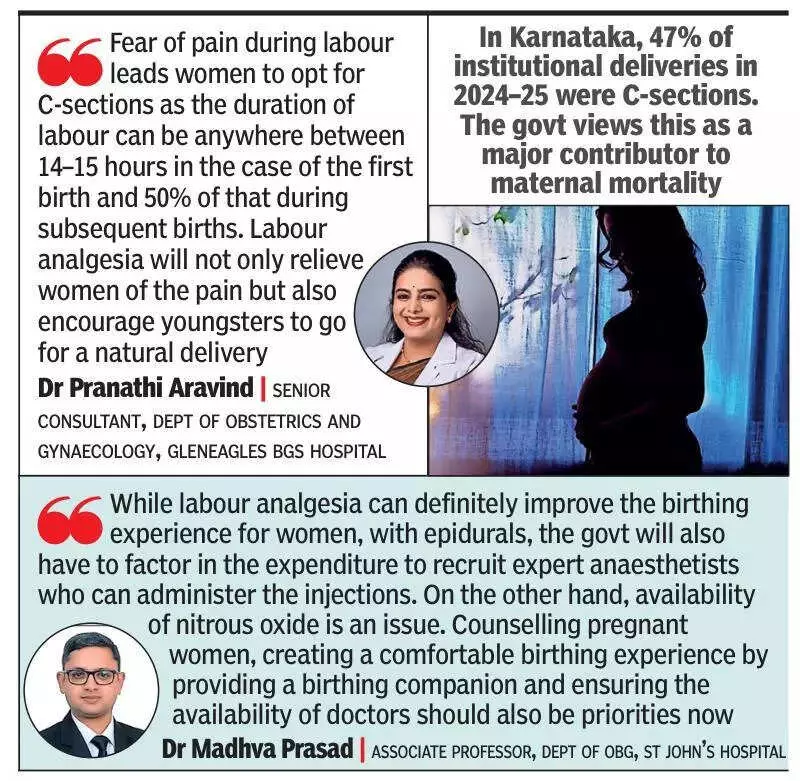
In a significant move to combat the alarmingly high rate of cesarean deliveries, the Karnataka health department has announced plans to introduce advanced pain-management techniques in government hospitals across the state. This initiative directly addresses the finding that nearly 47% of all institutional births in Karnataka are now surgical deliveries, a figure far exceeding global medical recommendations.
Addressing the Fear Factor Behind Surgical Births
Principal Secretary of the Health Department, Harsh Gupta, stated that the decision stems from a pilot study conducted in Tumakuru. The study revealed that fear and the anticipation of severe pain are primary reasons pushing mothers towards opting for elective C-sections. "We learned that C-section rates are higher than they should be. We hope that the new pain management techniques will help alleviate mothers' fear of pain," Gupta explained.
The department will roll out two key labour analgesia options: epidural injections and nitrous oxide (gas and oxygen). An epidural, administered in the lower back, numbs contraction pain while the mother remains awake. Nitrous oxide offers milder relief and reduces anxiety, allowing mothers to stay mobile during labour.

Implementation Challenges and Broader Strategy
Gupta acknowledged the logistical hurdles, especially for epidurals, which require expert anaesthetists. "Implementing epidurals will require additional expert anaesthetists, and we are currently figuring out how to allocate human resources for that. On the other hand, nitrous oxide can be self-administered during contractions," he added.
The strategy extends beyond pain relief. The government is consulting experts on birthing positions and plans to replicate initiatives like water births, music therapy, and aromatherapy—currently available at Bengaluru's Vani Vilas Hospital—in other facilities. Furthermore, the department is training medical staff to promote vaginal births, even for mothers with a previous C-section history. In subsequent phases, nurses and midwives will be trained to counsel on prenatal nutrition, exercise, and yoga.
Why Reducing C-Sections is a Public Health Priority
The government views the high C-section rate as a major contributor to maternal mortality. Gupta highlighted that higher C-section rates increase risks of complications like sepsis, oxygen deprivation to the baby, and ultimately, raise maternal mortality rates. He also pointed to studies indicating lower immunity levels in babies born via C-section compared to those born naturally.
To ensure informed consent, this information will now be included in the surgery consent form. "Some experts have informed us that mothers often choose elective C-sections for perceived safety... We are adding this information to the surgery consent form so mothers can make informed decisions," Gupta elaborated.
Medical experts have welcomed the focus on pain management but urge a holistic approach. Dr. Pranathi Aravind, a senior consultant in obstetrics and gynaecology, noted that stories of long labour pain passed through generations deter natural birth. "Labour analgesia will not only relieve women of the pain but also encourage youngsters to go for a natural delivery," she said.
Dr. Madhva Prasad, an associate professor, emphasized that while labour analgesia improves the birthing experience, the government must also prioritize counselling, creating a comfortable environment with birthing companions, and ensuring doctor availability alongside managing the costs and logistics of new techniques.






