

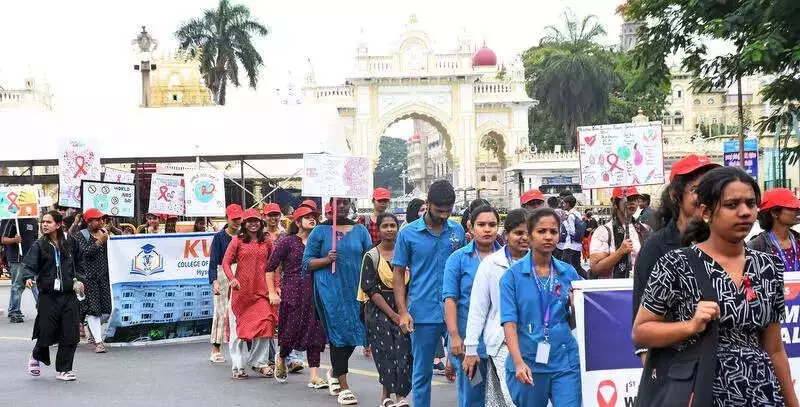
In a significant public health announcement, Karnataka's Health Minister Dinesh Gundu Rao has called upon citizens to join the state government's intensified drive to eliminate HIV/AIDS, setting an ambitious target to make the state free from the infection by the year 2030. The minister made this appeal while inaugurating the World AIDS Day programme in Mysuru, organized by the Karnataka State AIDS Prevention Society.
Uniting for a Common Goal: Public Participation is Key
Minister Dinesh Gundu Rao emphasized that achieving this 2030 goal is not solely the government's responsibility but requires united efforts from every citizen. The programme, held at the JK grounds under the department of health and family welfare, focused on rallying collective action. The minister stressed that preventing the epidemic is a shared social responsibility, moving beyond government initiatives to include widespread public awareness and behavioral change.
The historical timeline of HIV/AIDS in the region was outlined: the first global case was identified in 1981, the first Indian case in 1986, and Karnataka reported its first case in 1987. Thanks to sustained awareness campaigns, preventive measures, and the crucial involvement of non-governmental organizations, the prevalence and number of HIV patients in the state have been consistently declining.

Dispelling Myths and Understanding Transmission
The minister addressed the evolution of public understanding about the disease. In the early days of awareness, rampant misconceptions led people to believe HIV/AIDS was incurable and could be contracted through casual contact like conversation. Today, with advanced treatments like Antiretroviral Therapy (ART), people living with HIV are leading normal, healthy lives, and the disease is effectively under control.
He clarified the precise modes of transmission to combat stigma: HIV spreads through blood transfusion, unprotected sexual contact, mother-to-child transmission, sharing needles, and organ transplants. Crucially, he confirmed that the infection is not transmitted through everyday actions like hugging, shaking hands, kissing, or sharing toilets, food, and drinks. The minister specifically noted that gay and bisexual men remain a significantly affected group.
State Infrastructure and the Path Forward
Highlighting the state's preparedness, programme director Padma Basavanthappa of the Karnataka AIDS Prevention Society detailed the extensive network established for testing and treatment. The state has set up 442 standalone Integrated Counselling and Testing Centres (ICTC), which include 94 Antiretroviral Treatment (ART) centres and 290 sub-centres across both government and private hospitals.
MLC CN Manjegowda pointed out that the expanding network of hospitals and healthcare extension facilities is playing a vital role in both prevention and ensuring timely treatment for those infected. The human cost of delayed treatment was starkly revealed by the minister, who stated that approximately 1.16 lakh HIV-infected people have died in Karnataka since 2004 due to not receiving timely medical intervention. Conversely, he cited inspiring examples of individuals surviving for more than 20-25 years after infection by availing themselves of proper and timely treatment.
The event also saw the felicitation of achievers in the field of AIDS control and prevention, and the release of an annual calendar. Notable dignitaries present included Kannada Book Authority chairman Manasa, state health department director Dr. Vasanthkumar, Mysuru Medical College dean Dr. KR Dakshayini, and district AIDS control officer Dr. Mohammed Siraj Ahammed. Earlier, an awareness rally featuring students from nursing colleges, volunteers, and hospital representatives commenced from the Kote Anjaneyaswamy Temple.






