

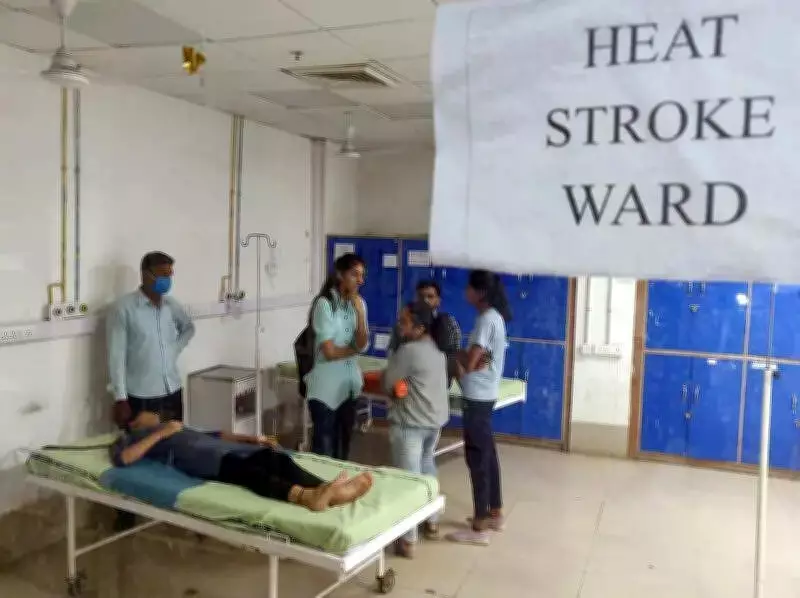
Hubballi: Karnataka Medical College-Research Institute (KMC-RI), Hubballi, has established a 14-bed ICU ward as a precautionary measure for heat stroke patients as temperatures rose in the district. Historically, the district's temperature averaged 32-33 degrees Celsius over the past several decades. However, this year, temperatures have increased to 37-38 degrees Celsius. Such high temperatures have led to various health problems, including headaches, fatigue, weakness, skin rashes, and fever, particularly among those who spend extended periods in the sun.
Specialized Heat Stroke Ward
The heat stroke ward has been set up with special care. All emergency medicines, including ORS, ice cubes, and thermometers, are stored in the ward. Skilled doctors and staff have been assigned to take care of the patients. So far, no serious patients have been admitted. The frequent rains combined with summer heat have worsened the situation. Hundreds of patients falling ill due to the heat are visiting the KMC-RI OPD. Common ailments include vomiting, diarrhoea, dehydration, asthma, and skin diseases.
Details from Hospital Officials
Dr. Uday Bande, Head of the Medicine Department, stated that the ward was set up specifically for heat stroke, which occurs due to rising temperatures. It was opened with the intention of fulfilling patients' needs. The ward is located in the old building, ward 02, and has 14 beds. The number of beds can be increased or decreased as per requirement, he added.

Dr. Ishwar Hasabi, Medical Superintendent of KMC-RI, informed TOI that this ward has all the facilities required for ventilators, monitors, and ICU. So far, no cases have been reported. He advised reducing public exposure to the sun. It is advisable not to go outside from 10 am to 4 pm during hot weather, drink clean water, consume buttermilk, wear white or light-coloured clothes, and wear slippers to prevent direct sun damage.
Precautions for Vulnerable Groups
The elderly, children, and pregnant women should take special precautions as they have an increased risk of hyperthermia. If the water content in the body decreases, there is an increased risk of stroke. There is also a possibility of flatulence, kidney problems, and multiple organ failure. The public should be careful not to let the water content in the body decrease, said Dr. Hasabi.






