

Kolkata Water Contamination Crisis Escalates as More Families Evacuate
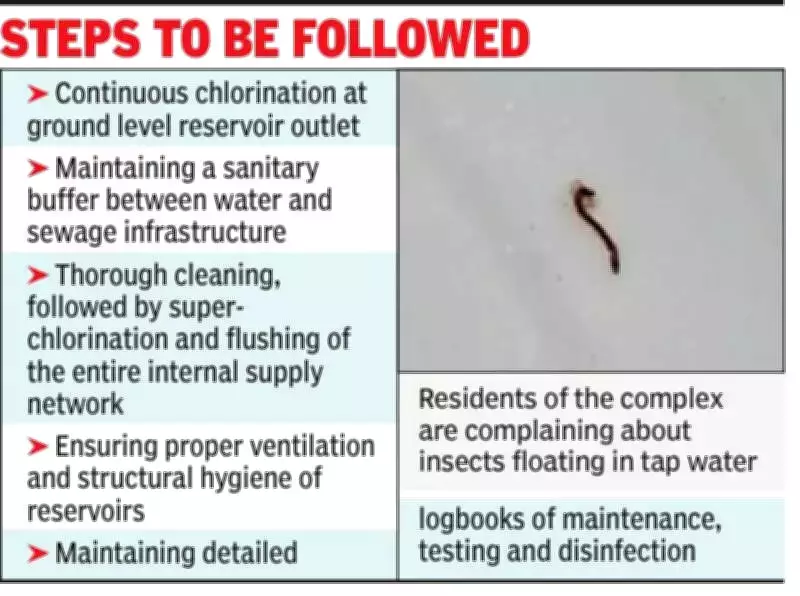
In a distressing development in Kolkata, residents of a New Town housing complex have been forced to abandon their homes following a severe and ongoing water contamination crisis. The situation, which began five days ago with initial suspicions of tainted water, has now escalated dramatically. On Friday, numerous additional families made the difficult decision to temporarily relocate after alarming videos circulated on residents' WhatsApp groups. These videos clearly showed insects floating in tap water, confirming their worst fears and triggering a new wave of evacuations.
Authorities Struggle to Identify Source as Contamination Spreads
Frustrated residents have alleged a critical failure by local authorities, who have yet to pinpoint the exact source of the dangerous contamination. In response, the New Town Kolkata Development Authority (NKDA) has issued a formal advisory to the facility's management. This directive mandates the immediate installation of a dedicated chlorinator at the underground reservoir to ensure continuous disinfection—a shocking revelation given that officials confirmed these reservoirs had not been chlorinated for at least three years.
The NKDA's comprehensive advisory goes further, calling for a thorough cleaning of the entire system. This must be followed by a process of super-chlorination and a complete flushing of the internal supply network, which includes all 141 overhead reservoirs. During inspections, officials noted stagnant water in valve chambers and identified a critical issue: a manhole and sewer line located perilously close to the underground reservoirs. Authorities have urgently recommended diverting this sewer line immediately to prevent further seepage.

Proximity to Sewage and Canal Raises Major Safety Concerns
The investigation has zeroed in on two potential culprits for the widespread contamination. First, authorities are meticulously inspecting a sewerage pipeline that runs less than a metre from the overhead reservoir connection line, searching for any breaches that could allow sewage to infiltrate the drinking water supply. Second, officials are examining whether a recent rise in the water level of the nearby Bagjola canal—which flows just outside the complex's boundary wall—has contributed to the problem through seepage.
This proximity between the internal water storage system and external sewage lines, especially near the canal, represents a clear and dangerous violation of standard separation norms designed to protect public health. A KMDA official emphasized the gravity of the situation, stating that the close quarters between potable water infrastructure and waste lines create an unacceptable risk.
Residents' Lives Disrupted by Health Fears and Uncertainty
The human toll of this crisis is profound and deeply personal. Sudhir Mondal, a retired civil engineer and resident of the E Block, shared his family's harrowing experience. "We don't think there will be any immediate solution," he lamented. "We have two flats here. Our tenant has already moved to a relative's place, and we are planning to return to our native home in Bankura because my wife was seriously ill due to the infection. My two daughters who work in New Town will shift to a friend's place for now." His story underscores the widespread disruption and fear gripping the community.
Despite NKDA confirming the presence of coliform bacteria in the internal storage system and identifying contamination at the entry point of the underground reservoirs, officials admitted that as of Friday evening, the precise source remained elusive. This ongoing uncertainty fuels residents' anxiety and distrust.
Neha Gupta, another resident, highlighted the persistent danger. She relocated to her in-laws' home in Assam with her ailing children after one resident shared a video of an insect swimming in tap water even after cleaning efforts. "It means the breach isn't plugged yet," she stated, pointing to the continued failure to secure the water supply. The community remains in a state of limbo, awaiting a definitive solution to this public health emergency.






